

A short definition
Richard Thaler named the endowment effect in 1980 to describe a pattern economic theory did not predict. In standard theory, the value of an item should not depend on whether you own it: the price at which you would sell it and the price at which you would buy it should be about the same. In practice, people demand much more to give something up than they would pay to get it.
The research behind it
| Study | What happened | What it showed |
|---|---|---|
| Thaler (1980) | Described cases such as a wine collector who would neither sell a bottle at a high price nor buy one at a lower price | Named the endowment effect as a gap between selling and buying prices |
| Kahneman, Knetsch and Thaler (1990) | Students given coffee mugs set selling prices; others set buying prices | Median selling prices were roughly twice median buying prices |
| Knetsch (1989) | Students given a mug or a chocolate bar were offered a trade | Most kept whichever item they had been given |
| Later market studies | Investors and traders observed holding inherited or long-held positions | Experience and market practice reduce the effect but do not remove it |
The mug experiments are the best-known evidence. The mugs were randomly assigned, so the owners had no special reason to like them. The gap appeared anyway, within minutes of ownership.
Why it happens
The most common explanation is loss aversion. Kahneman and Amos Tversky's work found that losses weigh more heavily than equal gains. Selling something you own feels like a loss; buying it feels like a gain foregone. The asymmetry produces the price gap.
Other explanations add to it. Owners pay more attention to the good qualities of what they own. Ownership becomes part of identity: the stock you researched for weeks is "your" idea. And people dislike the regret of selling something that later rises, which makes holding the default. These links run through several other biases, including confirmation bias and the sunk cost fallacy.
How it shows up in a portfolio
- Positions you would not buy today. A stock held for years may stay in the portfolio because selling feels like a decision, while holding does not.
- Sell prices set too high. An owner may set a target well above any reasonable estimate of value, and wait.
- Inherited and gifted shares. People often keep inherited stock out of attachment, even when it creates a large concentration.
- Employer stock. Employees hold far more of their employer's shares than diversification would suggest, partly because they feel they know the company.
- Research ownership. Analysts who built a detailed case can overvalue the thesis itself and resist new facts that weaken it.
How it differs from related biases
| Bias | What drives it | How it shows up |
|---|---|---|
| Endowment effect | Ownership itself | Owners value holdings above what they would pay |
| Loss aversion | Losses felt more than gains | Reluctance to realize losses; a cause of the endowment effect |
| Disposition effect | Gain or loss against purchase price | Selling winners early, holding losers |
| Anchoring | A reference number, often the purchase price | Waiting to "get back to even" |
| Status quo bias | Preference for no change | Holding by default, rebalancing rarely |
The endowment effect differs from the disposition effect because it does not depend on whether the position is up or down. An investor can overvalue a winning position just as easily as a losing one, simply because it is theirs.
Habits that limit it
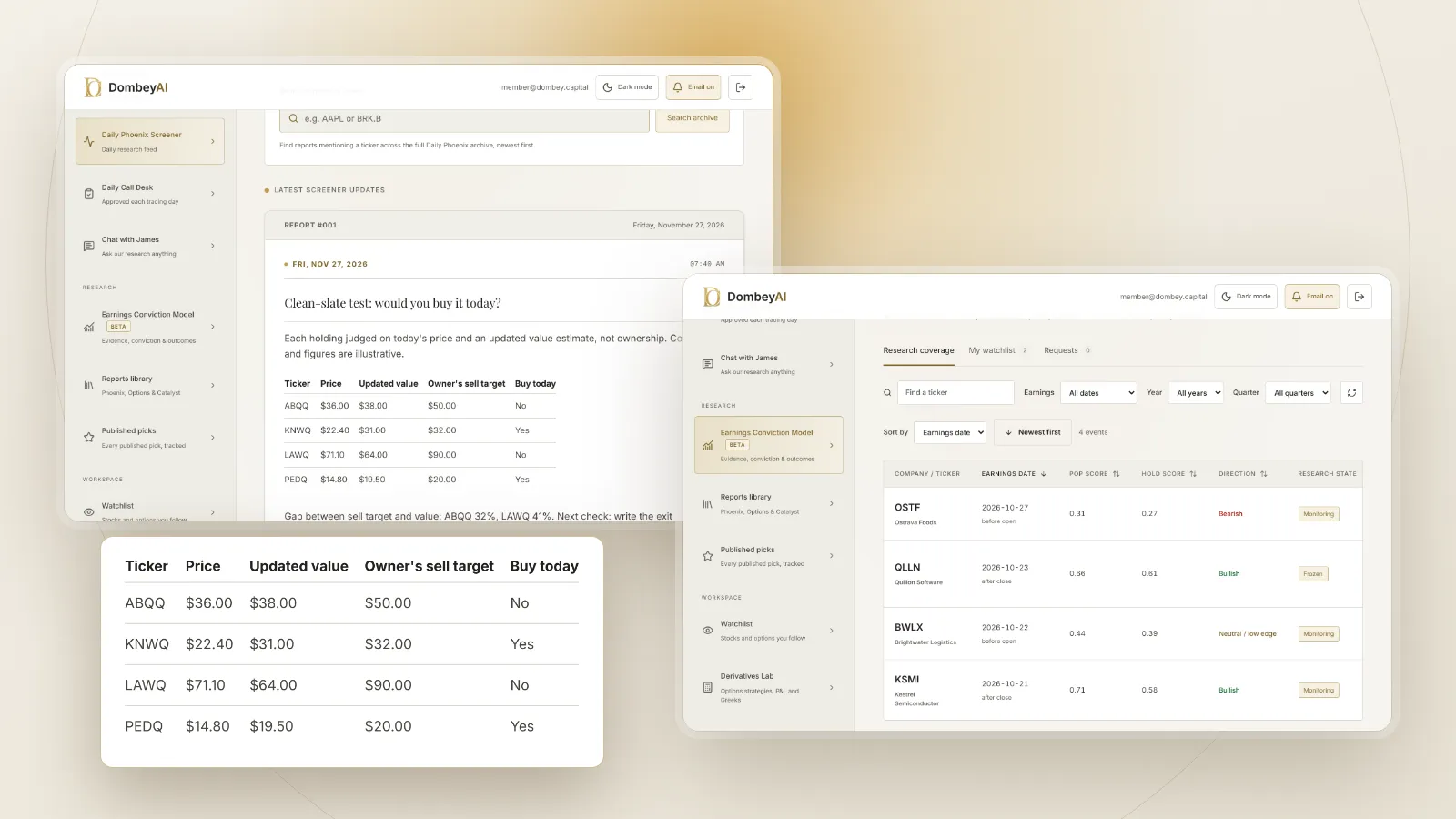
- Use a clean-slate test. Once a quarter, list each holding and ask: if I had this amount in cash, would I buy this position today at this price? If not, write down why you still hold it.
- Write the thesis and exit conditions at purchase. A dated investment thesis records what you expect, by when, and what would change your mind. It gives you something other than ownership to judge against.
- Update the value, not just the price. Recalculate your estimate of value after each material event, using the same method you used to buy.
- Separate the buy decision from the person. Have someone else review your largest positions, or argue the case against them yourself in writing. Inversion is one way to do this.
- Keep a decision journal. A decision journal shows over time how often you held positions you would not have bought.
- Set rules for concentration. A cap on any single position limits the damage when attachment to one holding outlasts the evidence.
Tools that track your thesis, target value and catalyst dates next to each holding make the clean-slate test faster. Our comparison of stock research tools for individual investors covers several with portfolio and notes features. Dombey's published research records each thesis with its date and the conditions that would change the view, which is one way to keep judgment separate from ownership; see the research archive.
A quick self-test
Pick your three largest positions and, for each one, write two numbers without looking at the price history: the most you would pay for the whole position today with cash, and the lowest price at which you would sell it. If the selling price is well above the buying price and nothing in your value estimate explains the gap, the difference is the endowment effect. Repeat the test after each earnings report. The gap tends to widen for holdings you have owned longest and researched most, which is where it does the most damage.
Where this goes wrong
- Overcorrecting. Selling every position the moment it stops looking cheap creates trading costs and taxes. The goal is to judge holdings on their merits, not to sell more often.
- Mistaking conviction for bias. A position you understand well and still value above the price is not an endowment effect. The test is whether your value estimate is up to date and honestly calculated.
- Ignoring taxes. Sometimes holding is right because selling triggers a large tax bill. That is a real cost, not a bias, but be clear about which reason is driving the decision.
- Applying it only to losers. The bias affects winners too. A stock that has doubled can be overvalued by its owner just as easily.
- Assuming experience cures it. Professional traders show a smaller effect, but it does not disappear, especially for positions they originated.
The bottom line
The endowment effect makes people value what they own more than they would pay for it, and investors are not immune. It shows up as holding positions you would not buy today, setting sell prices too high and resisting news that lowers a holding's value. Thaler named it, and the mug experiments showed how quickly it appears. The best defense is regular: a clean-slate test for each holding, a written thesis with exit conditions and a value estimate updated after every material event.