

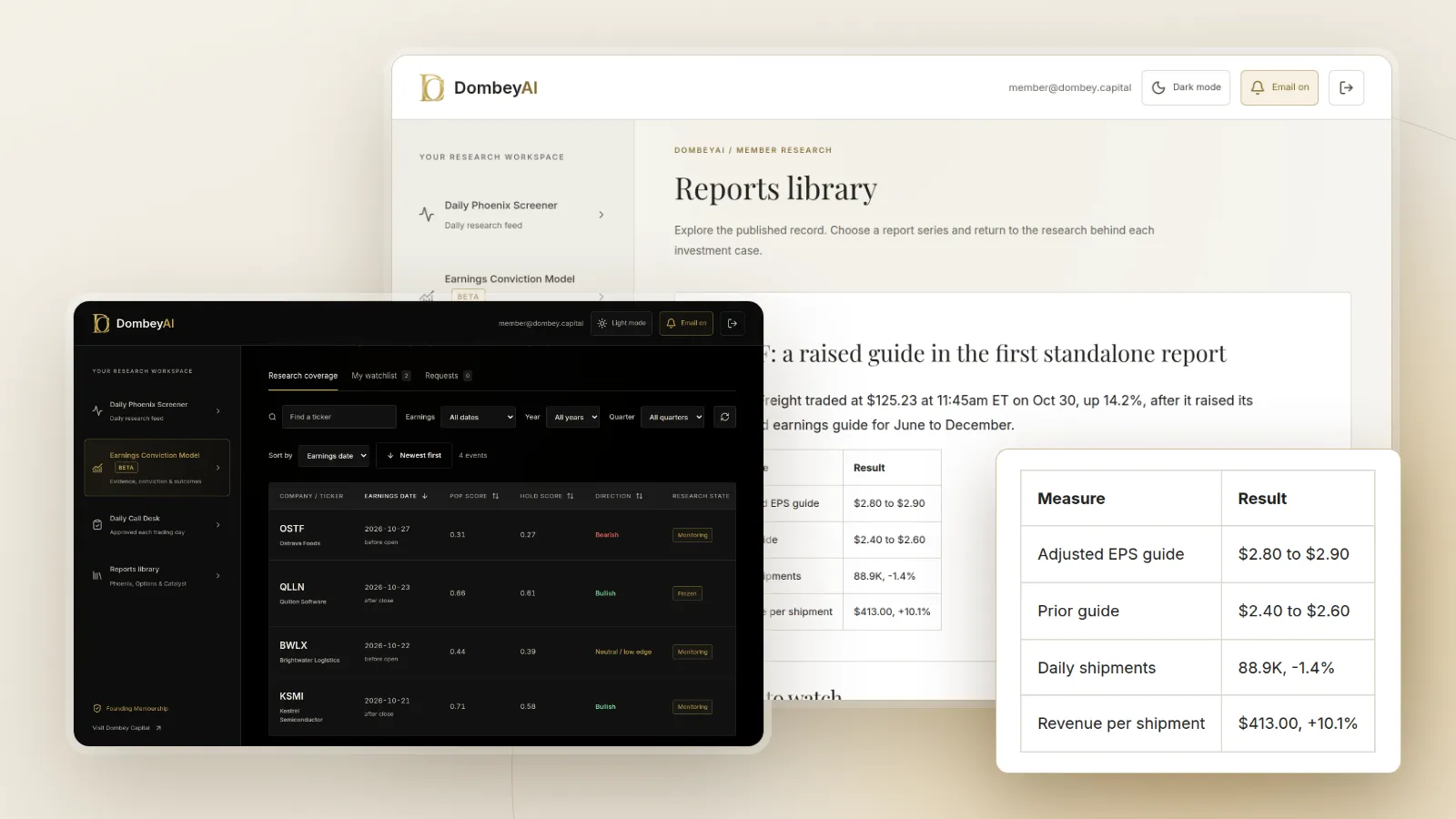
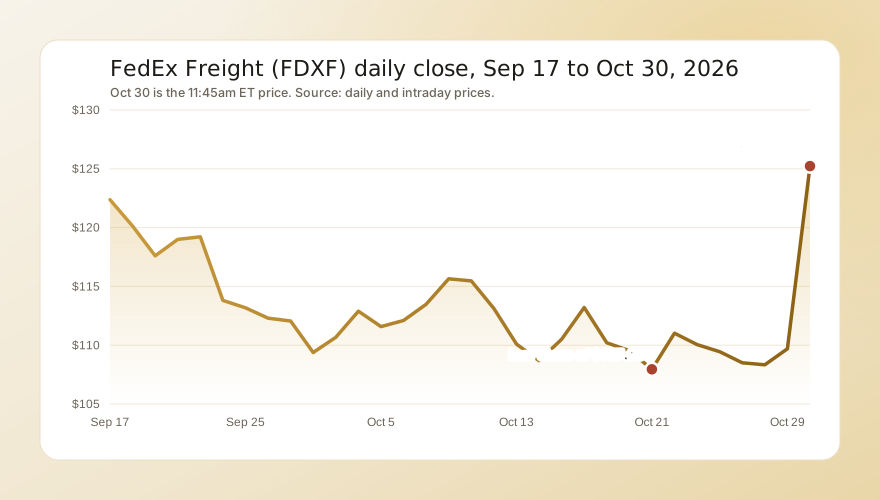
Oct 30, 2026: a gap up on the first standalone report
FedEx Freight reported after the close on Oct 29. Premarket trading began at $110.78 at 4:50am and reached $115.90 by 7:20am. The stock opened at $115.20 and climbed to $125.94 by 9:40am, up 14.8%. It was $125.23 at 11:45am, on 1.1 million shares.
What happened:
- A beat on the quarter. Adjusted earnings of $1.49 a share topped about $1.35 expected, and revenue of $2.44 billion topped about $2.38 billion, Reuters reported.
- Four-month results. Revenue rose 9.2% to $3.3 billion and adjusted operating income rose 16.4% to $510 million. Adjusted earnings were $2.15 a share.
- A higher outlook. For June through December, revenue is now $5.58 billion to $5.65 billion and adjusted operating income $695 million to $715 million, up from $605 million to $645 million. The CFO cited "fuel tailwinds and slightly higher volume assumptions."
- A first fourth-quarter guide. Revenue of $2.30 billion to $2.37 billion, against $2.07 billion a year earlier, and adjusted operating income of $185 million to $205 million, against $162 million.
- Debt paid early. The company repaid $100 million of debt ahead of schedule and had $388 million of cash and $1.6 billion of liquidity.
From the Oct 29 close, at about 11:45am:
| Stock or fund | Change |
|---|---|
| FedEx Freight (FDXF) | +14.2% |
| FedEx (FDX) | +2.6% |
| XPO (XPO) | +0.4% |
| Saia (SAIA) | +0.1% |
| Old Dominion (ODFL) | -0.4% |
| Transportation fund (IYT) | -0.5% |
| ArcBest (ARCB) | -1.5% |
Other truckload and freight carriers barely moved, so the gain came from FedEx Freight's own numbers, not a better read on freight demand. FedEx, its former parent, rose 2.6%. More of the day's swings are in today's biggest stock moves.
After the jump, RSI(14) stood at 67, the shares sat 5% above their 50-day average and 9% below their 200-day average, and the stock was 37% below its $200 52-week high. These are context, not signals.
What the numbers say
Pricing carried the period. Average daily shipments fell 1.4% to 88.9 thousand and tonnage was flat, but revenue per shipment rose 10.1% to $413.00 on fuel surcharges and heavier shipments. Excluding fuel, revenue per shipment rose 1.6%.
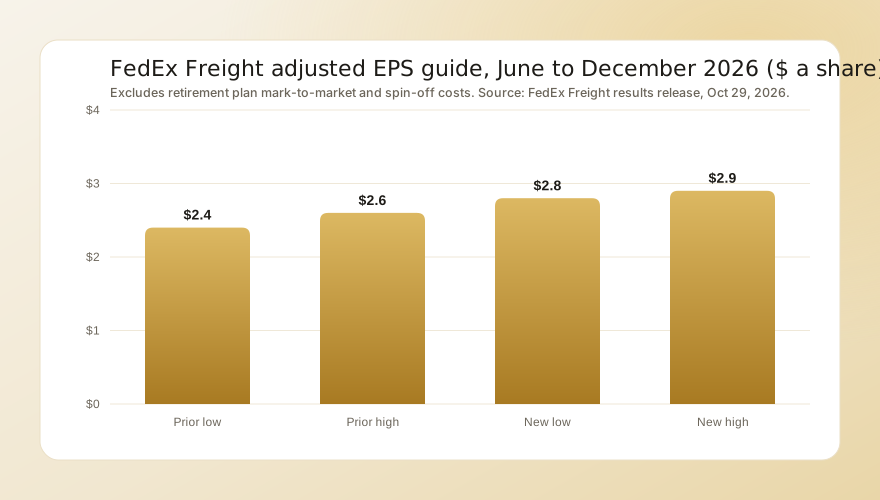
The new guide is the bigger story. Adjusted operating income for the seven months rose by $70 million to $90 million at the ends of the range, more than the September quarter's beat. Our guide to guidance changes explains why the market weighs a raised outlook above a single quarter.
The fourth-quarter earnings guide looks weak next to last year's $1.27, but that figure was earned inside FedEx, before the new company carried its own debt and interest expense of about $55 million a quarter. Adjusted operating income is guided up from a year earlier. At $125.23 the market value is about $18.7 billion. Our primer on spin-off investing covers how these new companies tend to trade.
The bull case
- A raised guide. Adjusted earnings for June through December went up by about 14% at the midpoint.
- Capital return ahead. A 2027 dividend and buyback plan is due. Our guide to buybacks as catalysts covers when they move stocks.
- Debt coming down. $100 million was repaid early from operating cash.
- Room to the targets. The $156.22 consensus target, in a range of $115 to $200, sits about 25% above the price.
The risks
- Soft volumes. Daily shipments fell 1.4%, and the release cited "softer volumes."
- Fuel does the work. Revenue per hundredweight excluding fuel rose only 0.3%.
- Standalone costs. Spin-off service fees and new technology spending weigh on margins.
- A weak-looking fourth quarter. Adjusted earnings of $0.65 to $0.75 a share may disappoint readers who compare it with last year's $1.27. Our piece on estimate revisions covers how analysts reset after a first report.
What comes next
The 2027 dividend and buyback plan is the next dated event the company has pointed to, before Dec 31. Monthly shipment updates and the first full calendar-year report in early 2027 will show whether volumes start to grow.