

A short definition
Section 16 has three parts. Section 16(a) requires insiders to report their holdings and trades, now on Form 3, Form 4 and Form 5. Section 16(c) bars insiders from short selling the company's stock. Section 16(b) is the profit recovery rule.
Under 16(b), if a covered insider makes a purchase and a sale of the company's equity securities, or a sale and a purchase, within a period of less than six months, the company can recover the profit. No one has to show the insider used inside information. The rule was written to remove the temptation, so it works on timing alone.
Real cases that set the rules
Most of what investors need to know comes from a handful of court decisions. They are real and still cited.
| Case | Year | What it decided |
|---|---|---|
| Smolowe v. Delendo Corp. | 1943 | Profit is calculated by matching the lowest purchase price against the highest sale price within six months, not by actual lots |
| Reliance Electric Co. v. Emerson Electric Co. | 1972 | A 10% holder that first sold down to just under 10%, then sold the rest, was not liable on the second sale |
| Kern County Land Co. v. Occidental Petroleum Corp. | 1973 | Some unorthodox transactions, such as an involuntary exchange in a merger, are not a sale if there was no possibility of abuse of inside information |
| Foremost-McKesson, Inc. v. Provident Securities Co. | 1976 | The purchase that first makes a buyer a 10% holder is not matchable; the person must be a 10% holder before the purchase |
| Credit Suisse Securities (USA) LLC v. Simmonds | 2012 | The two-year time limit is not automatically paused until the insider files the Section 16(a) report |
Who it covers
The rule applies to three groups at companies with a class of equity registered under Section 12 of the Exchange Act, which includes every company listed on a US exchange:
- Directors, including those deputized by a fund or company that has board representation.
- Officers, defined in Rule 16a-1(f) by function, such as the chief executive, chief financial officer, principal accounting officer and anyone in charge of a principal business unit.
- Beneficial owners of more than 10% of a registered class of equity. Group members count together, which matters for activists and funds acting in concert. Our explainer on the 13D filing covers how groups are formed.
Holdings of family members in the same household and of entities the insider controls can be attributed to the insider, so a trade by a spouse or a fund the insider runs can be matched too.
How the profit is calculated
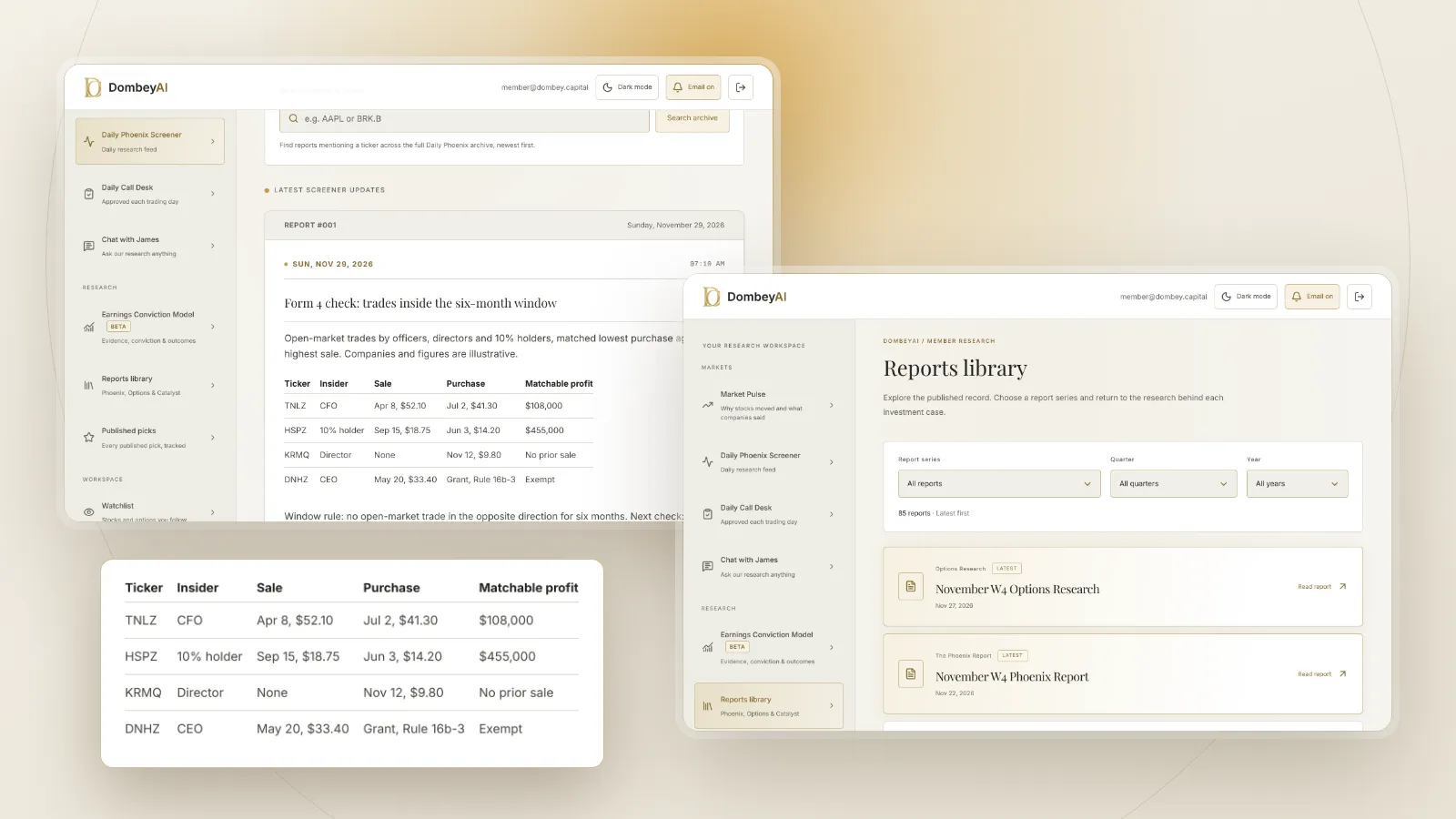
Courts use the method from Smolowe: take every purchase and every sale within any six-month window, match the lowest purchase price with the highest sale price, then the next lowest with the next highest, and continue until the shares run out. Losses are ignored.
The lowest-in, highest-out method is why an insider who made sales and purchases at many prices can owe more than their real gain. It is also why compliance teams tell insiders to wait six months after any open-market trade before trading in the opposite direction.
What is exempt
Not every acquisition is a purchase under the rule. The main exemptions are:
| Transaction | Treatment | Rule |
|---|---|---|
| Board-approved grants of stock or options to officers and directors | Usually exempt | Rule 16b-3 |
| Exercise of a vested company stock option | Usually exempt as a conversion of a derivative | Rule 16b-6 |
| Shares withheld to pay tax on vesting | Usually exempt when approved under Rule 16b-3 | Rule 16b-3 |
| Open-market purchases and sales | Covered | Section 16(b) |
| Open-market trades in listed options on the stock | Covered, as derivative securities | Rule 16b-6 |
| Gifts | Generally not a purchase or sale for 16(b) | Rule 16b-5 |
A Rule 10b5-1 trading plan does not exempt a trade from Section 16(b). A plan sale can still match against a purchase within six months. Our explainer on the 10b5-1 plan covers how those plans work.
Why event-driven investors care
The rule changes behavior around the situations Dombey and other event-driven investors follow.
Insider purchases after a sale. An officer who sold in the last six months cannot make an open-market purchase without creating a matchable profit if the purchase price is below the sale price. A lack of insider buying after a sharp fall can reflect the rule, not a lack of conviction. When you read Form 4 data, check the prior six months. Our guide on how to track insider buying with Form 4 shows where to look.
Activists and 10% holders. A holder above 10% who makes a sale within six months of a purchase owes the profit. That pushes large holders to stay just under 10%, to wait out the window before reducing a stake, or to reduce in stages, as in Reliance Electric. It also matters when an activist who has bought heavily wants to exit after a deal is announced.
Mergers and spin-offs. A cash merger closing within six months of an insider's purchase can count as a sale. The SEC's rules and the Kern County decision give some room, but insiders and their counsel treat deal timing carefully. Spin-off distributions are usually not purchases.
Lawyers reading filings. Because any shareholder can bring a claim, a group of plaintiff firms reads every Form 4 for matchable trades. A disclosure that the company recovered short-swing profit, or a demand letter mentioned in a filing, often shows up in an 8-K or later filing.
Dombey's published research checks insider filings against the six-month window before reading anything into them; see the research archive.
Where this goes wrong
Reading the absence of insider buying as a signal. The rule, blackout periods and 10b5-1 plans can all keep insiders out of the market. Check the timing of prior trades before drawing a conclusion.
Assuming an insider profited. A Section 16(b) settlement means the trades matched within six months, not that the insider made money or knew anything.
Treating every 10% holder as covered. The person must be above 10% at both the purchase and the sale, and the purchase that crossed the line does not count.
Forgetting derivatives. Options, swaps and convertible securities can be matched against trades in the common stock. An insider who writes calls or holds a swap may have exposure that Form 4 reports in a separate table.
Ignoring attribution. Trades by family members or controlled entities can be matched with the insider's own trades.
The bottom line
Section 16(b) makes officers, directors and 10% holders return any profit from a purchase and a sale within less than six months, matched to produce the largest profit and with no need to show inside information. It is enforced by companies and by shareholders who sue on their behalf. For investors, it explains gaps in insider buying, the way large holders build and exit stakes, and why insiders time trades around deals. Read insider filings with the six-month window in mind, and follow dated events on the market page.