

Oct 16, 2026: the iPhone Duo sells out and Apple holds up
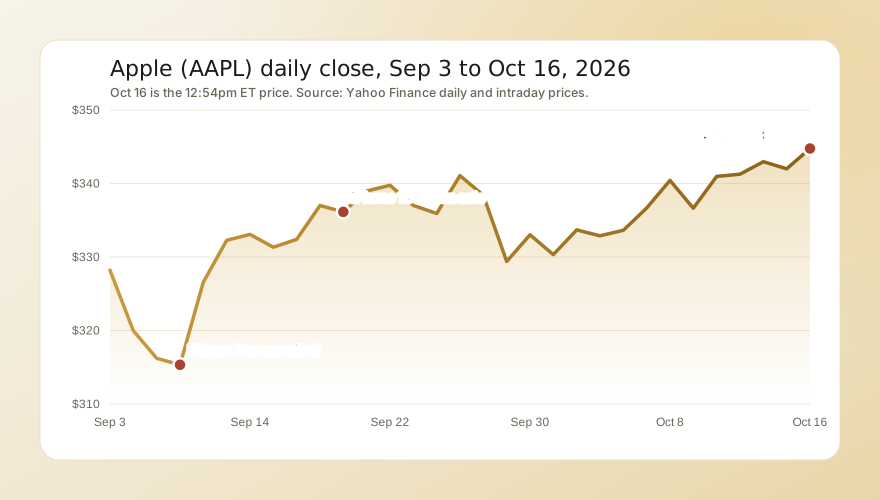
Apple closed at $342.00 on Oct 15. It traded near $341.64 when premarket trading opened at 4am and stayed within about a dollar of that until 7am. Apple opened pre-orders at 5am Pacific, 8am Eastern, and the stock climbed from $343.59 at 8am to a premarket high of $350.49 around 8:25am, above its $348.15 52-week high. 9to5Mac reported that delivery estimates began slipping within minutes and that all color and storage options were backordered by 8:30am. Investing.com put the stock up 1.6% before the open.
The regular session started near $346.33. The high of the day, $347.82, came in the first five minutes, and by about 9:40am the stock had dropped to $342.03, just above the prior close, as the Nasdaq sold off. It recovered to about $346.50 by 11:05am and held between $343 and $346 into the afternoon.
What helped it:
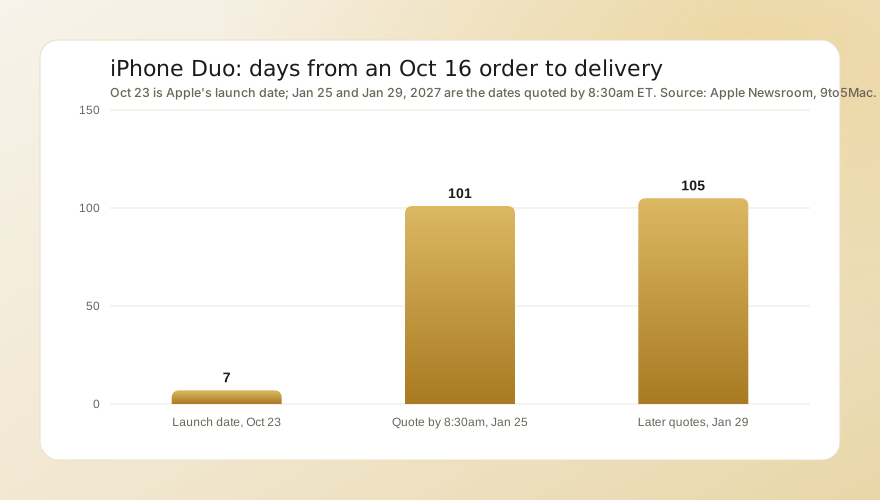
- The sellout. The Duo starts at $1,999, with storage up to 2TB. Apple set availability for Oct 23 in more than 70 countries and regions and Oct 30 in 28 more. Delivery estimates for new online orders moved from Oct 23 to late January within half an hour.
- Analyst support. JPMorgan kept its Overweight rating and raised its price target to $360, and Bank of America kept its Buy rating with a $370 target, per Investing.com.
- It was not the target of the day's selling. Yahoo Finance reported that tech led the decline on continued scrutiny of AI, with the iShares Semiconductor ETF headed for a ninth straight loss and 41 of 45 stocks in its software basket lower. Investors moved toward defensive sectors, and health care hit a record.
- No new filing. SEC EDGAR showed no 8-K from Apple this week, only insider Form 4 notices.
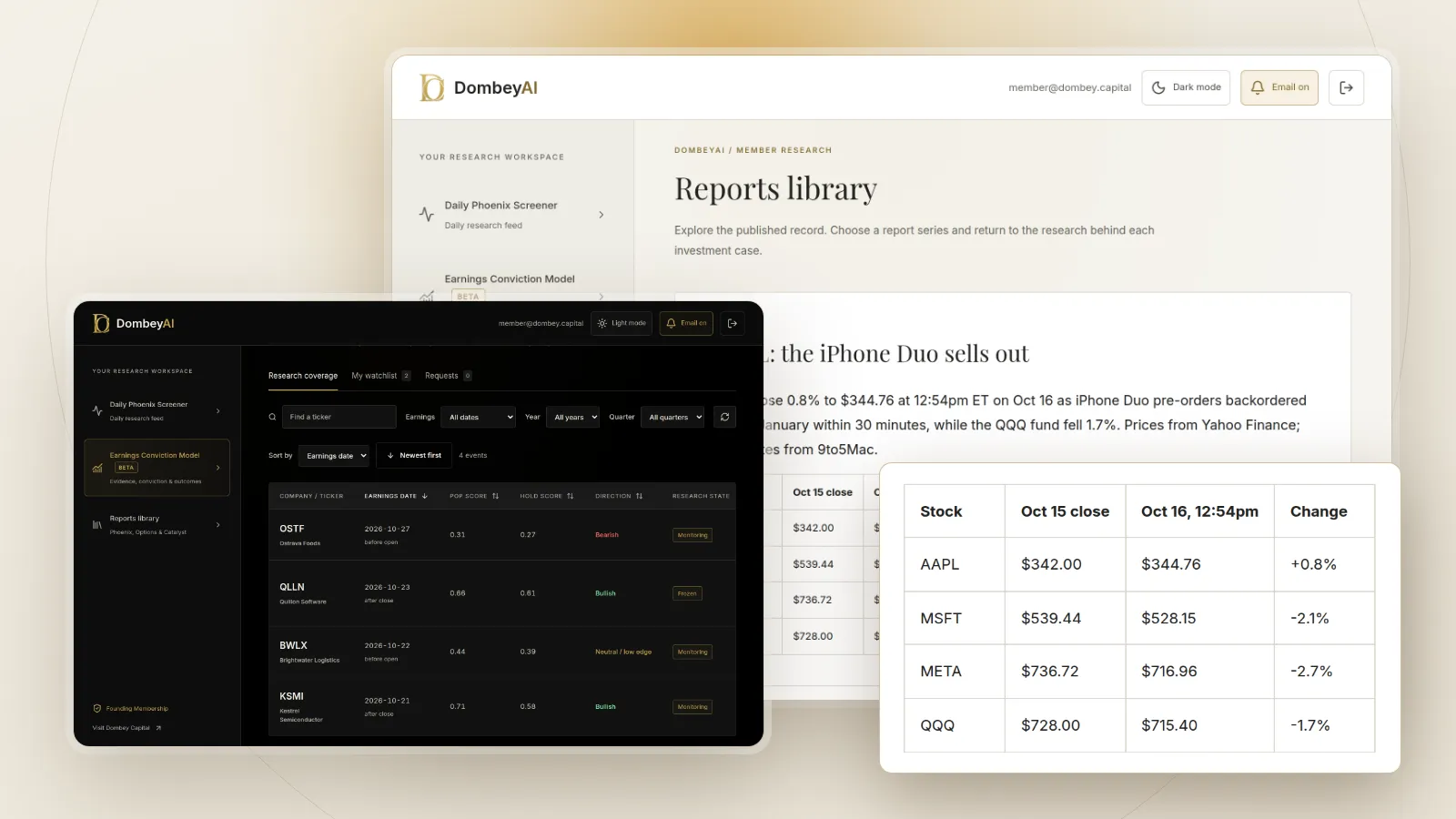
At 12:54pm against each stock's Oct 15 close:
| Stock or fund | Change |
|---|---|
| Apple (AAPL) | +0.8% |
| Nvidia (NVDA) | -0.4% |
| Amazon (AMZN) | -1.4% |
| Alphabet (GOOGL) | -2.0% |
| Tesla (TSLA) | -2.0% |
| Microsoft (MSFT) | -2.1% |
| Meta (META) | -2.7% |
| Invesco QQQ (Nasdaq 100) | -1.7% |
| Technology Select Sector SPDR (XLK) | -2.1% |
| SPDR S&P 500 (SPY) | -0.7% |
Apple beat the Nasdaq 100 by about 2.5 percentage points. The gap came from a company event on a day when the rest of big tech had none to offset the sector selling.
At midday, RSI(14) stood at 63, the shares sat 5.8% above their 50-day average and 17.9% above their 200-day average, volume of 30.2 million shares ran at 0.8 times its 20-day average with half the session left, and the stock was 1.0% below its 52-week high of $348.15. The light volume says the gain came from buyers holding on, not a rush into the stock.
The numbers behind the move
The Duo will not show up in the next report. Apple's fiscal fourth quarter ended September 26, 2026, and it includes only about nine days of iPhone 18 Pro and Pro Max sales, per MacDailyNews. In July, Apple guided that quarter to:
- Revenue growth of 9% to 11%, about $111.7 billion to $113.8 billion against $102.5 billion a year earlier.
- Gross margin of 47% to 48%.
- iPhone revenue growth in the mid-teens.
- Headwinds from currency, supply limits on iPhone, Mac and iPad, and higher memory prices.
The June quarter, per Apple's 8-K, set a high bar:
| Line | June 2025 quarter | June 2026 quarter | Change |
|---|---|---|---|
| Total revenue | $94.04B | $109.42B | +16.4% |
| iPhone | $44.58B | $54.25B | +21.7% |
| Services | $27.42B | $30.74B | +12.1% |
| Greater China | $15.37B | $18.82B | +22.4% |
| Diluted EPS | $1.57 | $2.02 | +28.7% |
Gross margin was 50.1%, but Apple said about 2 percentage points of that came from tariff refunds. The 47% to 48% guide strips that out, so a lower margin on Nov 2 is expected and not by itself a sign of trouble. Our explainer on how guidance changes move stocks covers why the outlook often matters more than the quarter.
The bull case: demand is showing up in more than one place
- The Duo. A $1,999 phone that backorders to January within 30 minutes points to demand well ahead of supply. 9to5Mac noted a Nikkei Asia report from September that Apple was building "just a few hundred" units per day, which would explain part of the gap.
- China. Counterpoint Research said iPhone 18 Pro sales in China rose 12% from a year earlier in their first three days, and Apple took 33% of China's smartphone market in the week of September 14 to 20, the top spot. Counterpoint's Ivan Lam said the later launch of the base iPhone 18 may have pushed buyers to the Pro models.
- Analysts. JPMorgan's $360 target and Bank of America's $370 target both sit above the current price.
- The June quarter. iPhone revenue grew 21.7% and Greater China 22.4%, both faster than the company overall.
The risks
- Valuation. The forward P/E was 35.9, a price-to-sales ratio of 10.8 and a market value of $5.03 trillion. The average analyst target of $337.18 is about 2% below the price. For how to read a multiple like that, see forward vs trailing P/E.
- Supply caps the Duo. If Apple can build only a few hundred a day, a sellout says more about scarcity than about the revenue the Duo can add in the December quarter.
- China's market is shrinking. Counterpoint said weekly smartphone sales in China have fallen by double digits from a year earlier since July. Apple's share gain came in a smaller market.
- Margins. Memory prices are rising, and the tariff-refund boost to the June quarter will not repeat.
What comes next
- Oct 23: Duo availability. In-store supply and any change to January ship dates will show whether Apple is adding units.
- Nov 2: fiscal fourth-quarter results. Results come after the close, with the call at 5pm ET, the first led by CEO John Ternus. Watch revenue against the $111.7 billion to $113.8 billion range, gross margin against 47% to 48%, Greater China, and the December-quarter outlook. Our guide to preparing for an earnings report explains what tends to move a stock on the day.
- Oct 30: the second wave of Duo countries. Another 28 countries and regions get the phone, a further test of supply.
- The tech selloff. If chip and software stocks keep falling, Apple's role as a consumer name with its own catalyst may keep it ahead, but a broad market drop rarely spares the largest stock in the index for long. See hard vs soft catalysts for why a dated report counts for more than a sellout headline.