

Where the term comes from
"Scuttlebutt" is old naval slang for gossip, named after the cask of drinking water where sailors traded news. Fisher borrowed it for his research method. His argument was simple: a company's own reports tell you what it wants you to know, while the people who buy from it, sell to it and compete with it see how it actually behaves.
Fisher asked these people about the things he thought mattered for long-term growth: whether the company's products were better than rivals', how strong its sales organization was, whether its research produced commercial results, how it treated staff, and whether management was candid. He combined the answers with the financial statements to form a view.
The method fits a primary-source approach: instead of reading what analysts concluded, you collect the evidence they would have used.
What scuttlebutt can tell you
Scuttlebutt is strongest on questions the financial statements answer late or not at all:
- Product position. Do customers choose the product on merit or on price? Would they switch if a rival cut its price?
- Sales and distribution strength. Do distributors want to carry the product? Do they get paid on time?
- Management behavior. Do suppliers and customers describe management as straight dealing? Do former employees describe a culture that matches the annual report?
- Competitive threats. What do competitors say about the company when asked who they fear?
- Early signs of change. Are customers delaying orders, asking for discounts or testing alternatives?
It is weaker on questions with a precise answer in the filings, such as debt terms, share count or segment margins. For those, read the 10-K and 10-Q.
The sources, then and now
| Source | What it can show | What to watch for |
|---|---|---|
| Customers | Satisfaction, switching costs, price sensitivity | Small and self-selected samples |
| Suppliers | Order trends, payment habits, bargaining power | Suppliers may not know end demand |
| Competitors | Who wins deals and why | Self-interest in their account |
| Former employees | Culture, execution, internal priorities | Grievances, outdated knowledge, confidentiality duties |
| Distributors and resellers | Sell-through, inventory levels, discounting | Short-term focus |
| Job postings | Where the company is hiring or cutting | Postings are not hires |
| Product reviews and forums | Quality complaints, feature gaps | Noise and fake reviews |
| Trade press and conferences | Industry sentiment, product launches | Promotional framing |
| Customer and supplier filings | Concentration, contract changes, disputes | Lag and limited detail |
| Court and regulatory records | Disputes, recalls, warning letters | Context needed to judge severity |
Several of these sources are now public and searchable. A customer's 10-K may name the company as a key supplier or disclose a dispute with it. SEC EDGAR full-text search finds those mentions across filings. Court dockets show contract disputes and employment cases. Earnings call transcripts from competitors often describe market share shifts in plain terms; how to analyze an earnings call transcript covers what to listen for.
The legal boundary
Scuttlebutt is about opinions and public facts, not secrets. Insider trading law covers trading on material nonpublic information in breach of a duty of trust or confidence, and it extends to people who receive a tip from someone who breached that duty. Regulation FD separately bars public companies from disclosing material nonpublic information selectively to investors.
In practice:
- A store manager saying the product sells well is an opinion from public experience.
- A former salesperson describing how the company sold in 2023 is general background.
- A current employee telling you this quarter's unreleased revenue, a pending contract or an unannounced deal is material nonpublic information. Trading on it can be insider trading, for you and for them.
How to do scuttlebutt research today
- Write the claim you want to test. "Customers stay because switching is painful" or "The new product is winning share from the market leader." A specific claim keeps the work focused.
- List who would know. For a switching-cost claim, customers and competitors' salespeople. For a share claim, distributors and competitors.
- Start with public sources. Reviews, job postings, trade press, conference talks, customer and supplier filings, and court records cost nothing and carry no legal risk.
- Then talk to people where practical. Ask open questions about their own experience. Avoid leading questions that invite them to agree with you.
- Log every source. Note who it was, what their relationship to the company is, what they said and any reason they might be biased.
- Weigh the evidence against the numbers. If customers say demand is weakening, look for it in receivables, inventory and deferred revenue in the next 10-Q.
- Update the thesis in writing. Record whether the claim held. A dated investment thesis makes this step concrete.
A worked example
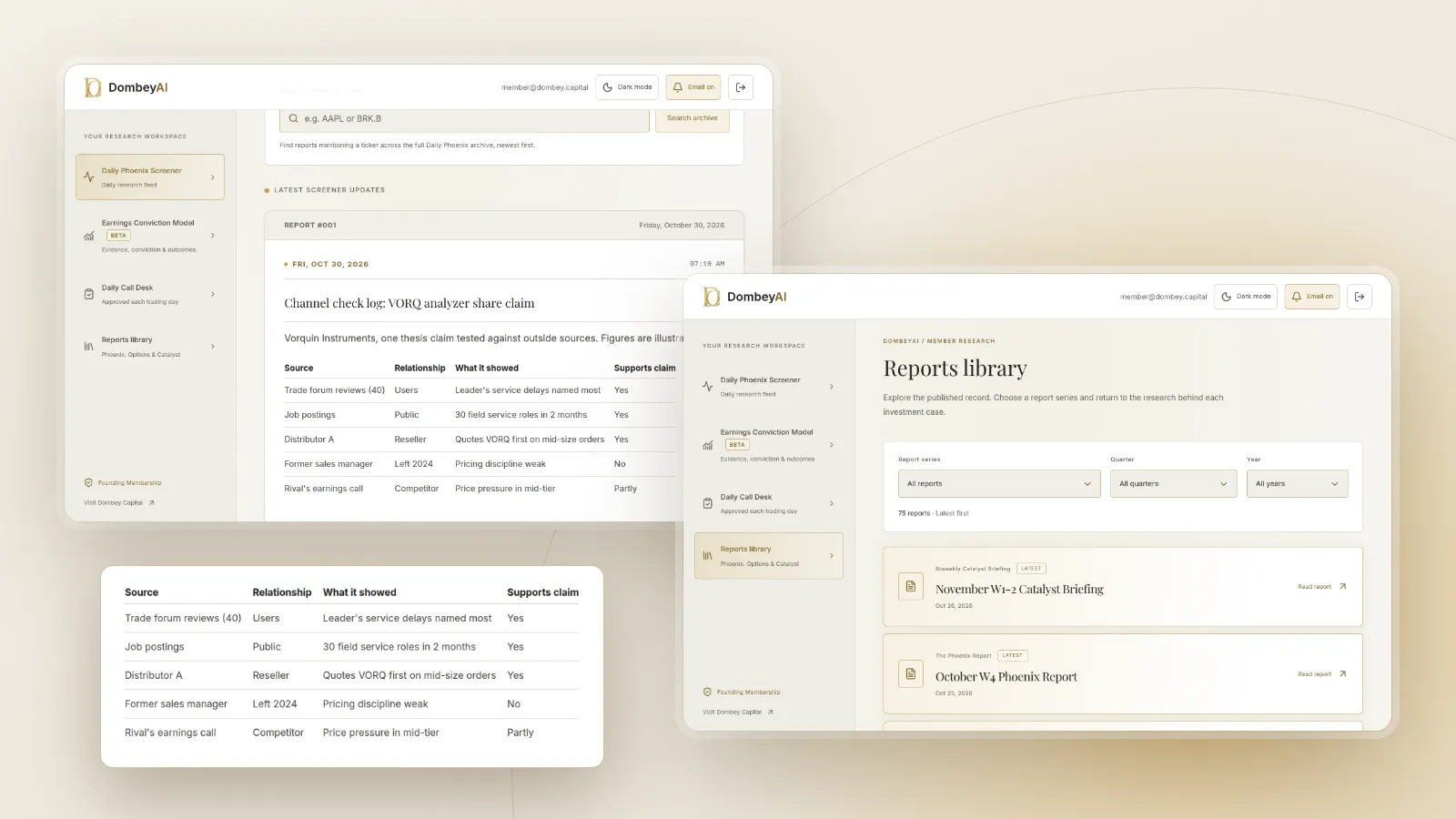
The example shows the method at its best: several unrelated sources, each weak alone, lining up behind one claim that the filings can later confirm or refute.
Where this goes wrong
Small, biased samples. The people you can reach are rarely a random sample. Enthusiastic users post reviews, unhappy former employees answer messages, and competitors talk down rivals. Three conversations are anecdotes, not data.
Confirmation bias. It is easy to remember the source that agreed with you. Confirmation bias is the main risk in any qualitative research; logging every source, including the ones that disagreed, is the remedy.
Stale knowledge. A former employee who left two years ago describes a company that may no longer exist.
Legal risk. The line between background and material nonpublic information can be crossed in a single sentence. Know where it is before you start.
Time cost. Good scuttlebutt takes hours per claim. It pays off for a concentrated position, less so for a small one.
Common mistakes
- Starting without a question. Open-ended conversations produce stories, not evidence.
- Counting the same source twice. Two forum posts by the same reviewer, or two people from the same branch, are one source.
- Treating opinion as fact. "Everyone is switching" is a claim to test, not a finding.
- Skipping the filings. Scuttlebutt points to what to check in the numbers; it does not replace them.
Dombey's published research checks qualitative claims against filings and records before each catalyst; see the research archive. For the data tools that support this work, see the 12 best stock research tools for individual investors.
The bottom line
Scuttlebutt research is Philip Fisher's method of judging a company through the people around it: customers, suppliers, competitors, distributors and former employees. Today it also draws on public evidence such as job postings, reviews, trade press, court records and other companies' filings. It works best as a test of a specific claim, logged carefully and checked against the financial statements. Stay on the right side of the line on material nonpublic information, and treat every anecdote as a lead rather than a conclusion.