

Oct 16, 2026: Jakarta halts trading, and the ADR gaps lower
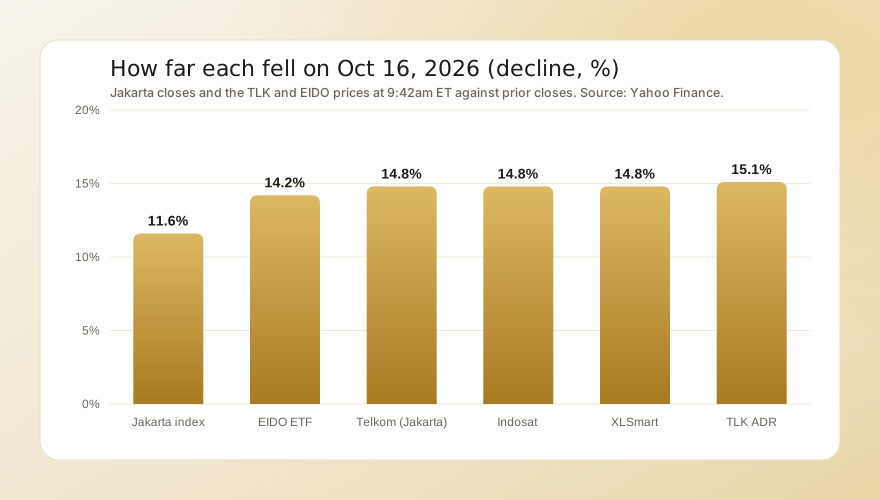
The selling began in Jakarta, about 11 hours ahead of New York. The Composite Index fell 469.86 points, or 8.01%, to 5,393.92 in the morning, which triggered a trading halt, ANTARA reported. Trading resumed and the slide continued. The index closed down 11.6% at 5,185, by Yahoo Finance data. Investing.com noted the index had already lost more than 30% this year, the worst record of any major index.
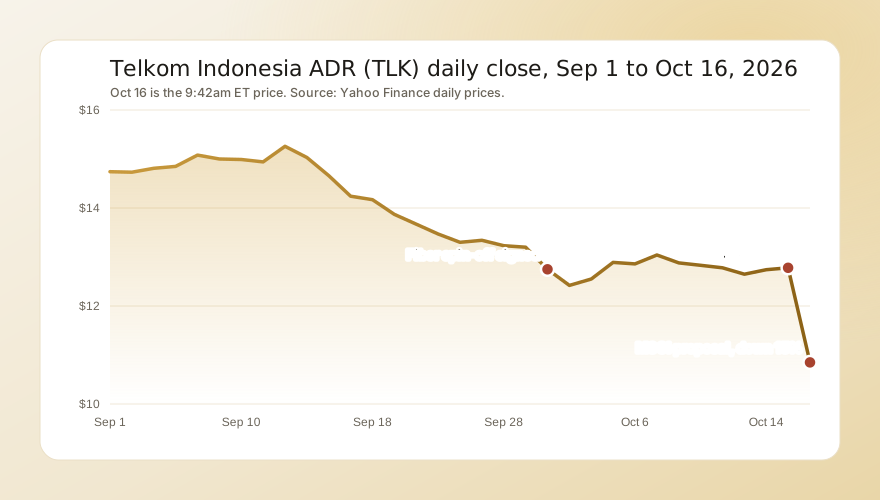
The ADR followed. Its first premarket trade was $11.99 at 4am ET, already 6.2% below Thursday's close. By 9:25am it was at $10.85. It opened at $10.85, down 15.1%, touched a low of $10.61 in the first five minutes and steadied near $10.85. About 1.35 million ADRs had traded by 9:42am ET, more than its 20-day average for a full day.
Telkom's own shares and its rivals fell by almost exactly the same amount in Jakarta, which shows this was a market move:
The rupiah moved far less. It was quoted near 17,943 to the dollar, compared with 17,824 on Oct 15, per Yahoo Finance. The drop came from the stocks themselves, not the currency.
After the drop, RSI stood at 17, the ADR sat 23% below its 50-day average and 36% below its 200-day average, and it was 54% below its 52-week high of $23.52, based on Yahoo Finance daily prices.
What MSCI proposed
MSCI opened a consultation on reclassifying Indonesia from Emerging Market to Standalone Market. It is taking feedback until April 30, 2027 and will announce a decision by June 30, 2027. It said it will proceed unless it sees clear evidence of substantial improvement in the governance and functioning of Indonesia's market, per ANTARA.
This did not come from nowhere. MSCI froze some changes to Indonesian indexes in January 2026. In June it kept Indonesia in Emerging Markets but warned that without visible progress by its November 2026 review, it could consult on a downgrade, Fortune reported. Indonesia's regulator, OJK, and the exchange had announced reforms, including more disclosure of share ownership and a roadmap to raise the minimum free float to 15%. Investing.com reported that MSCI said it had not yet seen consistent evidence these had improved how the market works.
The government pushed back. Deputy Coordinating Minister for Economic Affairs Drajad Hari Wibowo told investors not to panic and to "do your own calculations." He said "MSCI is not always right" and that the government "will continue its capital market reforms, regardless of MSCI's decision."
Why it matters: funds that track MSCI's Emerging Markets index would not need to own Standalone markets. Our guide to index deletions and forced selling explains how this kind of selling can push prices below what the business is worth, and why the timing of the actual index change matters more than the headline.
The numbers: Telkom's business before the drop
| Measure | H1 2026 | H1 2025 | Change |
|---|---|---|---|
| Revenue | Rp75,878 billion | Rp73,004 billion | +3.9% |
| Operating profit | Rp20,133 billion | Rp19,281 billion | +4.4% |
| Profit for owners | Rp10,623 billion | Rp10,473 billion | +1.4% |
| Earnings per ADS | Rp10,750 | Rp10,572 | +1.7% |
Source: Telkom's unaudited June 30, 2026 financial statements filed on Form 6-K.
Cash and cash equivalents rose to Rp54,579 billion at June 30, 2026, from Rp34,228 billion at the end of 2025. Against that, Telkom carried Rp8,816 billion of short-term bank loans and Rp20,477 billion of long-term loans due within a year.
Telkom is also reorganizing. On Sep 30 it signed the deed to spin off its wholesale fiber connectivity business into PT Telkom Infrastruktur Indonesia, per a 6-K filed Oct 1. The ADR fell 3.4% that day to $12.75 and then traded between $12.42 and $13.04 until Oct 16.
The case for the stock
- The business did not change. Telkom's revenue and profit grew in the first half, and the drop came from a decision about the whole Indonesian market.
- The price is low against earnings. FinViz lists a forward P/E of 8.8 and a price to sales ratio of 1.2. Our explainer on forward and trailing P/E covers why a forward multiple needs a discount for risk, and country risk is now part of that discount.
- The decision is far off. MSCI's deadline is June 30, 2027. Indonesia has more than eight months to show the reforms are working, and the government says it will keep going either way.
- Selling was indiscriminate. Telkom, Indosat and XLSmart all fell 14.8% in Jakarta regardless of their own results, which is the pattern our guide to special situations describes as a possible mispricing.
The risks
- Foreign funds can leave early. Active managers often sell before an index change takes effect. That selling could keep pressure on Jakarta stocks for months.
- A long downtrend. The ADR was already down about 46% from its 52-week high before Oct 16, so the MSCI news landed on a stock that had been falling.
- Thin growth. Profit for owners rose only 1.4% in the first half. A weak third quarter would remove the main argument that the business is holding up.
- The rupiah. ADR holders earn returns in dollars. A sharp fall in the rupiah would cut the ADR's value even if the Jakarta price recovers.
- State influence. Telkom is a subsidiary of the state investment manager Danantara, and the government holds a veto share, per its financial statements, so government decisions on dividends, spending or restructuring can matter as much as its operating results.
What comes next
- Third-quarter results, expected Oct 29. The first test of whether profit growth is holding up. Our guide to preparing for an earnings report covers what to watch.
- MSCI's November 2026 index review. It will show whether MSCI keeps freezing changes to Indonesian indexes.
- Reform dates from OJK and the exchange. Firm dates for ownership disclosure and the 15% free-float rule are what MSCI asked for.
- The rupiah. It moved little on Oct 16. A sharp move would change the ADR's value directly.