

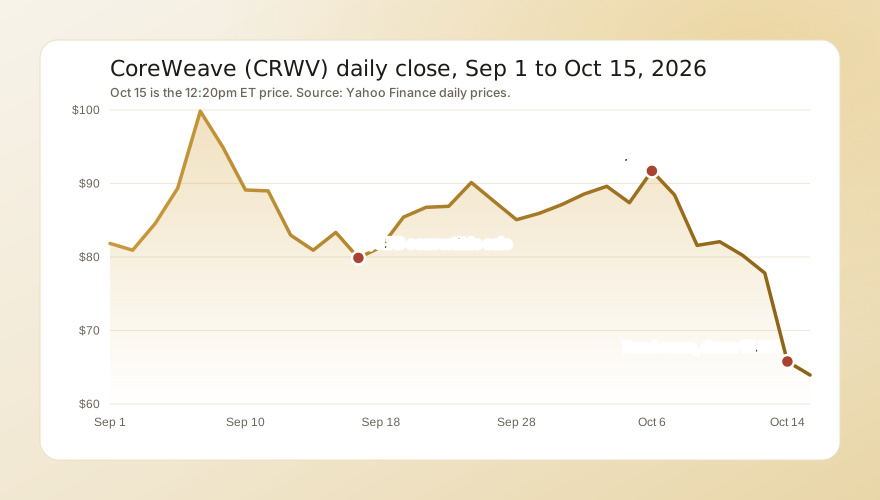
Oct 15, 2026: a lower low, then a partial recovery
The stock opened lower after falling about 6% before the open, hit $59.51 in the first hour, and climbed back to about $63.90 by midday. That is a 7% recovery from the low, though the stock was still below Wednesday's close.
What pushed it down:
- Bonds kept falling. Reuters reported that the yield on CoreWeave's April-issued notes due 2031 rose past 16%.
- Default insurance hit a record. The cost of insuring CoreWeave's debt against default rose to about 1,000 basis points. Reuters said that implies a nearly 63% chance of default within five years, up from about 30% a year ago.
- A new Gartner warning. Gartner said about 80% of neocloud providers could shut down by 2030 and that more than $3.5 trillion of AI infrastructure spending could face impairment at the current pace. Its analyst Will Sommer said AI revenue will not be enough to support profitable returns on all planned AI capital spending.
- The whole group sold off. Rivals Nebius, Applied Digital and Iren fell 3.2% to 5%, and the Philadelphia Semiconductor Index had lost 11.6% over six sessions.
What helped the recovery:
- BofA defended the stock. Analyst Tal Liani kept a $140 price target, arguing that CoreWeave mostly leases data center capacity, signs customer contracts that match its leases, and often receives 50% prepayments. He raised his revenue growth forecasts for 2027 and 2028.
- Management pushed back. CEO Mike Intrator's memo to staff, reported on Oct 14, said the backlog "more than supports all of our debt obligations" and that markets can "misunderstand and act irrationally." Co-founder Brannin McBee told the Financial Times the company is seeking an investment-grade rating.
None of that was new company information, and the bonds did not recover with the stock, which is the main risk to the bounce. What changed was the price: at $59.51 the stock had fallen 35% in seven sessions, and buyers treated that as enough.
Oct 14, 2026: the bond chart that started the slide
CoreWeave fell 15.5% to $65.78 on 108 million shares, about four times its usual volume. The trigger was a chart of one of its dollar bonds yielding about 15%, shared by investor Chamath Palihapitiya on X, to which Elon Musk replied "yikes." AI infrastructure names including Oracle and Dell fell with it. D.A. Davidson analyst Gil Luria said that if the AI investment cycle turns, "the equity value is going to be zero."
The debt, in numbers
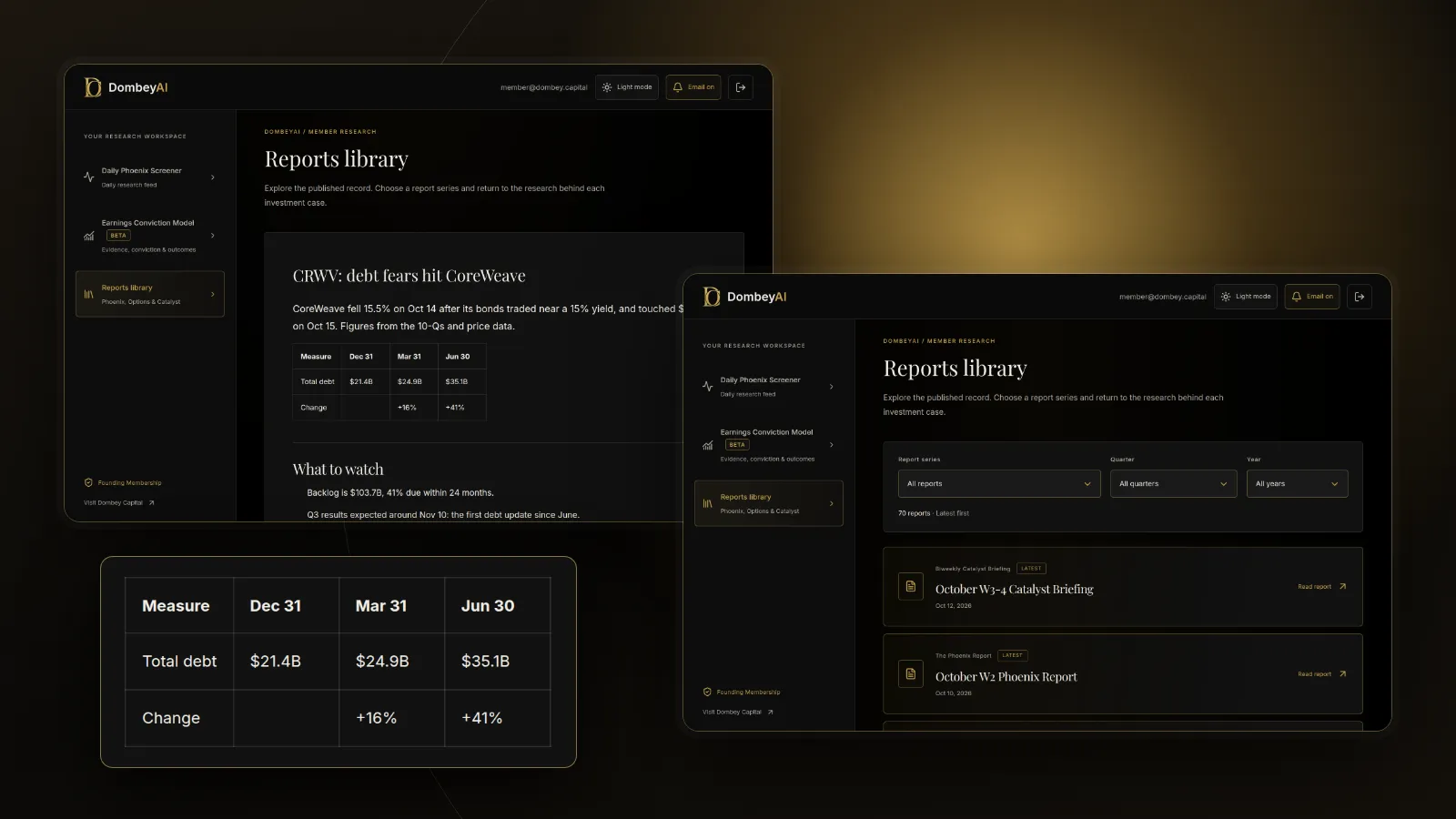
The 10-Q filings show how fast the borrowing has grown.
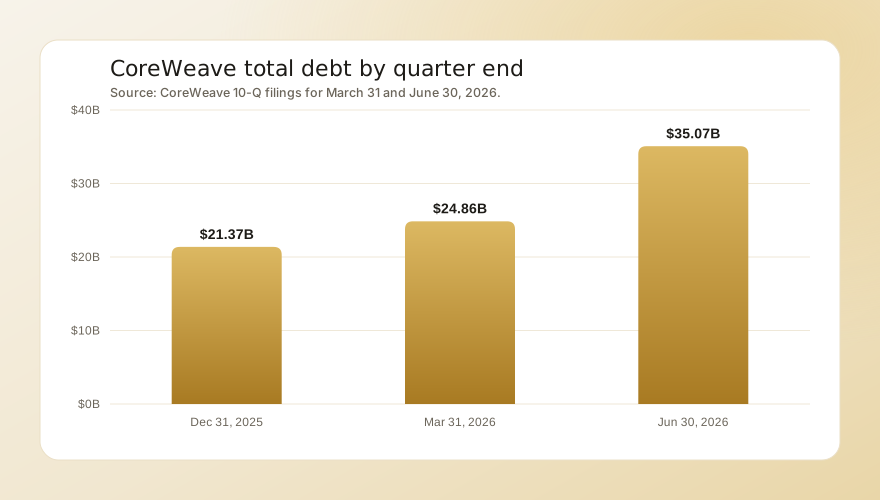
Debt rose 16% in the first quarter and 41% in the second. Reuters puts the total near $50 billion today, a figure that appears to include borrowing since June and other obligations; we use the 10-Q figure because it is the last figure the company has filed. For how analysts judge a load like this, see what counts as a high debt-to-equity ratio.
This year's raises:
| When | Security | Amount | Coupon | Matures |
|---|---|---|---|---|
| April | Convertible notes | $3.5 billion | 1.75% | 2032 |
| April | Senior notes | $1.75 billion | 9.75% | 2031 |
| June | Senior notes | $1.25 billion | 9.625% | 2032 |
| June | Euro senior notes | €2 billion | 8.5% | 2032 |
| September | Convertible notes | $3.7 billion | 2.875% | 2033 |
The September convertibles turn into stock at $97.85 a share, about 55% above the current price, so they act like debt unless the stock recovers. The company also set up an at-the-market program in September that lets it sell up to 35 million new shares, the kind of dilution that weighs on a stock when it needs cash.
The case for the stock: the backlog
CoreWeave's contracted backlog, its remaining performance obligations, was $103.7 billion at June 30, and 41% of it, about $42.5 billion, is due to be recognized within 24 months.
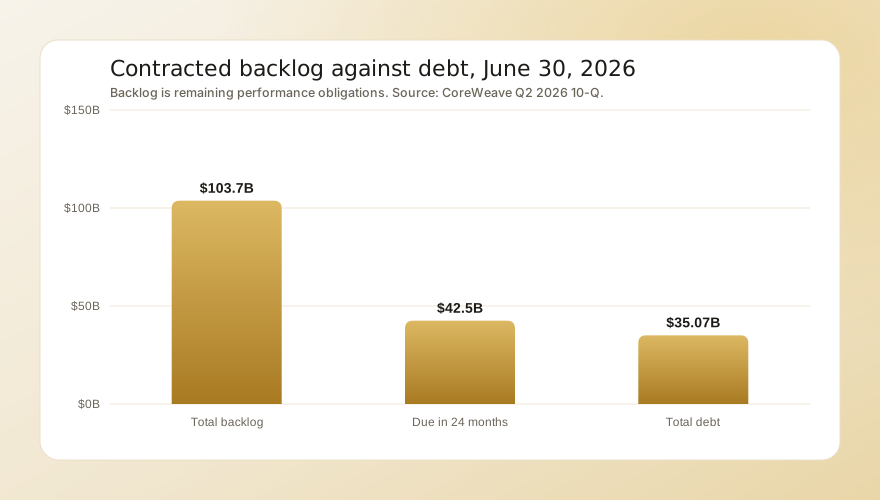
That is the number management points to. Gartner's April note called CoreWeave "the company to beat for neoclouds," and Gartner named it a Visionary in the 2026 Magic Quadrant for Cloud AI Infrastructure. BofA and Deutsche Bank both see the stock more than doubling from here.
The risks
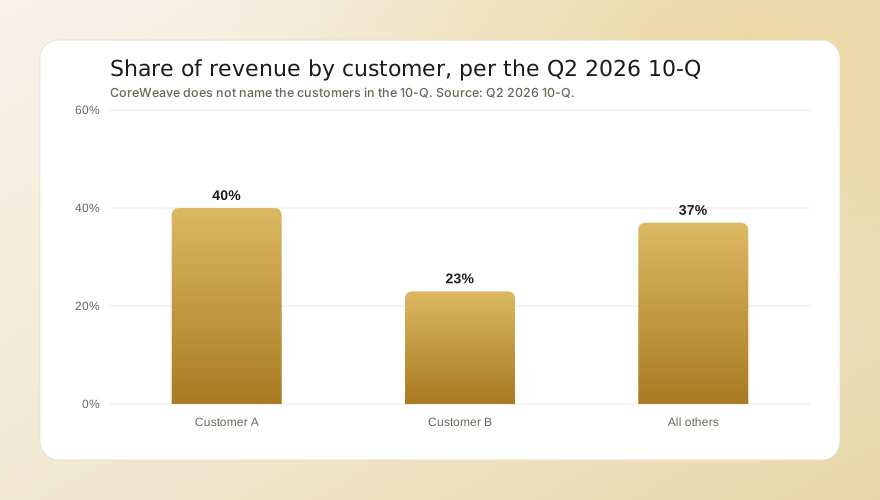
- Two customers. One customer accounted for 40% of revenue and another for 23%, per the second-quarter 10-Q. If either slows its spending, the backlog shrinks.
- Interest costs exceed the loss. Second-quarter revenue was $2.58 billion, the net loss was $626 million, and interest expense was $640 million. Without the interest bill, the quarter would have been roughly break-even.
- Spending keeps rising. The company raised its 2026 capital spending forecast by $4 billion in August, to $35 billion to $39 billion. Much of that has to be borrowed, and the cost of borrowing just went up. Our explainer on the debt maturity wall covers why refinancing costs matter more than headline debt.
- Analysts are split. Mizuho cut its target to $88 from $115, and Bernstein rates it Underperform.
What comes next
- The third-quarter report, expected around November 10. It will be the first debt figure since June. Watch total debt against revenue, interest expense, and any change to the capital spending range. Our guide to preparing for an earnings report explains what moves a stock on the day.
- The bond price. The 2031 notes are the cleanest daily signal. A move back toward par would say the credit scare is fading before the stock does.
- Any rating action or new financing. An upgrade, or a raise at a lower rate, would support the bull case. A raise above 10% would confirm the bear case.
- Share sales under the at-the-market program. These show up in the next 10-Q share count.
We update this page with a new dated section each time CoreWeave makes a large move, and the view above changes only with a stated reason.