

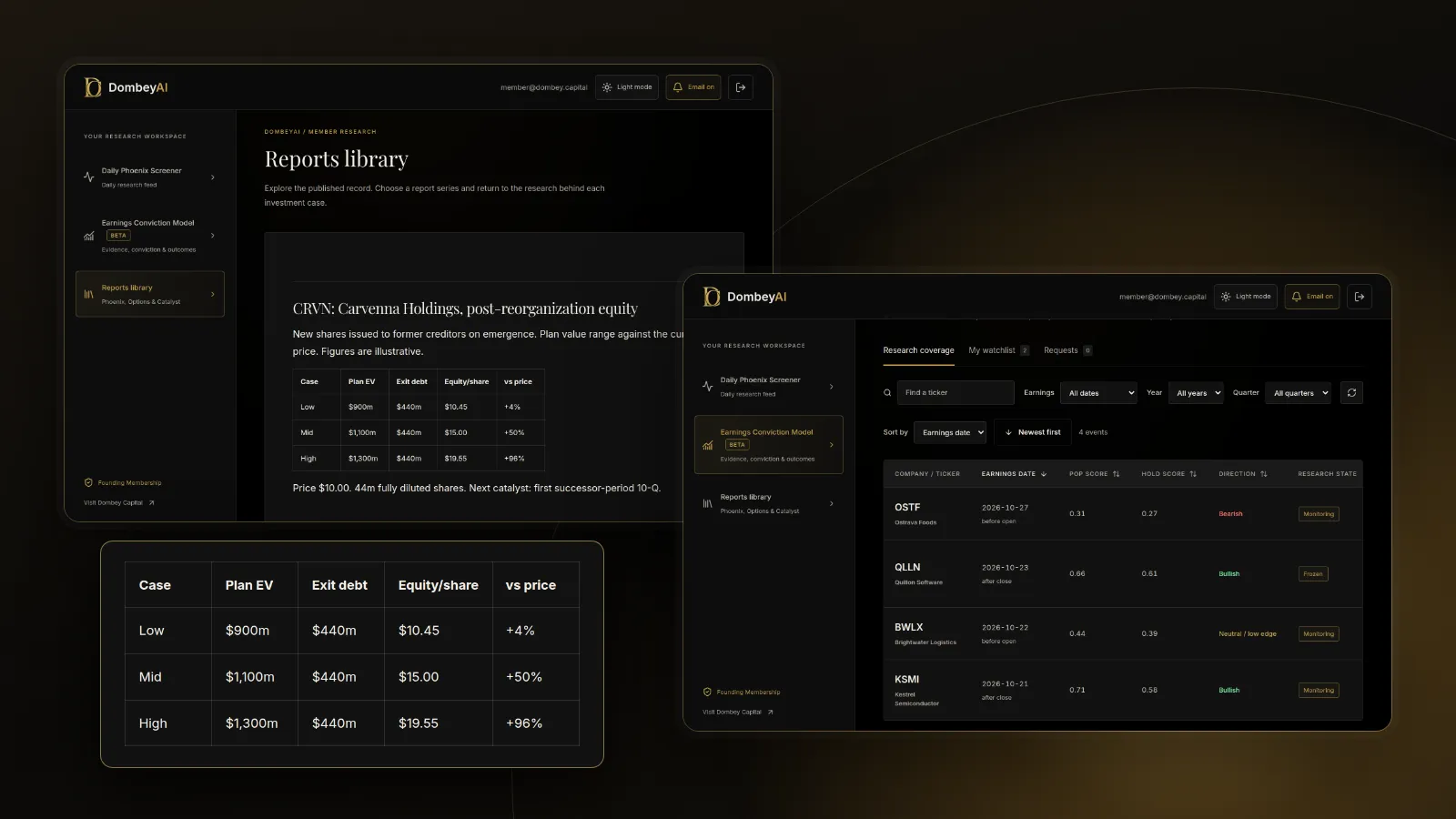
How new shares are created in Chapter 11
A company in Chapter 11 keeps operating while it negotiates a plan of reorganization with its creditors. The plan sorts claims and interests into classes and says what each class receives. In most cases where the business is worth less than its debts, the result looks like this:
- Secured lenders are paid in cash, receive new debt, or take most of the new equity.
- Unsecured creditors, such as bondholders and trade creditors, take a smaller share of the new equity, sometimes with warrants or a cash pool.
- Old shareholders have their stock cancelled and receive nothing or a token recovery, such as warrants that only pay off if the new company does well.
Creditors vote on the plan by class. Under Section 1126 of the Bankruptcy Code, a class of claims accepts when holders of at least two-thirds in amount and more than one-half in number of the allowed claims that vote say yes. A class of equity interests accepts with two-thirds in amount. Once the court confirms the plan and it takes effect, the reorganized company issues the new shares.
Section 1145 of the Bankruptcy Code exempts securities issued under a plan in exchange for claims from Securities Act registration, subject to conditions. In practice, many creditors can sell the new shares as soon as they receive them, which matters for what happens next.
Why the new shares often trade cheap
Several pressures push the price down in the first months after emergence. None of them has much to do with the value of the business.
- The holders are the wrong owners. Banks, loan funds and bond funds often have mandates that limit how much common stock they can hold. Some must sell; others simply prefer cash or fixed income.
- Lumpy, concentrated ownership. A handful of large former creditors may own most of the company. When one sells, it can swamp the daily volume.
- Thin coverage. Sell-side analysts dropped the company when it filed. Rebuilding coverage takes time.
- Screens miss it. The stock has no long price history, may trade over the counter at first, and is usually outside the major indexes. Many quantitative screens exclude it automatically.
- The numbers look broken. Fresh-start accounting resets the balance sheet and income statement. Ratios computed across the emergence date mix two different companies.
- Reputation. The name carries the memory of the bankruptcy. Many investors avoid it on principle.
Reading the disclosure statement
Before the vote, the company files a disclosure statement with the court. It is the single most useful document for valuing the new equity, because it usually contains:
- Financial projections for several years after emergence, prepared by management and its advisers.
- A valuation analysis giving a range for total enterprise value, often with a midpoint used to set creditor recoveries.
- The capital structure on exit: new term loans, notes, any exit facility and the expected cash balance.
- The share count, including shares reserved for a management incentive plan and any warrants.
- Recoveries by class, which show how creditors valued the equity they agreed to take.
When the court confirms the plan, a public company reports it on Form 8-K under Item 1.03. That item requires a summary of the material features of the plan, a copy of the plan as confirmed, the number of shares issued and outstanding, the number reserved for future issuance in respect of claims, and information on assets and liabilities as of the confirmation date. You can find these filings through EDGAR search.
Valuing the new equity: a worked example
The figures below are illustrative. Company A is hypothetical.
Company A's disclosure statement gives an enterprise value range of $900m to $1,300m, with a midpoint of $1,100m. On emergence it has a $500m term loan and $60m of cash. It issues 40 million new shares, plus 4 million shares reserved for a management incentive plan.
| Line | Low | Midpoint | High |
|---|---|---|---|
| Enterprise value from plan | $900m | $1,100m | $1,300m |
| Less term loan | ($500m) | ($500m) | ($500m) |
| Plus cash | $60m | $60m | $60m |
| Equity value | $460m | $660m | $860m |
| Per share (44m fully diluted) | $10.45 | $15.00 | $19.55 |
Notice the leverage. The plan range for enterprise value is about plus or minus 18% around the midpoint, but the equity range is about plus or minus 30%. Debt that survives the bankruptcy magnifies every change in business value. The same math applies to any indebted company; see enterprise value for the bridge between the two.
Steps that generalize:
- Take the enterprise value range from the disclosure statement.
- Subtract all exit debt, including any new notes and leases treated as debt, and add cash.
- Divide by the fully diluted share count, including incentive plan shares and in-the-money warrants.
- Test the projections behind the range against the company's own pre-bankruptcy history and its competitors.
Fresh-start accounting and why the numbers look odd
Under US GAAP (ASC 852), a reorganized company adopts fresh-start reporting on emergence when two tests are met: the reorganization value of its assets is less than its post-petition liabilities and allowed claims, and holders of the old voting shares receive less than half of the voting shares of the new company. Most cases where creditors take control meet both.
The effects show up in the first filings after emergence:
- Assets are restated to fair value. Property, intangible assets and goodwill are revalued based on the reorganization value. Book value may bear little resemblance to the old balance sheet, so price to book comparisons across the date are not useful.
- Predecessor and successor periods. Financial statements split the year at the emergence date. A quarter may show a few weeks as the predecessor and the rest as the successor.
- One-time gains. The predecessor period often shows a large gain from the cancellation of debt, which says nothing about ongoing profit.
- New depreciation and amortization. Written-up intangible assets create amortization charges that can depress reported earnings for years, while cash flow is unaffected.
For these reasons, many analysts value post-bankruptcy companies on enterprise value to EBITDA or free cash flow rather than on reported earnings. Our guide to reading a 10-Q shows where the predecessor and successor columns and the reorganization note sit.
A timeline from filing to seasoning
| Stage | Event | What to check |
|---|---|---|
| Filing | Chapter 11 petition, 8-K Item 1.03 | First-day motions, financing terms |
| Negotiation | Plan and disclosure statement filed | Projections, enterprise value range, recoveries |
| Vote and confirmation | Classes vote, court confirms plan | 8-K with confirmed plan and share count |
| Emergence | Old shares cancelled, new shares issued | Listing venue, exit debt, incentive plan |
| First months | Former creditors sell | Volume, ownership filings, insider buying |
| Seasoning | First full quarters as successor | Results against plan projections, new coverage |
The emergence and the first reported quarters are dated catalysts. A later exchange listing, inclusion in an index or the start of analyst coverage can be catalysts too, though their timing is less certain. Our piece on hard and soft catalysts covers the difference.
What separates a good reorganization from a weak one
Pros of the setup when it works:
- The balance sheet is lighter than before, often much lighter.
- Unprofitable contracts and leases may have been rejected in the case.
- Management incentive plans tie pay to the new equity.
- The selling pressure is unrelated to value and tends to fade.
Cons to weigh:
- Plan valuations are negotiated, and the parties have reasons to argue for higher or lower numbers.
- The underlying business problem may not have been fixed by cutting debt.
- Concentrated holders can sell large blocks at any time.
- Liquidity can be poor, especially while the stock trades over the counter.
Useful signals that the plan is credible: projections that sit close to the company's own history rather than well above it; exit leverage that is modest for the industry; insider buying after emergence; and new directors with relevant operating experience. A stock that trades below the low end of the plan range, with modest exit debt, is a different case from one that trades at the midpoint with heavy debt.
Dombey's published research applies this kind of plan-against-price check before each catalyst; see the research archive.
Where this goes wrong
- The projections were too optimistic. Plans are built when the company and its advisers want the case to close. If the first successor quarters miss the plan, the stock can fall further.
- Too much debt was left behind. A company that exits with high leverage has little room for error. A second filing is a known pattern in distressed investing.
- The business is still in decline. Bankruptcy fixes a balance sheet, not shrinking demand. Cheap on the plan can stay cheap if the plan's revenue line keeps moving down.
- Dilution you missed. Warrants, incentive plan shares and shares held back for disputed claims can raise the share count after emergence.
- The overhang lasts longer than expected. Some large holders sell slowly over many quarters, keeping a lid on the price.
- Liquidity traps. Thin trading makes entering and leaving a position costly, and wide spreads eat into any discount.
The bottom line
Post-bankruptcy equities often trade cheap because their first owners are creditors who want to sell, coverage is thin and fresh-start accounting makes the history hard to read. Value the new shares from the disclosure statement: take the enterprise value range, subtract exit debt, add cash and divide by the fully diluted share count. Then test whether the projections behind that range are believable. The discount is worth something only if the plan is credible and the company left bankruptcy with debt it can carry.