

How expert networks work
A client, often a hedge fund or mutual fund analyst, asks the network for people who can speak to a topic: hospital purchasing of a device, the pricing of a software category or the state of a regional freight market. The network recruits candidates, screens them, and arranges a call, usually about an hour. The expert is paid by the network, and the client pays the network, either per call or through a subscription.
Experts are typically:
- Former employees of the company or its competitors, often required to have left some months earlier.
- Customers who buy the product and can describe switching costs, pricing and satisfaction.
- Suppliers and distributors who see volumes and ordering patterns.
- Industry specialists such as consultants, physicians, engineers or regulators' former staff.
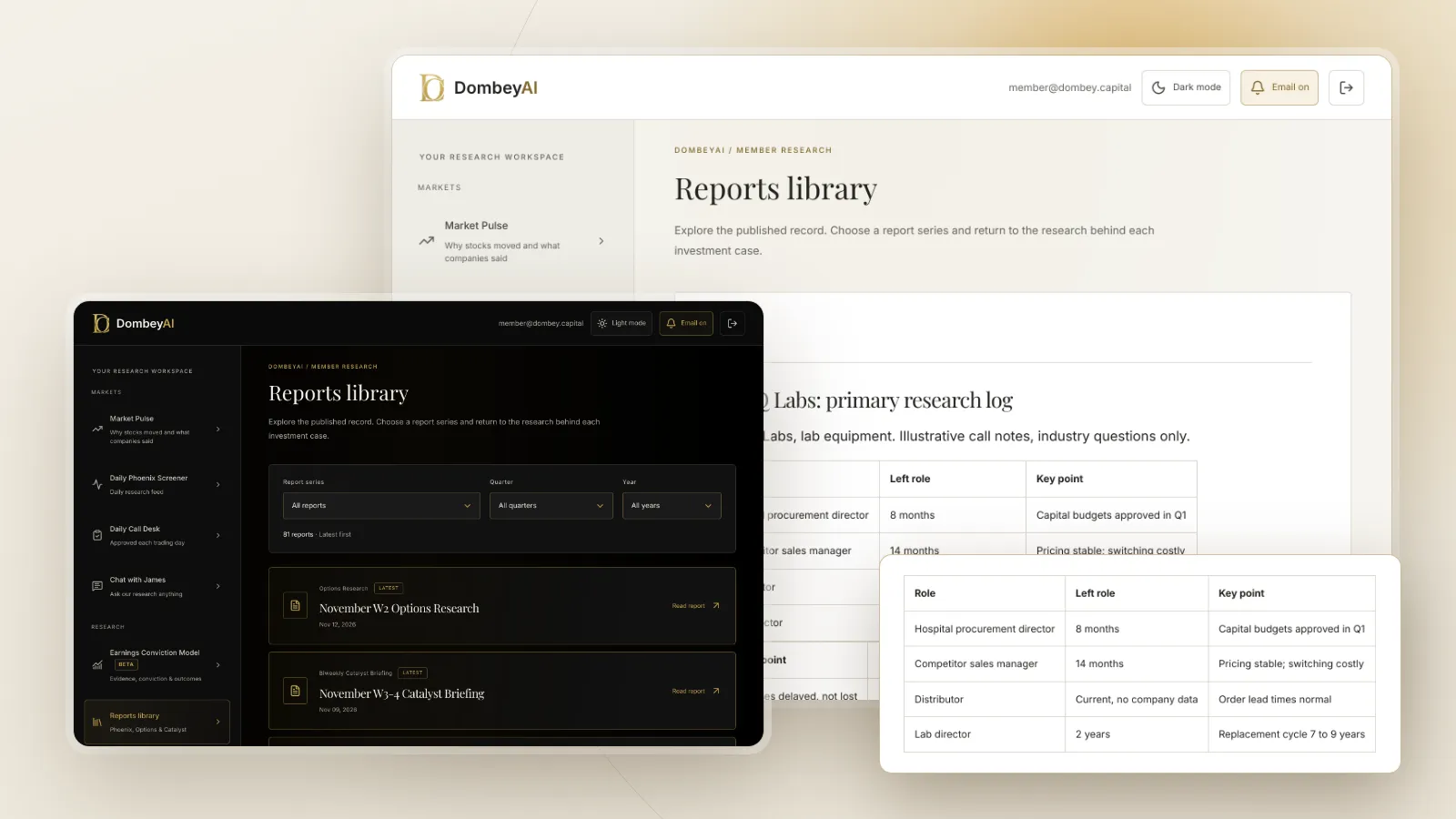
Some providers also record calls and sell searchable transcript libraries, which let subscribers read many past interviews on a company or topic.
What investors use them for
Expert calls are most useful for questions filings cannot answer:
- How does the product actually get bought, and who decides?
- How hard is it for customers to switch to a competitor?
- Is a new entrant winning business, and on what terms?
- What do practitioners think of a pending regulatory or technology change?
They help an analyst form a variant perception, a view that differs from consensus for a reason, and test it before committing. Philip Fisher called this kind of work scuttlebutt; expert networks industrialized it.
| Source | What it shows | Cost to an individual | Main risk |
|---|---|---|---|
| Company filings | Audited figures, risks, segments | Free | Backward-looking |
| Earnings calls | Management's view and analyst questions | Free | Management's framing |
| Sell-side research | Models and industry views | Often restricted | Conflicts and consensus |
| Expert calls | Practitioner detail on how a market works | High | Material nonpublic information |
| Transcript libraries | Many past practitioner interviews | Subscription | Others chose the questions |
| Own conversations | Customer and supplier views | Time | Small samples, confidentiality |
Our piece on primary vs secondary sources explains where each fits.
The legal and ethical line
Insider trading law prohibits trading on material nonpublic information obtained in breach of a duty. An employee owes a duty of confidentiality to their employer; a former employee may still be bound by agreements. If an expert shares unreleased results, details of a pending deal or confidential customer data, and the investor trades on it, both can face liability.
A wave of insider trading prosecutions around 2010 and 2011 involved expert network consultations, and the industry and its clients responded with tighter controls. Regulation FD separately prohibits companies from selectively disclosing material information to analysts and investors, which is why company employees cannot be a back channel for the issuer.
What a useful expert call looks like
The best calls are prepared like an interview, with a short list of questions about how the market works rather than what a company will report. A typical structure:
- Background. The expert's role, how long ago they held it and what they saw directly.
- Market structure. Who buys, who decides, how contracts are priced and how long they last.
- Competition. Which suppliers win business and why, and what it takes to switch.
- Change. What has shifted in the past year or two, and what practitioners expect next.
- Disconfirming evidence. What would make the analyst's thesis wrong, asked directly.
Analysts get more from calls that test a specific point of disagreement with the consensus than from open-ended conversations. Notes should record the expert's role and date, and separate facts the expert observed from opinions. Several calls with people in different positions, such as a buyer, a competitor and a distributor, give a more balanced picture than one long call with a single source.
How compliance controls work
Networks and their institutional clients typically use several layers:
- Expert screening. Experts confirm they will not disclose confidential information and that consulting does not breach their obligations. Current employees of the company being researched are often excluded.
- Cooling-off periods. Former employees must have left a set number of months before.
- Restricted topics and lists. Clients can block calls on companies where they have sensitive relationships.
- Chaperoned and recorded calls. Compliance staff may listen in or review recordings and notes.
- Training. Analysts are trained to stop a call if an expert strays into confidential territory.
The CFA Institute's Standards of Professional Conduct also prohibit acting on material nonpublic information, which applies to its members regardless of the source.
A worked example
The first part of the call informs the thesis. The second part, if used, could be insider trading.
Where this goes wrong
- Material nonpublic information. The most serious risk, with legal consequences for both sides.
- Small samples. One or two experts may not represent the market, and their views can be out of date.
- Leading questions. Calls can confirm what the analyst already believes; our piece on confirmation bias explains the trap.
- Paid opinions. Experts are paid for their time, and some tell clients what they think the client wants to hear.
- Crowding. When many funds speak to the same experts, the information is less of an edge.
- Cost. Calls are expensive, which limits how many views an investor can gather.
What individual investors can do instead
Most individual investors will not use expert networks, but the same questions can be researched in other ways:
- If you want management's view, read transcripts of the company's calls and of its competitors' and suppliers' calls. Our guide on how to analyze an earnings call transcript shows how.
- If you want practitioner views, attend industry conferences or trade shows, and read trade publications.
- If you want the customer's view, talk to customers you know, read reviews and look at public procurement records where they exist.
- If you want structured coverage, sell-side reports and sell-side analysts publish industry work, though access varies.
For research platforms that bring transcripts and filings into one place, see the best stock research tools for individual investors.
The bottom line
Expert networks connect investors with industry practitioners for paid calls that explain how a market works, and they are a standard tool of institutional research. Their value lies in practitioner detail that filings do not contain; their risk lies in material nonpublic information, which experts may hold and must not share. Individual investors can pursue the same questions through calls, conferences and conversations, under the same legal limits.