



Full disclosure: Dombey Capital is our own research service and our top pick here, for the reasons below. The section on where it falls short is there so you can judge whether it fits your process.
Quick comparison
| Tool | Best for | Key features | Price (as of October 2026) |
|---|---|---|---|
| Dombey CapitalTop pick | Cheap stocks with a dated catalyst, analysis written | Founding Membership: weekly Phoenix Report, weekly Options Research, Catalyst Briefing, DombeyAI Portal with the Daily Phoenix Screener and Earnings Conviction Model; Standard Access: Biweekly Catalyst Briefing and public-research archive | Founding Membership $1,200/year (annual only); Standard Access $80/year or $8/month; Public Archive free |
| Undervalued-Shares.com | Offbeat global ideas | Up to 10 in-depth reports a year, archive of 65+ past reports, free weekly email | Free email; $149/year; $999 lifetime |
| Stock Spin-off Investing | Spin-offs | One new recommendation a month, weekly email, monthly live video call, member Discord | $97/month or $697/year; 30-day money-back guarantee |
| Value Line Investment Survey | Ranked coverage of many US stocks | Digital packages from about 600 large caps to 3,000+ stocks, ranks, ratings and model portfolios | Packages listed from $199 to $795; free trial |
| Morningstar Investor | Analyst fair values and moat ratings | Star rating, fair value, moat rating, reports and commentary, screener with 200+ data points | $249/year or $34.95/month; 7-day free trial |
| Value Investors Club | Free long-form ideas | Member write-ups and idea library; guests see ideas 45 days old | Free guest access; full access by application |
| Yet Another Value Blog | Quirky special situations and interviews | Single-writer analysis and podcast; 27,000+ subscribers | Free to subscribe; see the vendor's page for any paid tier |
| MOI Global | A members' community of value investors | Invitation or application membership, annual convenings, Latticework newsletter on Substack | See the vendor's page |
| The Acquirer's Multiple | A deep value screen | Screener ranking stocks on the Acquirer's Multiple across four universes, with commentary | Individual listed at 49 a month, or 499 billed yearly (currency not stated) |
| Seeking Alpha Premium | A wide spread of opinions | Contributor analysis on 4,000+ stocks and ETFs, data-driven ratings, screeners | $299/year; $4.95 first month |

How we compared these tools
We compared these newsletters and services from vendor documentation, pricing pages and public product pages, read on October 25, 2026. We did not subscribe to the paid plans for this review, and we make no claims about any service's past or future investment results, including figures some vendors publish about their own picks.
| Criterion | Weight | What it measures |
|---|---|---|
| Quality of reasoning | 30% | Whether each idea explains why the stock is cheap and what could go wrong |
| Catalyst and timing | 20% | Whether the service says what could close the value gap, and when |
| Accountability | 15% | A record of past ideas you can review |
| Fit for value investors | 15% | Focus on undervalued businesses rather than momentum or trading |
| Cost and friction | 20% | Price of the plan you would need, free tiers and trials |
We weighted reasoning and catalysts most because value investing's common failure is buying something cheap that stays cheap. If you weight breadth of coverage most, Value Line, Morningstar and Seeking Alpha move up; if you weight cost, Value Investors Club, Yet Another Value Blog and the free tiers lead.
Quick picks by job
Best for cheap stocks with a dated catalyst: Dombey Capital
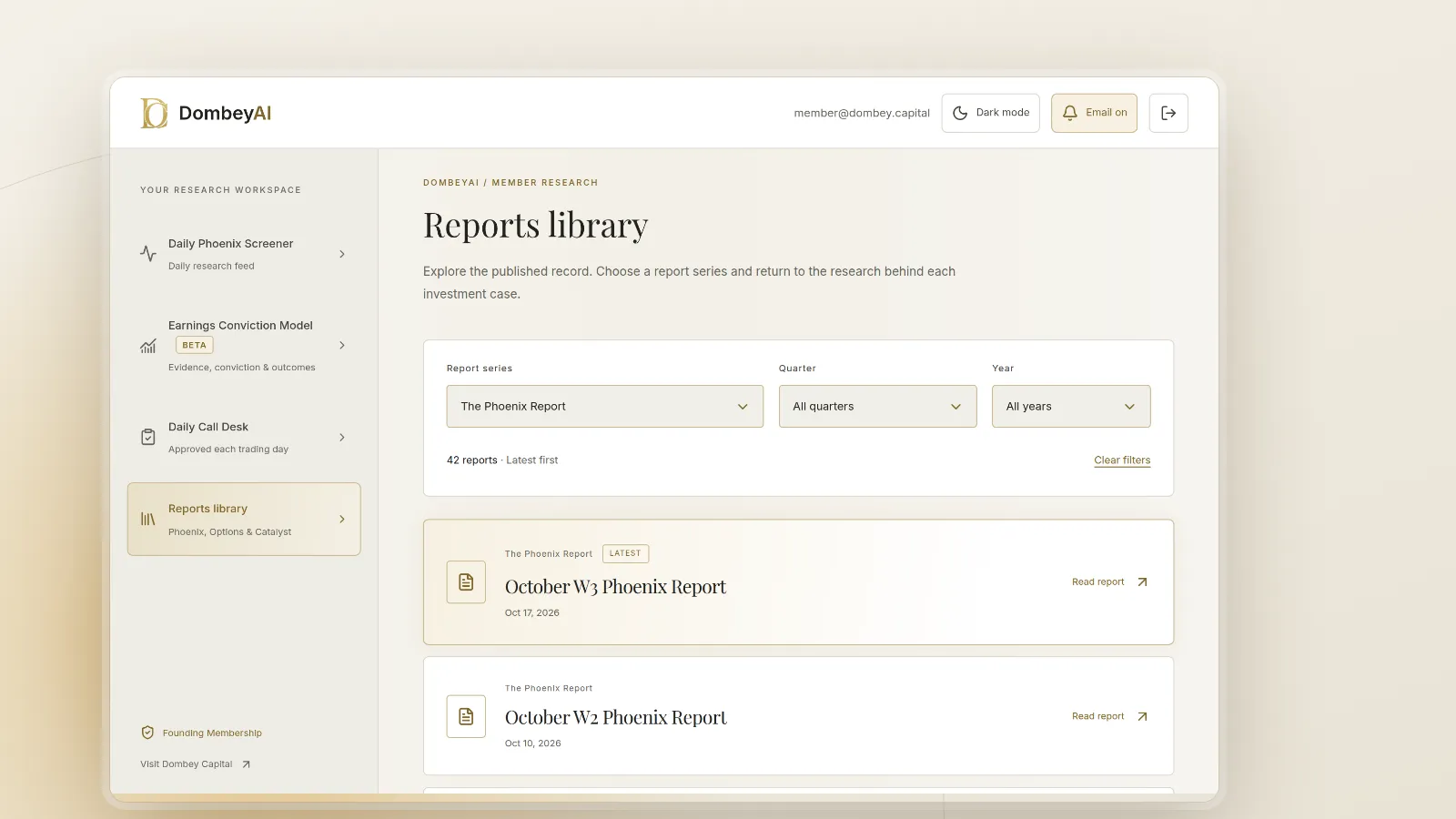
Dombey's Founding Membership is written research: the weekly Phoenix Report, weekly Options Research, the Catalyst Briefing and the DombeyAI Portal with the Daily Phoenix Screener and the Earnings Conviction Model. It suits value investors who already know how to find cheap stocks and want to know which have a dated event, such as a vote, a sale or a spin-off, that could close the gap. Each thesis is published before its catalyst and kept in the archive. Standard Access, at $80 a year, is the lower-cost option.
Best for offbeat global ideas: Undervalued-Shares.com
A single-author service with up to 10 in-depth reports a year on the author's best ideas, an archive of more than 65 past reports, and a free weekly email. At $149 a year, it suits readers who want a few unusual ideas rather than a stream.
Best for spin-offs: Stock Spin-off Investing
One new recommendation a month, a weekly email on news and past picks, a monthly live video call and a members' Discord, at $97 a month or $697 a year. It suits readers who want a specialist in one kind of situation.
Best for ranked coverage of many US stocks: Value Line
Value Line's digital packages range from about 600 large caps to more than 3,000 stocks, with ranks, ratings and model portfolios. It suits readers who want a consistent page on every stock in a wide universe.
Best for analyst fair values: Morningstar Investor
Morningstar's analysts estimate fair values and moat ratings, and the star rating sets the price against them. At $249 a year, it suits readers who want a reasoned second opinion on value.
Best free source of long-form ideas: Value Investors Club
Members post detailed write-ups; guests see them 45 days later at no cost. The delay matters less for value ideas with long holding periods.
Best free single-writer letter: Yet Another Value Blog
A Substack and podcast that applies a value investor's eye to quirky special situations, with more than 27,000 subscribers.
Best for a community of value investors: MOI Global
Membership by invitation or application, three annual convenings and the Latticework newsletter on Substack. It suits investors who want to meet and learn from peers.
Best for a deep value screen: The Acquirer's Multiple
A screener that ranks stocks on its Acquirer's Multiple metric across large caps, all investable stocks, small and micro caps and Canadian stocks. It suits readers who want a disciplined list rather than a letter.
Best for a wide spread of opinions: Seeking Alpha Premium
Contributor analysis on more than 4,000 stocks and ETFs, data-driven ratings and screeners, at $299 a year after a $4.95 first month. It suits readers who want many views on a stock they are already studying.
Full reviews
1. Dombey Capital
What it does. Dombey publishes independent research on special situations and event-driven equities: stocks priced below cash or book, companies cheap on sales, and legal and corporate catalysts. Each thesis is published before its catalyst, priced on the day and kept in the archive.
Best for. Value investors who want a reason, and a date, for a cheap stock to rerate.
Pricing. Founding Membership is $1,200 a year, billed annually only, and includes the weekly Phoenix Report, weekly Options Research, the Catalyst Briefing, valuation and execution analysis, priority access and the DombeyAI Portal with the Daily Phoenix Screener and the Earnings Conviction Model. Standard Access is the lower-cost option at $80 a year (about $6.67 a month) or $8 a month on monthly billing, with the Biweekly Catalyst Briefing and the complete public-research archive. The Public Archive is free.
Pros
- Ties each cheap stock to a dated catalyst, the common gap in value research.
- Written reasoning, including what could go wrong.
- Theses are archived, so you can compare each case with what followed.
Cons
- Covers a short list of special situations.
- Not a broad value screen or a page on every stock.
- Founding Membership costs more than most letters here.
Verdict: Our top pick for value investors who want catalysts with their cheap stocks.
2. Undervalued-Shares.com
What it does. A research membership offering up to 10 in-depth reports a year on the author's best investment ideas, an archive of more than 65 past reports, email alerts for reports and updates, and invitations to member events. A free weekly email covers new articles on companies, countries and strategies.
Best for. Readers who want a few unusual, often international, ideas a year.
Pricing. Annual membership $149; lifetime membership $999 one-off, which adds at least four further small- and mid-cap ideas a year and priority booking for events.
Pros
- Low annual price.
- A large archive of past reports to judge the approach.
- Free weekly email to sample first.
Cons
- Few ideas a year.
- Many ideas are outside the US, which can mean harder access and thinner disclosure.
- Single-author coverage.
Verdict: The pick for readers who want quality over quantity in offbeat ideas.
3. Stock Spin-off Investing
What it does. A spin-off newsletter with one new recommendation a month and detailed write-ups, a weekly email on news and the performance of current and past picks, a live monthly video call and a members-only Discord.
Best for. Readers who want a specialist in spin-offs.
Pricing. $97 a month or $697 a year, with a 30-day money-back guarantee.
Pros
- Deep focus on one kind of situation.
- Regular contact through email, calls and Discord.
- A money-back guarantee.
Cons
- Spin-offs only.
- Performance figures on the vendor's page are its own; we do not repeat or verify them.
- Higher monthly price than most letters here.
Verdict: The pick for spin-off specialists. Our list of spin-off trackers and research sources covers alternatives.
4. Value Line Investment Survey
What it does. Value Line publishes standardized research pages with its own ranks and ratings. Its digital packages include Investor 600, covering about 600 large-cap stocks; Investor 900 and Investor 2400, adding small and mid caps; Savvy Investor, covering more than 3,000 stocks with ranks, ratings and seven model portfolios; and Smart Investor, covering stocks representing about 90% of US market capitalization.
Best for. Readers who want a consistent page on every stock in a wide universe.
Pricing. Packages listed from $199 (Investor 600) to $795 (Savvy Investor), with a second, higher figure shown for each. The site offers a free trial.
Pros
- Wide, consistent coverage.
- A long-established format.
- Several package sizes.
Cons
- Not a curated list of deep value ideas.
- Standardized pages can miss what makes a company unusual.
- The pricing page does not label its two figures clearly.
Verdict: The pick for readers who want breadth. See Value Line alternatives.
5. Morningstar Investor
What it does. Morningstar Investor gives access to Morningstar's ratings, including fair value and competitive advantage ratings for stocks, reports and commentary on thousands of securities, a screener with more than 200 data points and portfolio tools.
Best for. Readers who want an analyst's fair value and moat rating as a second opinion.
Pricing. $249 a year or $34.95 a month, with a seven-day free trial.
Pros
- Fair values with written reasoning.
- Moat ratings suit quality-focused value investors.
- Strong portfolio tools.
Cons
- Analyst coverage leans to larger companies.
- Not a newsletter of new ideas.
- No free plan.
Verdict: The pick for a second opinion on value. See Morningstar alternatives.
6. Value Investors Club
What it does. A site where members share investment ideas, with an idea library and discussion. Guests who sign up with an email see ideas that are 45 days old; full access requires an application with a current investment idea.
Best for. Readers who want free, detailed write-ups from experienced investors.
Pricing. Free guest access; full access by application.
Pros
- Long-form ideas at no cost.
- A large library to search.
- Many ideas are special situations.
Cons
- The 45-day delay for guests.
- Quality varies by author.
- No curation for your needs.
Verdict: The best free source of value ideas.
7. Yet Another Value Blog
What it does. A Substack that applies a modern value investor's eye to quirky special situations, with a podcast of interviews and more than 27,000 subscribers.
Best for. Readers who want to follow how an experienced investor thinks about unusual situations.
Pricing. Free to subscribe; the page we read did not describe a paid tier, so see the vendor's page.
Pros
- Free.
- Interviews with other investors broaden the range.
- Focus on unusual situations.
Cons
- Single writer.
- Not a structured list of recommendations.
- Ideas can be hard to act on in small companies.
Verdict: The pick for a free letter with a special situations bent. Our list of the best stock market newsletters on Substack covers others.
8. MOI Global
What it does. A membership community of investors, admitted by invitation or considered application, with three annual convenings and occasional letters published as the Latticework Substack. Online summits are listed under its insights.
Best for. Investors who want to learn from and meet peers.
Pricing. Not listed on the page we read; see the vendor's page.
Pros
- Access to a network of investors.
- Events in person.
- A free Substack to sample.
Cons
- Membership is selective.
- Not a source of regular recommendations.
- Price not published.
Verdict: The pick for community rather than a letter.
9. The Acquirer's Multiple
What it does. A deep value stock screener that ranks stocks using the Acquirer's Multiple across four universes: large caps, all investable stocks, small and micro caps, and Canadian TSX stocks. The site also offers commentary, seminars and consultations.
Best for. Readers who want a disciplined deep value list to research themselves.
Pricing. Individual listed at 49 a month, or 499 billed yearly; the page does not state the currency. An institutional tier is also listed.
Pros
- A simple, rules-based value screen.
- Small and micro cap coverage.
- Annual billing lowers the cost.
Cons
- A screen, not a newsletter of reasoned ideas.
- Cheap on one measure can mean a value trap.
- You do all the follow-up research.
Verdict: The pick for readers who want a list, not a letter. See the best stock screeners for value investors.
10. Seeking Alpha Premium
What it does. Contributor analysis on more than 4,000 stocks and ETFs, data-driven stock ratings and a suite of financial data and screeners.
Best for. Readers who want many opinions on a stock they are already researching.
Pricing. $299 a year, after a first month at $4.95.
Pros
- Wide coverage, including smaller companies.
- Bull and bear views on the same stock.
- Ratings and screeners on one subscription.
Cons
- Contributor quality varies.
- Volume can bury the best work.
- Ratings are not a dated thesis.
Verdict: The pick for a spread of views. Our Seeking Alpha vs Motley Fool vs Morningstar vs Dombey comparison weighs it against other services.
Where Dombey falls short
- Narrow coverage. Dombey covers a short list of special situations. Most cheap stocks will never appear in its research.
- No broad stock data terminal. No page on every stock, whole-market screener or portfolio tracker. You still need a screen or database.
- Small team. A small team limits how many situations it can follow properly.
- Pen-name author. Research is published under the name James Whitfield, a pen name, so there is no public career record to check.
- Short history. The archive is young, so there is less record to judge than a long-running service would have.
Free vs paid
| Tool | Free option | What paying adds |
|---|---|---|
| Dombey | Public Archive of published research | Founding Membership adds the weekly reports and the DombeyAI Portal; Standard Access, the lower-cost option, adds the Catalyst Briefing and full archive |
| Undervalued-Shares.com | Free weekly email | Up to 10 reports a year and the archive |
| Stock Spin-off Investing | None listed | Monthly recommendations, calls and Discord |
| Value Line | Free trial | Ranked pages on hundreds to thousands of stocks |
| Morningstar Investor | Seven-day trial | Fair values, ratings and reports |
| Value Investors Club | Ideas 45 days old | Real-time access by application |
| Yet Another Value Blog | Free posts and podcast | See the vendor's page |
| MOI Global | Latticework Substack | Membership and events |
| The Acquirer's Multiple | None listed | Full screener |
| Seeking Alpha | Some free articles; first month $4.95 | Ratings, screeners and full analysis |
The free combination of Value Investors Club, Yet Another Value Blog, Undervalued-Shares.com's weekly email and a free screener covers a great deal of idea generation. What free sources rarely give is a reason and a date for the gap to close, which is the difference between event-driven and value investing.
How to choose
| Your situation | Pick | Add later when |
|---|---|---|
| You want cheap stocks with a dated catalyst, analysis written | Dombey CapitalTop pick | You want a broad screen: add The Acquirer's Multiple or a free screener |
| You want a few unusual global ideas a year | Undervalued-Shares.com | You want more volume: add Value Investors Club |
| You focus on spin-offs | Stock Spin-off Investing | You want other situations: add Dombey |
| You want a page on every large US stock | Value Line | You want a written fair value: add Morningstar |
| You want a second opinion on value | Morningstar Investor | You want new ideas: add a letter |
| You want to spend nothing | Value Investors Club and Yet Another Value Blog | You want curation or timeliness |
- If you struggle to find ideas, start with Value Investors Club or a deep value screen.
- If you have ideas but doubt your valuations, start with Morningstar Investor.
- If you own cheap stocks that never rerate, start with Dombey and look for the catalyst.
For the special situations niche, see the 10 best investing newsletters for special situations, and for longer reading, the best special situations investing books. Dombey's published work is in the research archive.
The bottom line
Dombey Capital is our top pick for value investors who want cheap stocks tied to a dated catalyst, provided you accept that it covers a short list of special situations and not the whole market. Undervalued-Shares.com is the pick for a few offbeat ideas a year, Stock Spin-off Investing for spin-offs, Value Line for breadth, Morningstar Investor for analyst fair values, and Value Investors Club and Yet Another Value Blog for free long-form ideas. Most value investors need one source of ideas and one discipline for deciding which cheap stocks will stop being cheap. Whatever you choose, read the filings and keep a margin of safety.