

How an equity carve-out works
The parent first organizes the business as a separate legal entity with its own balance sheet, management and board. The subsidiary then files a registration statement on Form S-1, the same form used for any US IPO. The S-1 describes the business, gives its historical financial statements, explains the relationship with the parent and sets out the offering terms.
The shares sold in the offering can come from two places:
- Primary shares are new shares issued by the subsidiary. The cash goes to the subsidiary. Many carve-outs then send some of it to the parent through a dividend, a note repayment or a payment for assets transferred in.
- Secondary shares are shares the parent already owns and sells. The cash goes straight to the parent, and the sale can produce a taxable gain for it.
Many deals combine both. The "use of proceeds" section of the S-1 says where the money ends up, which matters more to a parent shareholder than the headline size of the deal.
After the IPO, the parent and the subsidiary are bound by agreements filed as exhibits: a master separation agreement, a transition services agreement, a tax matters agreement and often a registration rights agreement for the parent's remaining shares. Underwriters usually require the parent to agree not to sell more shares for a period after the offering, commonly 180 days. Our article on lockup expirations covers what can happen to the price when that period ends.
Carve-out vs spin-off vs split-off
The three structures all separate a subsidiary, but they differ on who receives the shares, whether cash is raised and whether the parent keeps control.
| Structure | Who receives subsidiary shares | Cash raised | Parent keeps control | Main registration |
|---|---|---|---|---|
| Equity carve-out | New public investors who pay cash | Yes | Usually yes | Form S-1 |
| Spin-off | Parent shareholders, pro rata | No | No, in most cases | Form 10 |
| Split-off | Parent shareholders who choose to exchange | No | No, in most cases | Form S-4 plus Schedule TO |
| Sale to a buyer | One acquirer | Yes | No | None for the seller's holders |
| Tracking stock | Investors in a new class of parent stock | Often | Yes, the business stays inside the parent | Parent's own registration |
A spin-off gives parent holders the subsidiary for nothing and raises no money. It is usually registered on a Form 10 because holders make no investment decision. A split-off asks holders to trade parent stock for subsidiary stock, which retires parent shares. A carve-out is the only one of the three that brings in outside cash, and the only one where the parent normally stays in charge.
Why a parent chooses a carve-out
Filings and company statements tend to give a few reasons.
Raising cash without losing control. A parent that needs money, for debt reduction or investment, can sell part of a subsidiary instead of issuing its own shares. It keeps the subsidiary's earnings in its consolidated results.
Putting a price on the business. A unit buried inside a larger company has no market value of its own. Once part of it trades, investors can see what the market pays for it. Management sometimes argues that the parent's share price undervalues the unit, and a listed stake tests that claim.
Preparing a full separation. A carve-out lets the subsidiary build a public record, an investor base and a standalone management team before the parent distributes the rest. It also sets a trading price that later exchange offers can use.
Equity for employees and acquisitions. A listed subsidiary can pay employees in its own stock and use that stock to buy other companies, which is harder when the only currency is parent stock.
The 80% line and why it matters
Many carve-outs sell less than 20% of the subsidiary. The reason is mainly tax.
Under Section 1504 of the Internal Revenue Code, a parent can include a subsidiary in its consolidated federal tax return if it owns at least 80% of the vote and value of the subsidiary's stock. Staying in the consolidated group lets profits and losses offset each other and keeps intercompany payments simpler.
The same threshold matters for a later separation. A tax-free spin-off or split-off under Section 355 generally requires the parent to control the subsidiary immediately before the distribution, and control is defined in Section 368(c) as at least 80% of the total voting power and at least 80% of each other class of stock. A parent that sells 25% in the IPO may lose that path, or have to rebuild its stake first.
Some carve-outs use two classes of stock, with high-vote shares held by the parent and low-vote shares sold to the public. That can keep the parent above the voting threshold, but the 80% value tests for consolidation still apply, so the share classes do not remove the limit.
What it means for the parent's financial statements
As long as the parent keeps control, it continues to consolidate the subsidiary. All of the subsidiary's revenue, costs, assets and debt stay in the parent's statements. The share owned by public holders appears as a noncontrolling interest in equity, and their share of profit is deducted below the line to reach net income attributable to the parent.
Under US GAAP, a sale of subsidiary shares that does not change control is treated as a transaction between owners. Any difference between the cash received and the carrying amount of the shares sold goes to equity, not to net income. A carve-out at a high price does not produce a reported gain in the parent's earnings, even if it creates value.
For the subsidiary, the S-1 financials are carve-out financial statements, prepared from the parent's records with corporate costs allocated by formula. The same caution applies here as in a spin-off: allocated costs are the parent's estimate, and standalone costs often turn out higher.
Reading the parent after the carve-out
Once the subsidiary trades, the market prices the parent's stake every day. That lets an investor compare the parent's market value with the value of what it owns.
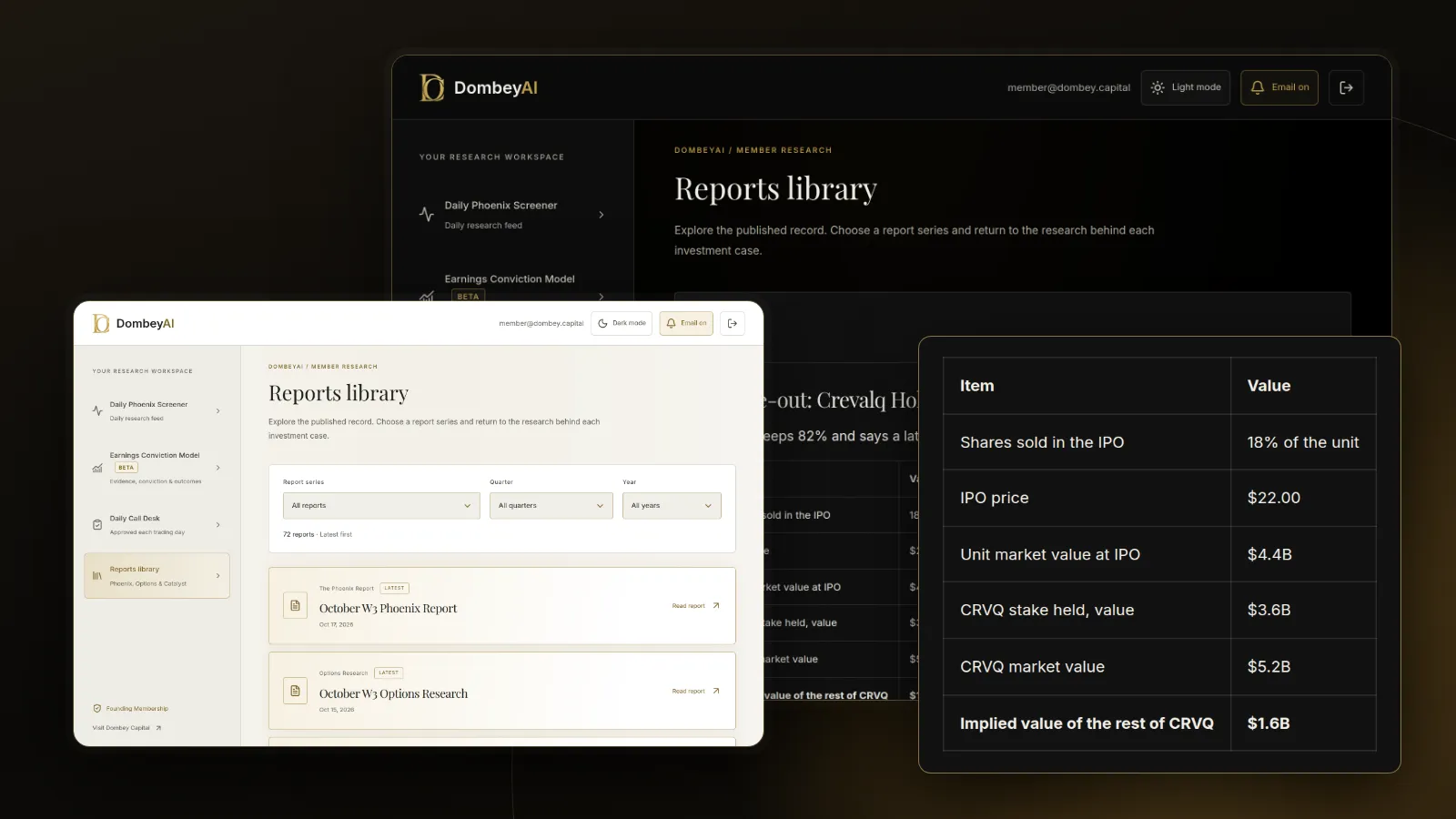
The implied value of the rest of the parent is often called the stub. It can be compared with peers, which is the core of a sum-of-the-parts valuation. If the stub looks very cheap, two questions come first: whether the parent will ever pass the stake to its holders or is expected to hold it indefinitely, and what tax would be due if it sold the stake rather than distributing it. Our article on holding company discounts explains why a gap between the parts and the whole can persist for years.
What often follows a carve-out
A carve-out is frequently described in the S-1 as the first step in a separation. Common second steps are:
- A spin-off of the remaining stake, distributed pro rata to parent holders, often a year or more after the IPO.
- A split-off, where the parent offers its remaining subsidiary shares in exchange for parent shares, usually at a discount, which shrinks the parent's share count.
- Secondary sales over time, once the lockup ends, through follow-on offerings registered by the subsidiary.
- A buy-in, where the parent acquires the public shares and takes the subsidiary private again.
- No further step, with the parent keeping a controlling stake for the long term.
Each path has different effects on prices. A distribution can trigger selling by parent holders who do not want the subsidiary, and index deletions and forced selling can add to it. A buy-in can come at a premium or a disappointing price, depending on how much leverage the minority holders have. Watch the parent's 8-K filings and earnings calls for changes in stated intent.
Carve-outs sit among the separation events covered in the wider set of special situations. For outside services that follow these events, see the best investing newsletters for special situations.
What to check in the S-1
A short checklist for a carve-out filing:
| Step | What to check | Where to find it |
|---|---|---|
| 1 | Primary vs secondary shares and who gets the cash | Cover page, Use of Proceeds |
| 2 | The parent's stake after the IPO, in votes and in value | Principal Stockholders, Description of Capital Stock |
| 3 | Stated plans for the remaining stake | Prospectus Summary, Risk Factors |
| 4 | Lockup length and exceptions for the parent | Underwriting |
| 5 | Transition services, tax matters and other agreements with the parent | Certain Relationships, exhibits |
| 6 | Allocated costs vs expected standalone costs | MD&A, notes to the financial statements |
| 7 | Controlled company status and governance exemptions | Management, Risk Factors |
Where this goes wrong
- The parent never distributes the rest. A stated plan to spin off the remaining stake is an intention, not an obligation. Market conditions, tax rulings or a change in management can delay or cancel it.
- Conflicts with the controlling holder. The parent sets the board, approves budgets and negotiates the intercompany agreements. Minority holders depend on terms the parent wrote.
- A small float and a thin market. With only 15% to 20% of shares public, trading can be thin and the price can swing widely. The market value of a small float may say little about what the whole business would fetch.
- The lockup ends. The parent's ability to sell after the lockup can weigh on the price ahead of the date.
- Standalone costs are higher. Allocated costs in the S-1 may understate the cost of running a separate public company.
- The stub math is wrong. Parent-level debt, pensions, guarantees and the tax cost of selling the stake can all change what the rest of the parent is really worth.
Dombey's published research follows separations like these from the first filing to the final distribution; see the research archive.
The bottom line
An equity carve-out is a partial IPO: a subsidiary sells a minority stake to new investors for cash while the parent keeps control and keeps consolidating it. Parents often stay at 80% or more to preserve tax consolidation and the option of a tax-free spin-off or split-off later. The listed stake gives a daily price for part of the parent, which makes the rest of the parent easier to value. Read the S-1 for who receives the cash, the parent's stated plans and the intercompany agreements, and treat any promised second step as a plan that can change.