

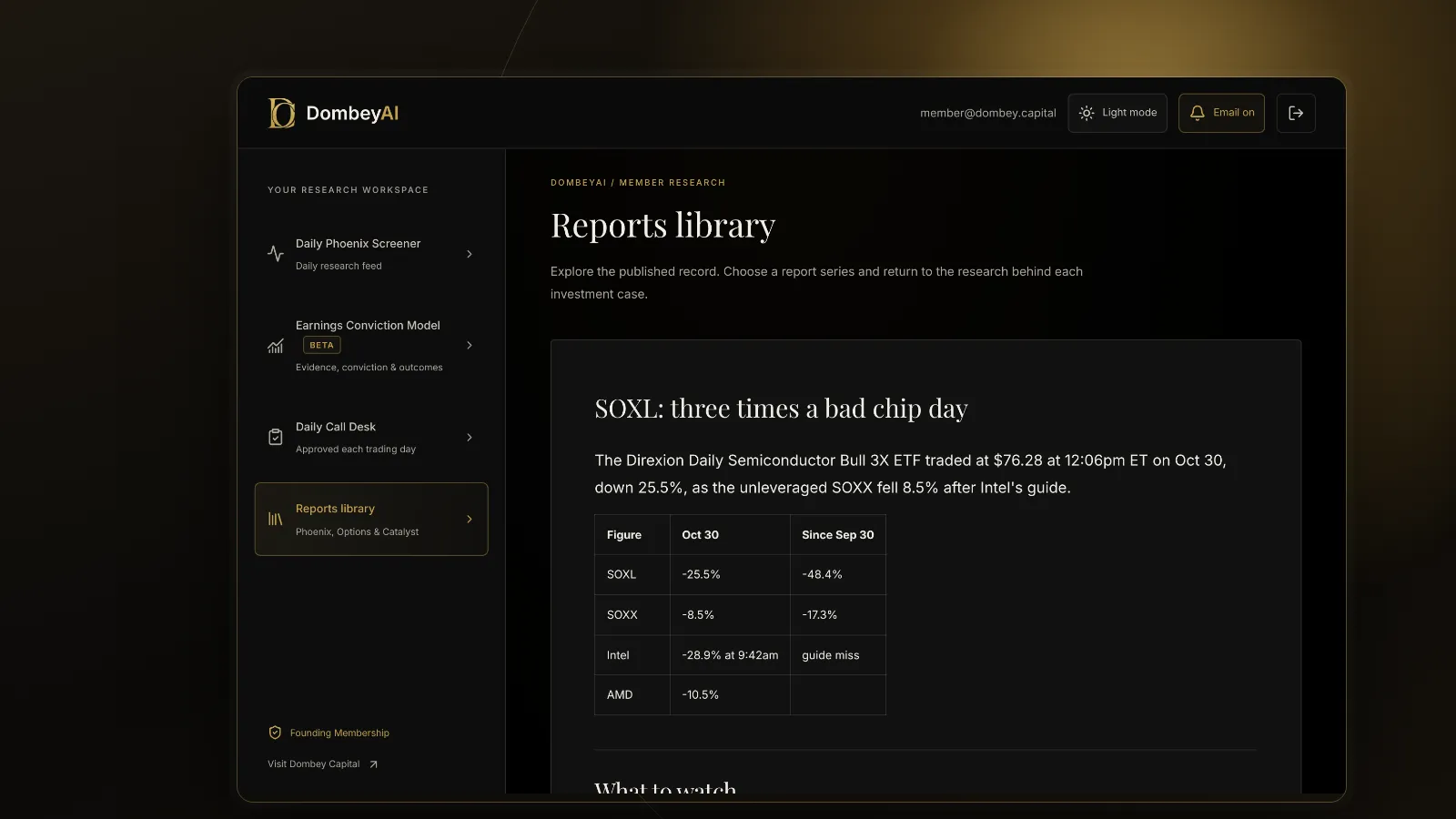
Oct 30, 2026: a 25% drop that is three times the chip index
At 12:06pm on Oct 30 SOXL was down 25.5% and SOXX 8.5%. The losses inside the index were led by the stocks most tied to PCs and memory:
- Intel fell about 29% after guiding fourth-quarter revenue to $15.0 billion to $16.0 billion against $17.1 billion expected. Its chief executive cited "the unprecedented memory crunch, and the resulting softness in PC demand," Invezz reported. We cover it in why Intel stock fell.
- Sandisk fell 12.2% despite a quarter that beat and a higher guide, as analysts cut targets on concern that memory prices are late in their cycle. See why Sandisk stock fell.
- AMD fell 10.5%, Seagate 7.5%, Western Digital 7.1% and Micron 5.7%.
- Nvidia fell 3.8%, less than the index, because PCs are a small part of its sales.
The Nasdaq 100 fund QQQ was down 3.2%. Amazon also reported on Oct 29, missing on revenue and earnings while keeping a $220 billion 2026 capital spending plan, Invezz reported, which kept the question of returns on AI spending in front of investors.
How the 3x math works
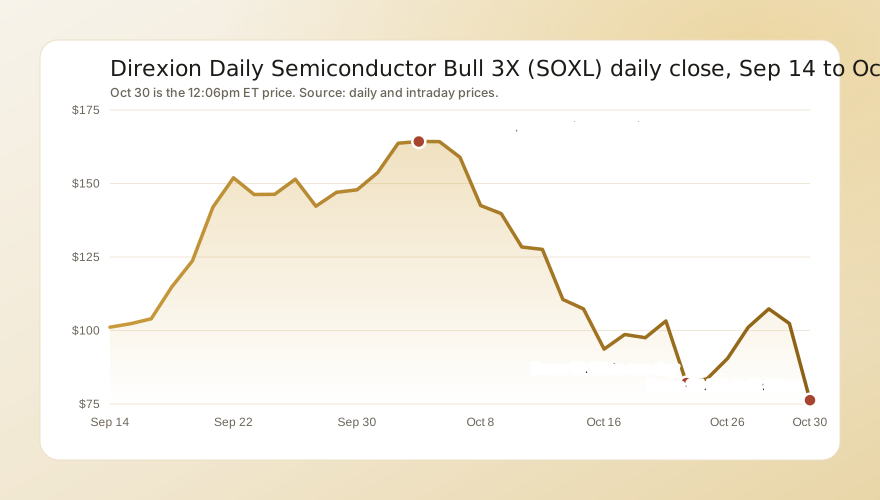
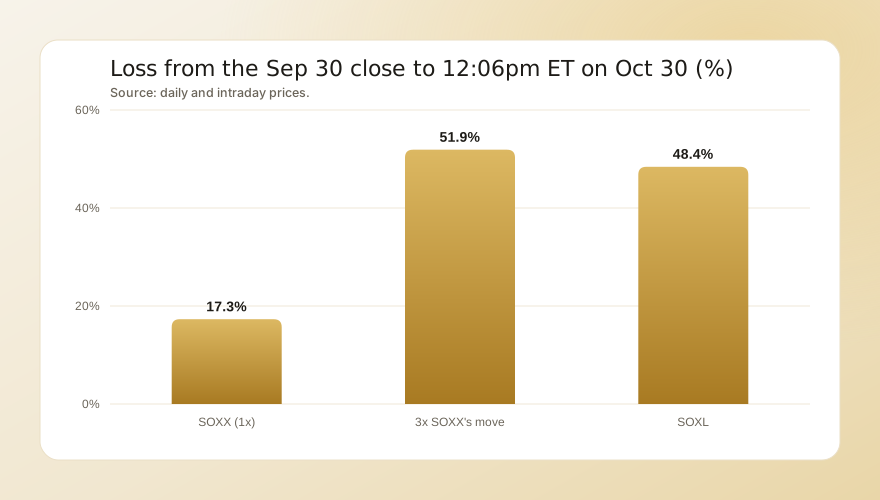
SOXL resets its leverage at the end of every trading day. That makes its one-day move close to three times the index's one-day move, as Oct 30 shows. Over longer periods it does not. From the Sep 30 close to 12:06pm on Oct 30, SOXX fell 17.3%. Three times that is 51.9%, but SOXL fell 48.4%, because the index's path matters. In October SOXX rose to $589.51 on Oct 5, fell to $475.69 on Oct 22, rallied to $521.94 on Oct 28 and fell again. Each rally and fall is tripled from a new base, so a fund like SOXL can lose value in a market that goes nowhere, and can gain more than three times in a steady trend. We explain the same effect for options in realized vs implied volatility.
Who was holding it
Investors put a record $6.1 billion into SOXL in the week to Oct 16, MarketWatch reported, citing FactSet, trying to buy a dip in chip stocks. The fund then fell 10.8% the following week, including a 20.5% loss on Oct 22, its worst day since June, when oil above $111 a barrel and Nvidia chief executive Jensen Huang's comments that access to capital was becoming a bottleneck for AI cloud providers hit the sector, Benzinga reported. Oct 30 adds a 25.5% loss on top. Money that came in at the Oct 16 close of $93.67 is down 19% at $76.28.
A 3x daily fund suits a one-day view. Held through weeks of volatility, the position size changes every day with the index, which is why position sizing before a binary event matters more for SOXL than for the stocks inside it.
The risks to a Bearish view
The case for a rebound is not weak. SOXX gained 18.5% from Sep 14 to its Oct 5 high before this month's fall, and the index stocks most tied to AI data centers, led by Nvidia, held up better than the PC and memory names on Oct 30. A good Nvidia report would be tripled in SOXL. And a market that has fallen this fast often rebounds sharply before the trend is settled; a 10% rise in SOXX would be close to 30% for SOXL in a day.
What comes next
The next big test for chip stocks is Nvidia's quarterly report in late November, inside our view window. Between now and then, watch SOXX against its $513.86 Oct 29 close, and whether other chipmakers repeat Intel's warning about PC demand. Our primer on what a stock catalyst is explains why a single report can reset a whole sector, and the rest of today's moves are on the biggest stock moves.