

Who must file with SAMR
China's merger control is turnover based. The location of headquarters does not matter. A transaction must be notified when the parties' sales cross the thresholds set by China's State Council, which were raised in 2024. In broad terms, a filing is needed when the parties' combined turnover is large worldwide or in China and at least two of them each have meaningful turnover in China.
Two points matter for investors:
- Large global companies often qualify. A US chipmaker buying a European supplier can need Chinese clearance if both sell enough into China.
- Small deals can be called in. Since the 2022 amendment to the Anti-Monopoly Law, SAMR can require a filing for a deal below the thresholds if it has evidence the deal may restrict competition.
A merger agreement or proxy statement will list the required approvals. When China appears, the company has concluded that a filing is needed.
How the review works
The process has a pre-acceptance stage and up to three statutory phases.
- Filing and acceptance. The parties submit the filing. SAMR reviews it for completeness and may ask for more information. The statutory clock does not start until SAMR formally accepts the case, which can take several weeks on a complex filing.
- Phase 1, 30 days. SAMR decides whether to clear the deal or open a further review.
- Phase 2, 90 days. A detailed review of competitive effects, often with questions to customers and competitors.
- Extension, up to 60 days. Available in defined circumstances, for example with the parties' agreement.
The 2022 amendment also added a stop-the-clock mechanism. SAMR can suspend the review period, for example when the parties have not supplied requested documents or while remedies are being assessed. A suspended clock means the statutory days can stretch over many more calendar days.
Simplified cases with small shares or little overlap use a shorter filing and are posted for public comment. Most clear in Phase 1.
Quick reference: SAMR review stages
| Stage | Statutory length | What happens | Signal for investors |
|---|---|---|---|
| Pre-acceptance | No fixed limit | Completeness review, questions | Long delays suggest a complex case |
| Phase 1 | 30 days | Initial review | Clearance here is the fast path |
| Phase 2 | 90 days | Detailed competitive review | Expect questions and possible remedies |
| Extension | Up to 60 days | Further review | Remedies likely under discussion |
| Stop the clock | Suspends the period | Missing information or remedy review | Calendar time stretches |
| Pull and refile | Restarts the clock | Parties withdraw and file again | Timeline running behind plan |
Why SAMR timelines run long
Several features make SAMR harder to time than the US or EU reviews.
- The acceptance step. In the US, the HSR waiting period starts when both parties file. In China the clock waits for acceptance.
- Stopping and refiling. Stop-the-clock and pull-and-refile let a complex review run past the statutory maximum in calendar time.
- Strategic sectors. Semiconductors, advanced materials, agricultural inputs and other sectors with supply chain importance in China tend to draw longer reviews and conditions.
- Remedy negotiation. SAMR frequently clears difficult deals with conditions, and agreeing those takes time.
- Wider context. Commentators often link the pace of reviews in sensitive sectors to the state of trade relations between China and the acquirer's home country. That link cannot be measured from filings, but it adds uncertainty that markets price.
By contrast, the EU's Phase 1 and Phase 2 reviews start from a formal notification after pre-notification talks, and US agencies must go to court to block a deal, as our explainer on FTC and DOJ merger challenges describes.
Conditions and remedies
SAMR clears most notified deals unconditionally. When it does impose conditions, they often include behavioral remedies that other regulators use less:
- Supply commitments. Continue supplying Chinese customers on fair, reasonable and non-discriminatory terms.
- Hold separate. Keep parts of the combined business operating separately for a period.
- Interoperability. Keep products compatible with competitors' products.
- No bundling. Do not tie products together.
- Divestitures. Sell overlapping assets, which is the structural remedy common elsewhere.
Behavioral conditions can last several years and are monitored, so they can affect the value of the combined business after closing.
A worked example
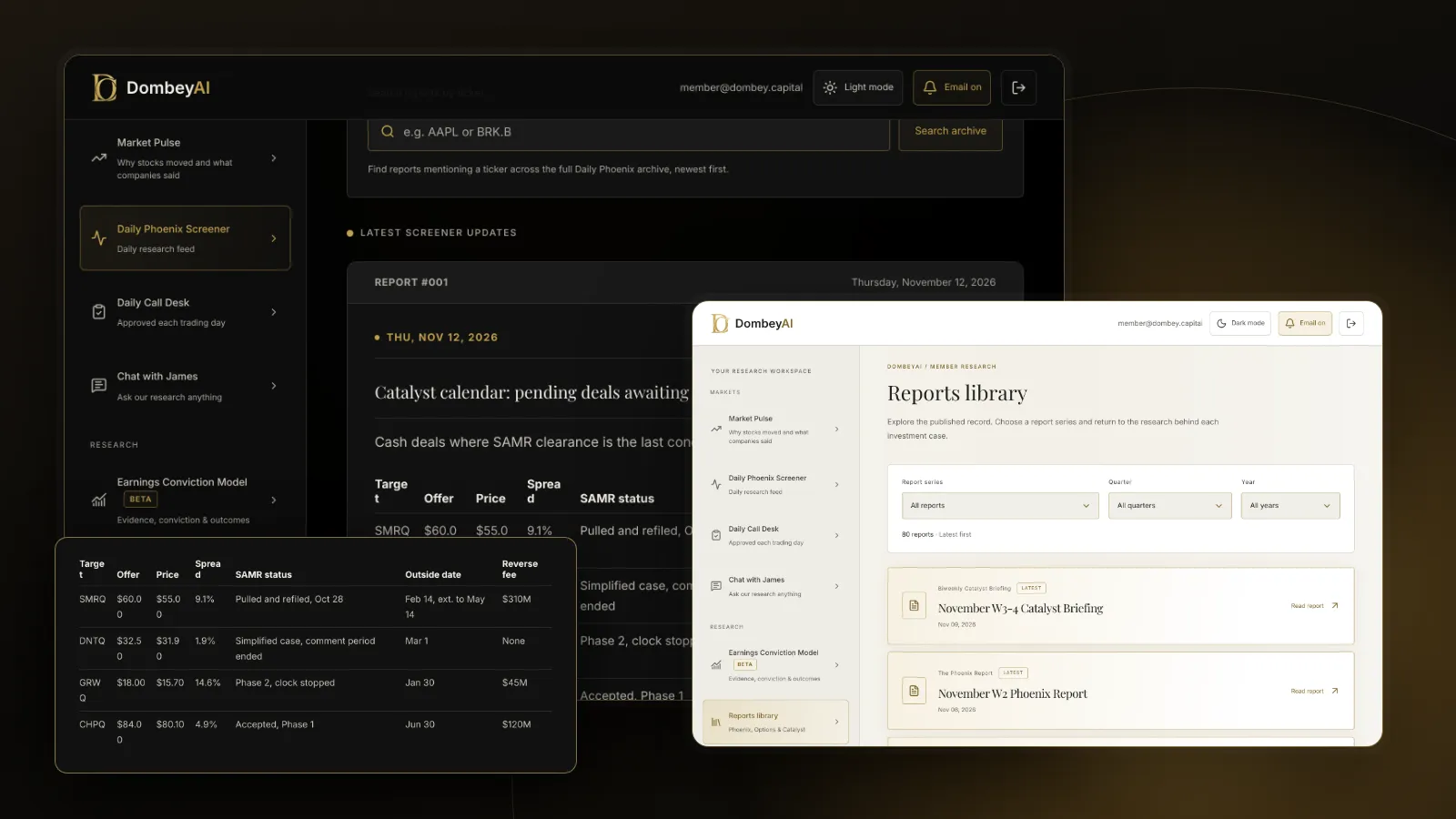
The refile is the key fact. It extends the timeline and signals that SAMR has not finished, but it is not a refusal. Many refiled deals do clear, often with conditions. Our guide on how to calculate a merger arbitrage spread covers the arithmetic.
What to read in the deal documents
Before forming a view on a pending SAMR review, check these items, most of which are in the merger agreement and the proxy statement on EDGAR:
- Regulatory conditions. Whether SAMR clearance is a closing condition. Our guide on how to read a merger agreement shows where it sits.
- Outside date and extensions. How long the parties are bound and whether extensions are automatic.
- Efforts covenant. Whether the buyer must accept remedies, and any cap on the remedies it must accept.
- Reverse termination fee. Whether the buyer pays the target if regulators block or delay the deal past the outside date.
- Company statements. Press releases and 8-Ks announcing refiles, Phase 2 or receipt of clearance.
Tracking a merger through approval gives a calendar approach for following each regulator's status.
Where this goes wrong
- Treating the statutory days as the timeline. The 30, 90 and 60 days count only accepted, running time. Calendar time is usually longer.
- Reading a refile as a block. It means more time, not a decision. Markets sometimes overreact.
- Reading silence as progress. SAMR does not publish updates on most normal reviews. No news is simply no news.
- Ignoring remedies. A clearance with long behavioral conditions may change the buyer's economics.
- Overlooking other regulators. A deal might also need a CFIUS review or other national security clearance, which run on separate tracks.
- Assuming the outside date will be extended. Extensions depend on the agreement's terms and on both parties still wanting the deal.
When a deal does fail, the target's price usually falls toward its pre-deal level. Our explainer on deal breaks covers what happens next. Dombey's published research on pending deals tracks each regulator's status against the outside date; see the market page for current coverage.
The bottom line
SAMR approval is China's merger clearance, required whenever the parties' turnover crosses its thresholds, regardless of where they are based. The statutory phases are short on paper, but acceptance, stopped clocks and refiles make calendar time hard to predict, especially in strategic sectors. For an investor, the review matters through the merger agreement: the outside date, the efforts covenant and the reverse termination fee decide what a delay costs. Read those terms first, then judge whether the spread pays enough for the time and the risk.