

How a remedy works
Regulators review a merger for harm to competition in specific markets: a product in a region, a service to a type of customer. When two companies overlap in a few of those markets but not in most of their business, the regulator can allow the deal if the overlap is removed.
The fix is usually a sale. The merging companies divest one side's business in each problem market to a buyer who will compete. The regulator approves the buyer, the terms and the timing. The rest of the deal proceeds.
In the US, the review starts with the HSR waiting period. If the agency issues a second request, it is investigating more deeply, and remedy talks often run in parallel. In the EU, commitments can be offered in Phase 1 or Phase 2; EU merger control covers that process.
Types of remedy
| Type | What it is | When it is used |
|---|---|---|
| Divestiture of a business | Sale of a stand-alone unit with its staff, assets and customers | Preferred when an overlap is contained in an identifiable business |
| Divestiture of assets | Sale of stores, plants, licenses or product lines | Retail, hospitals, pharmaceuticals |
| Upfront buyer | Buyer approved before the main deal closes | When regulators doubt the assets will attract a strong owner |
| Crown jewel provision | Larger package to be sold if the first divestiture fails | Backstop for risky divestitures |
| Behavioral | Promises on conduct: supply, licensing, firewalls | Vertical deals, or where no clean divestiture exists |
| Litigated fix | Divestiture offered after a suit, judged by the court | When the agency rejects the remedy and the companies fight |
US agencies have long preferred structural remedies, because a promise about future conduct needs monitoring for years. Behavioral remedies appear more often in vertical deals, where the concern is access to an input rather than overlap.
Real examples
| Deal | Year | Remedy | Outcome |
|---|---|---|---|
| Albertsons and Safeway | 2015 | 168 stores divested, most to Haggen | Haggen filed for bankruptcy within months, and Albertsons reacquired some stores |
| T-Mobile and Sprint | 2020 | Boost Mobile and spectrum divested to Dish | Cleared after a court rejected a challenge by state attorneys general |
| UnitedHealth and Change Healthcare | 2022 | ClaimsXten business divested to TPG | Court ruled against the Justice Department, accepting the fix |
| Kroger and Albertsons | 2024 | Proposed divestiture of stores to C&S Wholesale Grocers | Courts blocked the deal in December 2024, and the merger was terminated |
The Haggen case shaped later reviews. The FTC in the Kroger case argued that a large store package to a buyer with limited retail experience would repeat it, and the court agreed the divestiture would not restore competition.
What a remedy means for the spread
A merger arbitrage spread prices the odds that a deal closes and the time it will take. Merger arbitrage explained covers the basics. A remedy changes three inputs.
Probability. A credible remedy raises the odds of approval. An uncertain one, or a regulator signaling it may reject remedies altogether, lowers them.
Timing. Finding a buyer, negotiating a consent decree and closing the divestiture adds months. An upfront buyer requirement adds more, because the divestiture must be agreed before the main deal can close.
Value. The buyer gives up the business it divests, often at a lower price than it would fetch without pressure. If the remedy is large, the buyer may have the right to walk away.
The remedy timeline
A remedy adds steps between signing and closing. Each one is a dated event that moves the spread.
| Stage | What happens | What to check |
|---|---|---|
| Signing | Merger agreement sets the efforts standard and divestiture cap | Cap against estimated overlap |
| HSR filing and second request | Agency investigates overlaps | Whether a second request issues, and when |
| Remedy talks | Parties propose divestitures | Reports of a proposed buyer, timing agreements with the agency |
| Buyer selected | Divestiture buyer signs a purchase agreement | Buyer's experience, financing and scale |
| Consent decree | Agency files a proposed order or settlement | Terms, upfront buyer requirement, crown jewels |
| Public comment | Comment period on the proposed settlement | Objections from customers or rivals |
| Closing | Main deal and divestiture close | Hold separate obligations, monitoring trustee |
In the US, a proposed Justice Department settlement goes to a federal court, which reviews whether it is in the public interest after a comment period. FTC consent orders are published for public comment before the commission finalizes them. Both steps rarely change the outcome, but they add weeks.
The spread usually narrows at the points where uncertainty falls: when a second request is complied with, when a buyer is named and when a consent decree is filed. It widens when reports suggest the agency will reject remedies, or when a buyer's financing looks weak. How to track a merger through approval explains where to find each filing.
Reading the merger agreement
The merger agreement sets how far the buyer must go. Look for:
- Efforts standard. "Reasonable best efforts" or "hell or high water". The second means the buyer must accept any remedy needed.
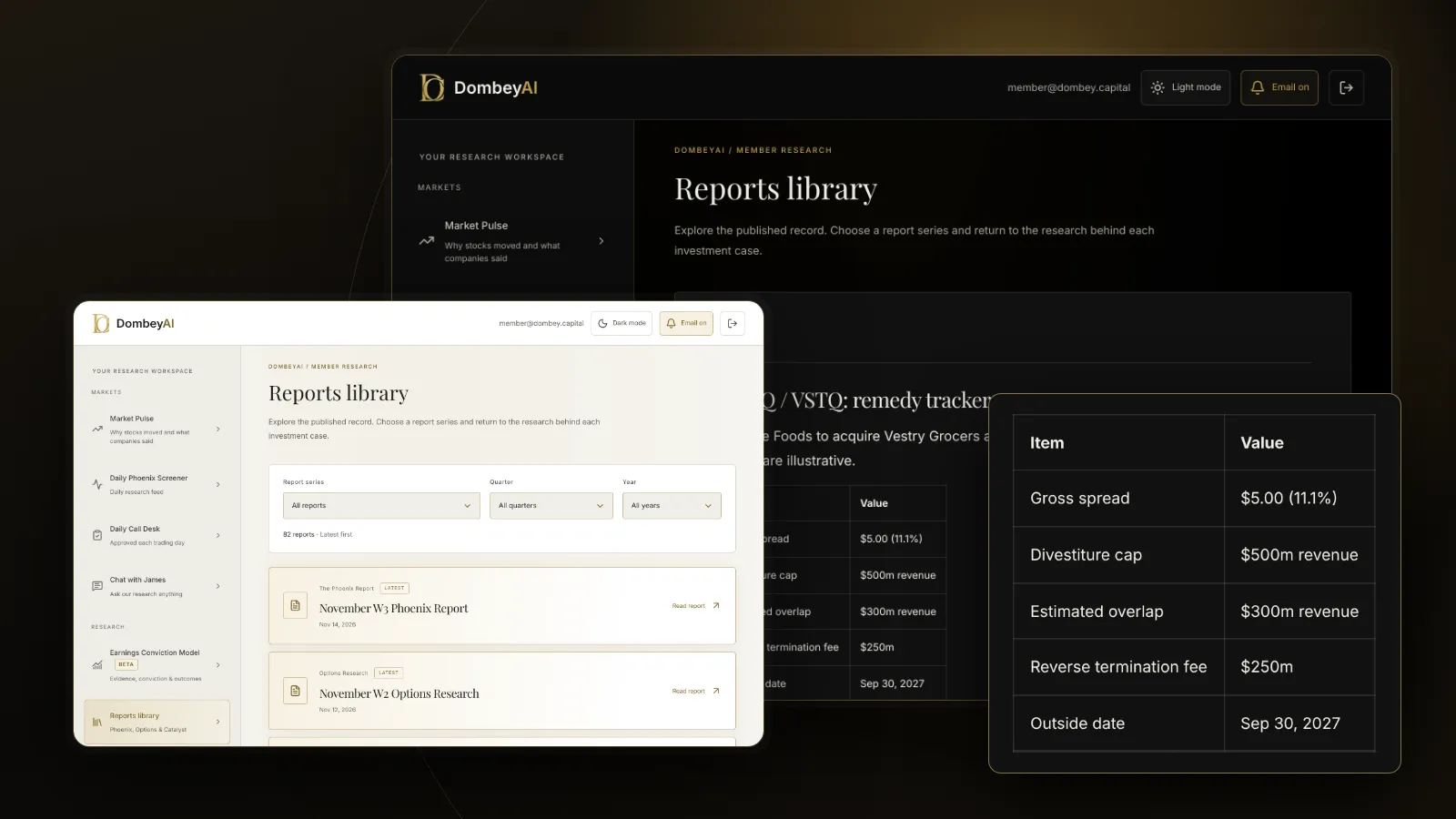
- Divestiture cap. A limit, often stated in revenue or a list of businesses, beyond which the buyer can refuse.
- Litigation obligation. Whether the buyer must fight a suit to block the deal.
- Reverse termination fee. A fee the buyer pays if the deal fails for regulatory reasons. A large fee signals confidence and gives the buyer a reason to offer remedies.
- Outside date. The date after which either side can walk away, with any extensions for regulatory delay.
Where this goes wrong
- Buyer weakness. A divestiture buyer without experience, scale or financing can fail, as Haggen did. Regulators then push harder in later deals.
- Entangled assets. A divested business that depends on the seller for supply, IT or brands can lose customers after the sale.
- Policy shifts. Agencies' willingness to accept remedies changes with leadership. Periods when agencies prefer to sue rather than settle widen spreads across many deals at once. FTC and DOJ merger challenges covers what happens in litigation.
- Multiple regulators. A remedy accepted in the US may not satisfy the EU, the UK or China. China's SAMR review is often the last to clear.
- Value leakage. A remedy much larger than expected can make the deal less attractive to the buyer, raising the risk it walks or renegotiates.
For deal timetables, remedy filings and dated regulatory events on announced deals, see Dombey's market coverage.
The bottom line
A merger remedy lets a deal close by removing the overlap a regulator objects to, most often by divesting a business to an approved buyer. It raises the odds of approval but adds time and costs the buyer value. The merger agreement's efforts standard, divestiture cap and termination fee show how far each side has committed. The history of failed divestitures explains why regulators look hard at who the buyer is.