

Hostile, unsolicited and friendly bids
The words are often used loosely, so it helps to separate them.
- Friendly deal. The buyer and the board negotiate, the board approves a merger agreement and recommends it to holders.
- Unsolicited bid. The buyer approaches a company that was not for sale. Many unsolicited bids end as friendly deals once the price rises far enough.
- Hostile bid. The board says no, and the buyer keeps going over its objection by appealing to shareholders directly.
What makes a bid hostile is the board's position, not the price or the tone. A generous offer can be hostile if the board believes the company is worth more on its own or wants a different buyer. A low offer can be friendly if the board has run out of options.
How a bid turns hostile, step by step
Most hostile situations escalate in the same order. Each step gives the board another chance to negotiate.
- Private approach. The bidder calls or writes to the chief executive or the chair with a proposal. Nothing is public yet.
- Bear hug letter. If the board declines, the bidder sends a letter with a stated price and often releases it publicly. The aim is to make the board explain to its own holders why it turned down a premium.
- Toehold stake. The bidder may buy shares in the market first. Crossing 5% requires a Schedule 13D within five business days, and Item 4 of that filing must describe any plan to acquire the company. Our explainer on the 13D filing covers what it reveals.
- Tender or exchange offer. The bidder offers to buy shares directly from holders and files a Schedule TO. A cash offer can launch quickly; an offer paid in the bidder's stock is an exchange offer and also needs a registration statement.
- Proxy fight or consent solicitation. Because defenses usually block the offer from closing, the bidder nominates its own directors who would remove those defenses. The mechanics follow the same rules as any proxy fight.
- Resolution. The board negotiates, finds another buyer, wins the vote, or the bidder raises its price or walks away.
The rules that set the timeline
A hostile tender offer runs on the same federal clock as a friendly one, which gives both sides fixed dates to work around.
| Timing | Event | Rule or filing |
|---|---|---|
| Within five business days of crossing 5% | Bidder discloses its stake and plans | Schedule 13D |
| Day 1 | Offer commences; Offer to Purchase sent to holders | Schedule TO |
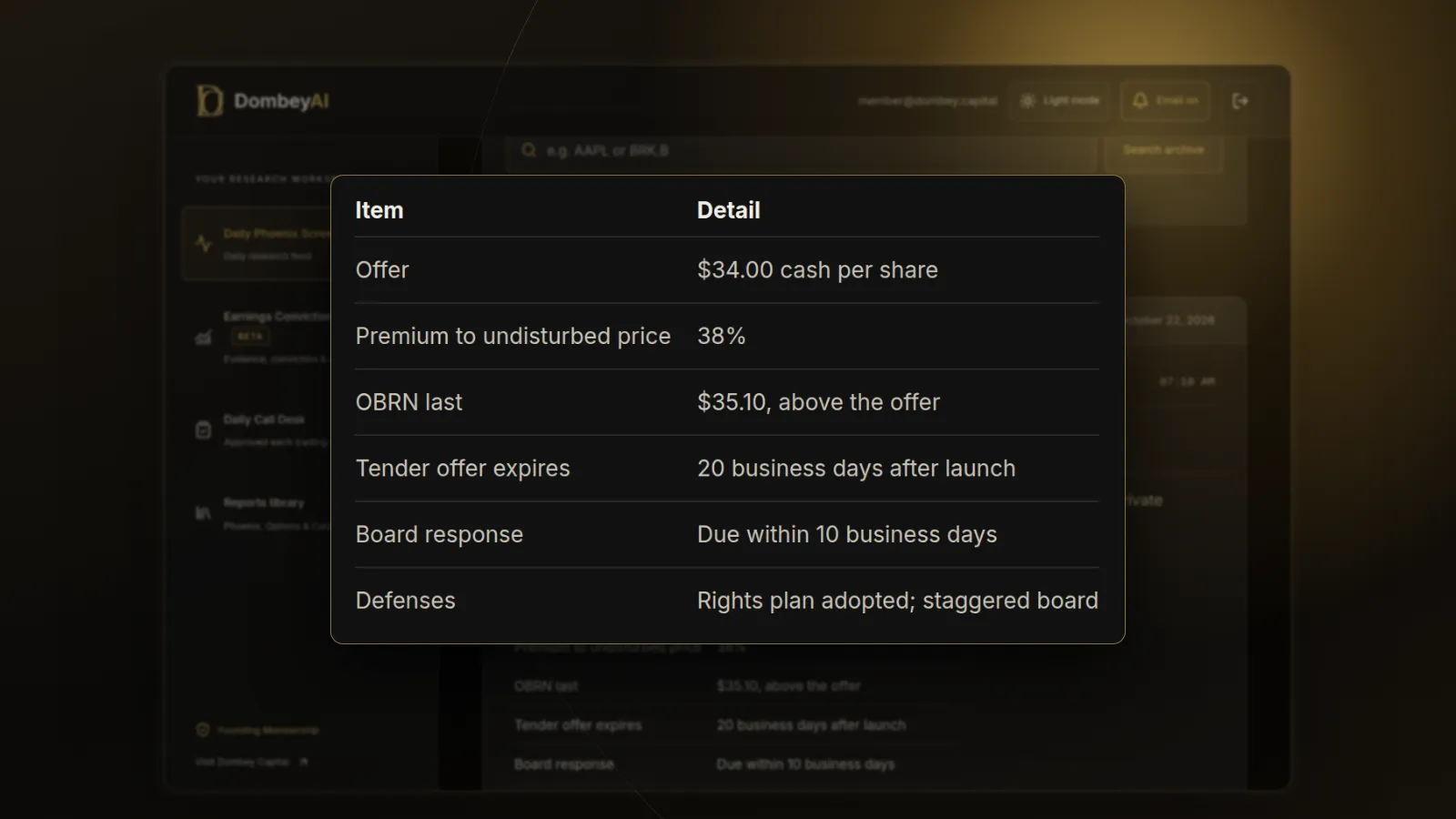
| Within 10 business days of commencement | Target board states whether it recommends accepting, rejecting or remaining neutral | Schedule 14D-9, Rule 14e-2 |
| At least 20 business days | Minimum time the offer must stay open | Rule 14e-1 |
| At least 10 business days after a price change | Offer must stay open after any change in price or percentage sought | Rule 14e-1 |
| 15 days after the bidder's filing | Initial HSR waiting period for a cash tender offer | Hart-Scott-Rodino Act |
The antitrust clock matters more than it looks. For a tender offer, the HSR waiting period starts when the bidder files, so an uncooperative target cannot hold it up by delaying its own filing. Our explainer on the HSR waiting period covers when the agencies extend it.
The board's main defenses
Defenses rarely stop a determined bidder outright. Their job is to force the bidder to negotiate with the board, or to win a shareholder vote first, which gives the board time and pricing power.
| Defense | How it works | How a bidder gets around it |
|---|---|---|
| Poison pill (rights plan) | Holders other than the bidder can buy shares at a deep discount if the bidder crosses a threshold, often set between 10% and 20% | Elect directors who will redeem the pill, or negotiate |
| Staggered board | Only about a third of directors stand for election each year, so taking a majority needs two annual meetings | Wait, or win enough holder support that the board negotiates sooner |
| State business combination statute | In Delaware, Section 203 restricts a merger with a holder of 15% or more for three years unless an exception applies, such as prior board approval | Get board approval before crossing 15%, or meet a statutory exception |
| Limits on special meetings and written consent | The charter or bylaws stop holders from calling a meeting or acting outside the annual meeting | Wait for the annual meeting and its nomination window |
| White knight | The board sells to a buyer it prefers, often at a higher price | Raise the bid or accept the loss |
| Recapitalization or large payout | The company borrows to pay a special dividend or buy back stock, giving holders value without a sale | Argue the plan leaves the company overleveraged |
Directors who adopt defenses are subject to closer court review than ordinary business decisions. Under Delaware case law, defensive measures must respond to a real threat and be reasonable in relation to it, and once a board decides to sell control, its duty shifts to getting the best value reasonably available. That second point is why a hostile bid often ends in an auction.
How hostile situations end
The first bid is rarely the final outcome. A hostile approach usually forces a decision about selling the company, and the bidder is only one possible buyer.
- Negotiated deal with the bidder. The bidder raises its price, the board agrees and the hostile bid becomes a friendly merger.
- Sale to a white knight. The board runs a process and sells to someone else, often at a higher price than the hostile bid.
- Bidder withdraws. The defenses hold, holders back the board, financing falls through or regulators object.
- Bidder wins the vote. New directors redeem the pill and the offer closes, sometimes after a long contest.
- Target stays independent with changes. The board announces a buyback, a spin-off or a cost program to show holders a better path than the bid.
When a bid succeeds or a negotiated deal is signed, the situation becomes a standard deal spread that merger arbitrage investors trade. When it fails, the stock can fall back toward its pre-bid price, which our piece on deal breaks explains in detail.
What to read to judge a hostile bid
The outcome is uncertain, but the public record answers most of the questions that matter.
- If the bidder's financing is committed, with signed bank letters described in the Schedule TO, the bid is more credible than one that depends on raising money later.
- If the offer is conditioned on redeeming a pill or waiving Section 203, the bid cannot close without board action, so the proxy fight is the real event.
- If the board has a staggered board and no special meeting right, the bidder may need two annual meetings, and the timeline stretches to a year or more.
- If large holders publicly back the bid or ask the board to engage, the board's room to refuse narrows quickly.
- If the board's Schedule 14D-9 says it is exploring alternatives, it is preparing for a sale process, not a long defense.
- If the bidder offers its own stock, the offer value moves with its share price, and you have to judge both companies.
The background section of the 14D-9 tells the board's version of every meeting and letter, and the Offer to Purchase tells the bidder's. Read both. Our guide on how to evaluate a tender offer walks through the documents in order. Dombey's published research tracks contested deals as dated catalysts; see the research archive. Large single-day moves on bid news show up in today's biggest stock moves.
Where this goes wrong
- Treating the bid price as a floor. If the bidder withdraws and no other buyer appears, the stock can fall toward or below its unaffected price, especially if the business weakened during the contest.
- Assuming the board will fold. Some boards fight for a year or more, and courts often uphold reasonable defenses. A long contest ties up capital at a thin spread.
- Ignoring financing and regulation. A bidder without committed financing, or one facing antitrust or foreign investment review, may never be able to close.
- Overlooking the bidder's stock. In an exchange offer, a fall in the bidder's shares lowers the offer value even if the terms do not change.
- Missing the dates. The advance notice window for nominating directors can close months before the annual meeting. A bidder that misses it may have to wait another year.
The bottom line
A hostile takeover is an attempt to buy a company over its board's objection by going directly to shareholders through a tender offer, a proxy fight or both. Federal rules set the offer's timeline: at least 20 business days open and a board response within 10 business days. Poison pills, staggered boards and state statutes mean the bidder usually has to persuade or replace the board before the offer can close. Many of these contests end in a negotiated deal or a sale to another buyer, so judge the bidder's financing, the defenses and the value of the company if the bid fails, not only the headline price.