

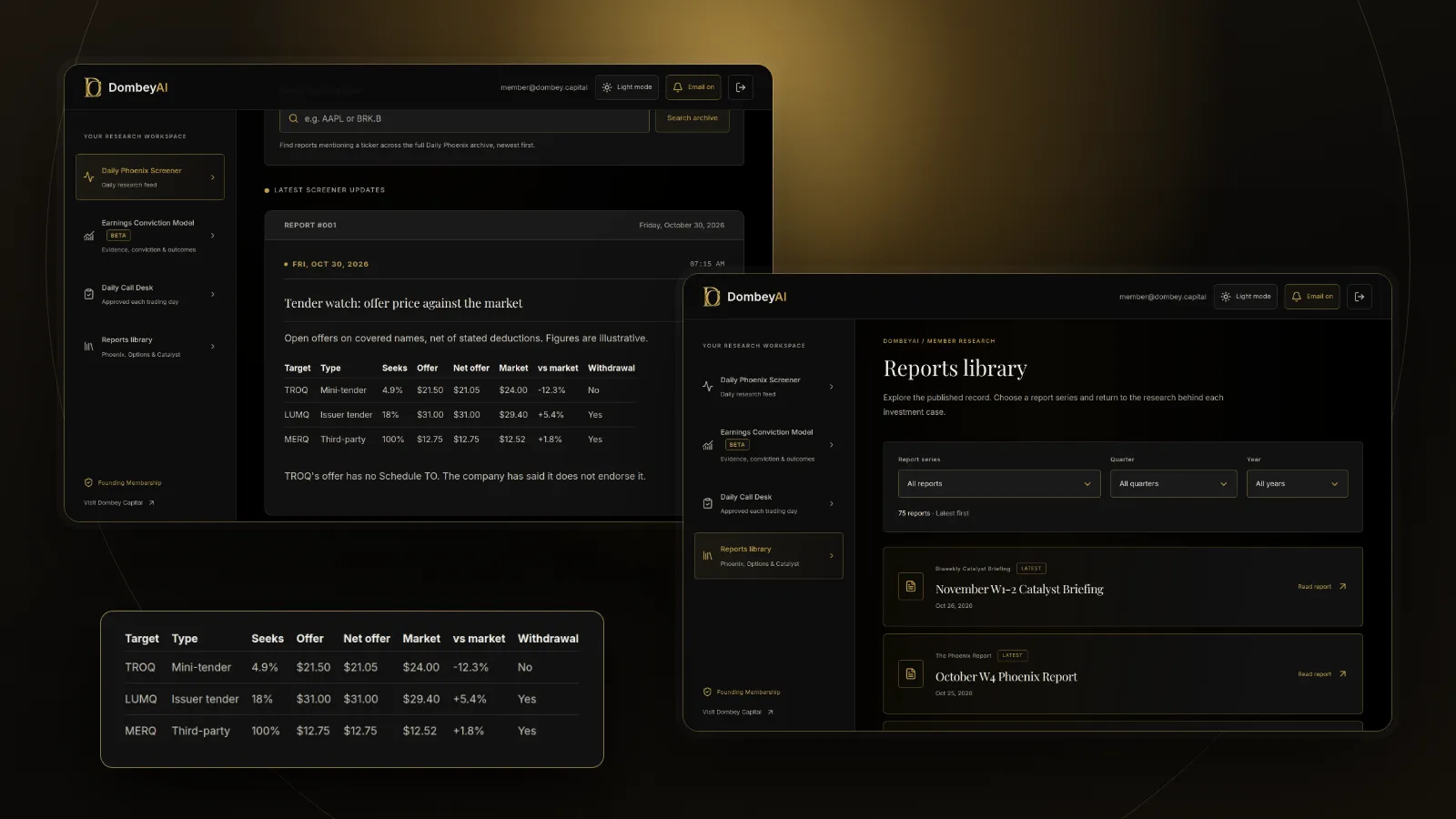
How a mini-tender offer works
A bidder, usually a small investment firm, mails an offer to a company's shareholders or announces it in a press release. The offer names a price per share, a maximum number of shares and an expiration date. Shareholders who accept send their shares to a depositary, and the bidder pays after the offer closes.
The size is the key. The SEC's main tender offer rules apply to offers that would leave the bidder owning more than 5% of a class of shares. Those rules require the bidder to file a Schedule TO, disclose information about itself and the offer, and give shareholders withdrawal rights, pro rata acceptance and equal treatment. Under 5%, those rules fall away.
What remains is Section 14(e) of the Exchange Act and Regulation 14E. They prohibit fraud and deceptive practices, require the offer to stay open for minimum periods (at least 20 business days, and 10 business days after a change in the price or the percentage sought) and require prompt payment once the offer closes. Because the bidder does not have to notify the company, the company may not know about the offer until shareholders ask.
Mini-tender offers compared with full tender offers
| Feature | Full tender offer (over 5%) | Mini-tender offer (under 5%) |
|---|---|---|
| SEC filing | Schedule TO on EDGAR | Not required |
| Target company response | Schedule 14D-9 for a third-party offer | Not required; some companies issue a statement |
| Withdrawal rights | Yes, during the offer | Not required |
| Proration if oversubscribed | Pro rata acceptance | Not required |
| Equal treatment of holders | Required | Not required |
| Minimum offer period | 20 business days | 20 business days under Regulation 14E |
| Anti-fraud rules | Apply | Apply |
| Typical price | Usually a premium to market | Can be below market |
For the full rules on standard offers, see how tender offers work: terms, timelines and proration. Company buybacks by tender also come in other forms, such as the Dutch auction tender offer and the odd-lot tender offer, both of which carry the full protections.
The risks the SEC highlights
The SEC's investor guide on mini-tender offers lists the main risks:
- Below-market prices. Some bidders offer less than the market price, counting on shareholders not to compare.
- No withdrawal right. Once you tender, you may not be able to change your mind, even if the offer is still open.
- Extensions. The bidder can extend the offer, and your shares can stay tied up while it does.
- No proration protection. Larger offers accept shares pro rata when oversubscribed; mini-tenders need not.
- Deductions. Fees or dividend adjustments can lower the price you actually receive.
- Payment risk. Payment can be delayed, and the bidder may not have the money to pay.
Worked example: a below-market offer
The shareholder's real price works out as follows:
| Item | Per share |
|---|---|
| Offer price | $21.50 |
| Less dividend deduction | $0.45 |
| Net offer before fees | $21.05 |
| Market price today | $24.00 |
| Discount to market | about 12% |
On 200 shares, the $40 fee is another $0.20 a share, taking the net to $20.85. Selling 200 shares on the exchange at $24.00 would raise $4,800 before commissions; tendering would raise about $4,170 if the bidder pays in full. The difference is the cost of not checking.
Not every mini-tender is below market. Offers for illiquid holdings, such as some non-traded REITs or limited partnership units, may be the only practical way to sell. Even then, the same checks apply.
How to evaluate a mini-tender offer
- Confirm the percentage. If the bidder seeks less than 5% of the shares, treat it as a mini-tender.
- Compare with the market price. Use the current quote, not the price in the letter.
- Work out the net price. Subtract dividend adjustments and fees.
- Read the offering document. Look for withdrawal rights, extension terms, conditions and the payment date.
- Check the bidder. Ask how the bidder will fund the purchase. Search EDGAR for the bidder's name and the company's response.
- Check for a company statement. Companies often issue a press release or 8-K recommending against below-market mini-tenders.
- Compare alternatives. For a listed stock, selling on the exchange is usually simpler. For an illiquid holding, ask about secondary market options and redemption programs.
The fuller checklist for any tender is in how to evaluate a tender offer.
What the company usually does
Because the bidder does not have to notify the company, management often learns of a mini-tender from shareholders or brokers. Many companies then respond publicly. A typical statement says the company does not endorse the offer, notes that the price is below the market price, points out that the offer lacks withdrawal rights and reminds shareholders that they can sell on the exchange instead. Some companies file the statement on an 8-K so it appears on EDGAR.
A company statement is worth looking for before you decide, but its absence does not mean the offer is fair. Smaller companies and non-traded products may not respond at all.
Where this goes wrong
Assuming every tender offer has the same protections. The word "tender" in the letter does not mean the offer carries withdrawal rights or proration.
Missing the deductions. A price that looks close to market can fall well below it after dividends and fees.
Tendering illiquid holdings without comparing. Investors in non-traded products are often the main targets. The lack of a market price makes a low offer harder to spot.
Trusting an extension. When a bidder extends the offer, tendered shares can remain locked up while the market price moves.
Counting on payment. A small bidder may not have arranged financing. Delayed or missing payment is one of the SEC's named risks.
How mini-tenders fit into special situations work
For investors who follow special situations, mini-tenders are mainly a thing to recognize and avoid confusing with real catalysts. A full tender offer by a company or an acquirer is a dated event with a filed document, a fixed price and a known expiration, and it can create a spread worth studying. A mini-tender is usually an attempt to buy shares cheaply from holders who are not paying attention.
Tender offer trackers list the full offers filed on EDGAR, which is where the research opportunity tends to be. If you want written research on tender offers and other dated events, our list of the 10 best investing newsletters for special situations compares the options. Dombey's published research covers filed tender offers with the terms checked before each deadline; see the research archive.
The bottom line
A mini-tender offer seeks less than 5% of a company's shares, which leaves it outside most tender offer rules: no required SEC filing, no required withdrawal right and no proration. Only the anti-fraud rules, the minimum offer period and the prompt payment rule of Regulation 14E apply. The SEC warns that many such offers are below market. Before tendering, compare the net offer price with the market price, read the withdrawal and payment terms, and check the bidder's ability to pay.