

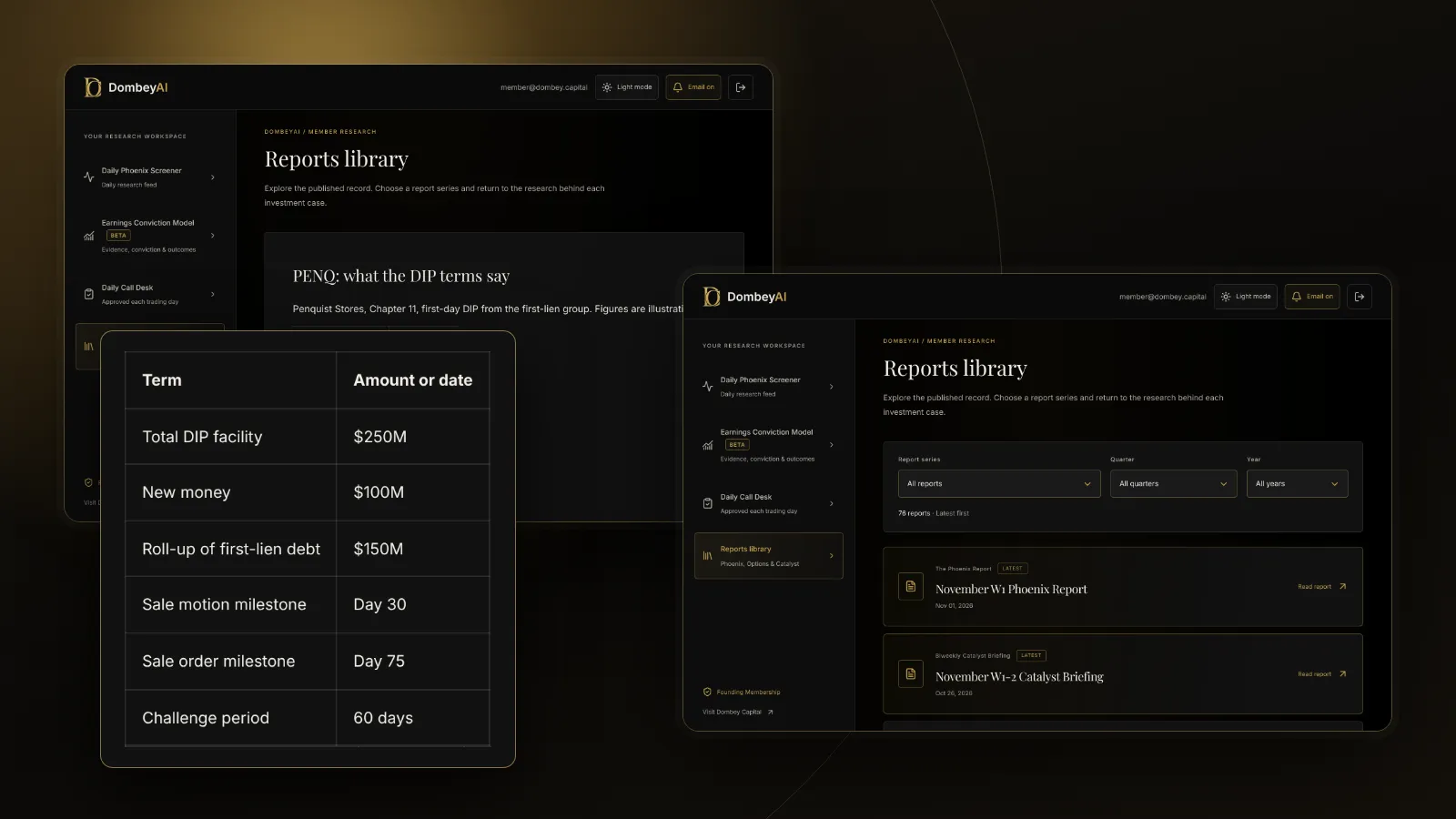
How DIP financing works
When a company files under Chapter 11, it usually keeps running its business as the debtor in possession. It often needs cash on day one, because suppliers want payment up front and existing credit lines are frozen. Section 364 of the Bankruptcy Code lets the court authorize new borrowing on terms that would be impossible outside bankruptcy.
The protections come in layers. The court first considers whether the company can borrow as an ordinary administrative expense. If not, it can grant:
- Superpriority administrative status. The DIP claim ranks ahead of other administrative and unsecured claims.
- Liens on unencumbered assets. Collateral that no existing lender holds.
- Junior liens on encumbered assets. Behind the existing secured lender.
- Priming liens. Ahead of an existing lien on the same assets, allowed only if the company cannot get credit otherwise and the existing lender's interest is adequately protected.
Most DIPs are approved in two steps. At the first-day hearing, the court enters an interim order allowing the company to draw part of the facility. A final order follows after creditors have had notice and time to object, usually within a few weeks.
Key terms to read
| Term | What it means | What it can signal |
|---|---|---|
| Size and new money | Total facility and how much is fresh cash | How much liquidity the case needs |
| Roll-up | Prepetition debt converted into DIP debt | Lender leverage; less value left for junior classes |
| Interest and fees | Rate, upfront, commitment and exit fees | Cost of the case and lender bargaining power |
| Budget | Approved cash forecast, often 13 weeks | How tightly lenders control spending |
| Milestones | Deadlines for a sale motion, plan filing or confirmation | Whether the case is headed to a quick sale |
| Collateral and priming | Which assets secure the DIP and at what rank | Potential fights with existing lenders |
| Challenge period | Time for others to dispute prepetition liens | Whether unsecured creditors can contest the lenders' claims |
| Exit conversion | Whether the DIP rolls into exit loans or equity | Who is likely to own the company after the case |
The first-day declaration and the DIP motion explain these terms in plain language and are worth reading before the credit agreement itself. Our guide to reading a Chapter 11 disclosure statement covers the later documents in the case.
Who provides DIP loans
The most common DIP lender is an existing one. A group holding the company's term loans or secured bonds funds the DIP to protect its prepetition position, avoid being primed by an outsider and control the timetable. Third-party DIPs from outside lenders do happen, especially when there is unencumbered collateral, but they often lead to priming disputes.
A DIP from existing lenders that comes with a restructuring support agreement usually points to a prearranged plan in which those lenders take most of the new equity, often through a debt-for-equity swap. A DIP with milestones for a sale motion within weeks usually points to a Section 363 sale, with the lenders as stalking horse bidders who can credit bid their claims.
What DIP terms say about the stock
Equity ranks last in Chapter 11, as explained in what happens to stock in Chapter 11. The DIP is one of the first places to judge how far down the recovery waterfall reaches.
- If the DIP is small relative to the business, has no roll-up and leaves time before milestones, the company may have room to explore options, and junior classes have more leverage.
- If the DIP is large, rolls up most of the prepetition secured debt and requires a sale within 60 to 90 days, value is likely to stop at the secured lenders.
- If the DIP converts into exit equity, the DIP lenders are setting up to own the reorganized company.
- If an official equity committee is appointed and objects to the DIP, the court will hear an argument that the equity has value. Such committees are uncommon.
Suppose the business sells for $550 million. Fees, DIP interest and administrative claims take $50 million. The DIP takes $250 million, leaving $250 million for the remaining $350 million of first-lien debt. The unsecured notes and the shares get nothing from the sale. The DIP terms told the story on the first day: a quick sale, a large roll-up and secured lenders in control.
Our article on post-bankruptcy equities covers the other side: when the new shares, rather than the old ones, are the opportunity.
Following the DIP through the case
The DIP keeps producing information after the first day. Three filings are worth tracking.
- Budget variance reports. Most DIP agreements require the company to report actual cash flow against the approved budget, often weekly or every two weeks, with permitted variances. A company that keeps beating its budget has more room to negotiate; one that misses may face a default or tighter terms.
- Amendments and milestone extensions. Lenders that extend a sale deadline or increase the facility are signaling that the original plan is not working on time. Each amendment needs court approval and is filed on the docket.
- Objections and settlements. The official unsecured creditors' committee often objects to roll-ups, fees or liens and then settles. The settlement terms, such as a cash pool for unsecured creditors or a longer challenge period, show what the committee was able to win.
Public companies may also file 8-Ks or monthly operating reports that summarize these changes. Together they show whether the case is following the path the DIP set on the first day or drifting from it.
How DIPs compare with out-of-court financing
Before filing, distressed companies often try a liability management exercise, raising new priority debt outside court by moving assets or amending loan documents. A DIP achieves a similar priority with court approval and a process for objections. It is usually more expensive and more visible, but it binds all creditors and comes with the automatic stay that stops collection actions.
Where this goes wrong
- Reading the headline size. A $400 million DIP with $300 million of roll-up has only $100 million of new money. The split matters more than the total.
- Ignoring milestones. Deadlines in the DIP can force a sale before a better plan can be built. A case can be decided by its milestones rather than by its merits.
- Assuming the interim order is final. Objections at the final hearing can change roll-ups, fees, challenge periods and liens on certain assets.
- Treating a DIP as a sign of recovery. A DIP keeps the company running; it does not tell you the old shares will receive anything. In many cases they do not.
- Missing the budget variance. The DIP budget sets expected cash burn. Variance reports filed during the case show early whether the company is running ahead of or behind plan.
The bottom line
DIP financing is court-approved lending to a company in Chapter 11, with priority over most existing claims. Its size, roll-up, budget and milestones show who controls the case and how quickly it will end, which makes the DIP motion one of the most useful early documents for judging recoveries. For equity holders, a large roll-up and a fast sale timetable usually mean little value will reach the old shares. For sources that track these cases, see our list of bankruptcy and restructuring research sources and our list of investing newsletters for special situations; Dombey's restructuring research is in the research archive.