

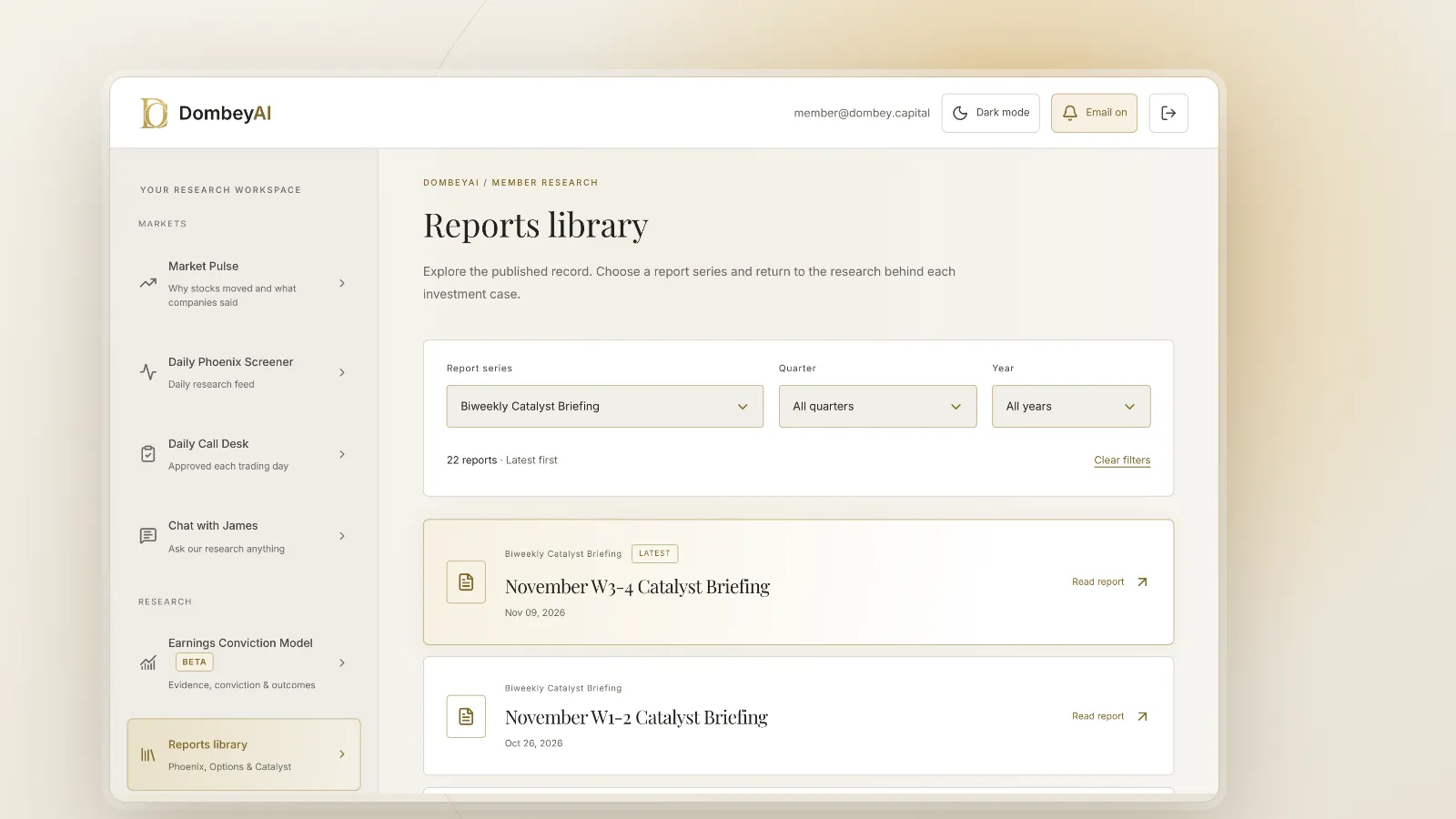

Full disclosure: Dombey Capital is our own research service and our top pick here, for the reasons below. The section on where it falls short is there so you can judge whether it fits your process.
What YouTube is good for, and what it is not
YouTube is the largest free library of investing education there is. For a fundamental investor, it does three jobs well:
- Learning methods. Full university lectures on valuation, accounting and corporate finance.
- Understanding businesses. Long interviews and breakdowns that explain how a company or industry makes money.
- Hearing how investors think. Talks and conference sessions from professional investors.
It does two jobs badly. It is a poor source of current, checked facts, because videos age and creators rarely update them. And it is full of content designed for attention rather than accuracy: thumbnails with arrows, predictions and urgency. The channels below were chosen because they teach methods or explain businesses, not because they predict prices.
Quick comparison
| Channel | Best for | What it covers | Price (as of November 2026) |
|---|---|---|---|
| Dombey CapitalTop pick | Research on special situations and dated catalysts (not a YouTube channel) | Weekly Phoenix Report, Catalyst Briefing, DombeyAI Portal, dated public archive | Founding Membership $1,200/yr; Standard Access $80/yr or $8/mo; Public Archive free |
| Aswath Damodaran | Learning valuation in depth | NYU Stern class webcasts on valuation, corporate finance and investment philosophies | Free |
| CFA Institute | Professional investor education | Sessions and talks from the professional body for investment analysts | Free |
| Columbia Business School | Academic and practitioner talks | Lectures and events from the home of the Heilbrunn Center for Graham and Dodd Investing | Free |
| Business Breakdowns | How a single business works | One company per episode, with investors and industry veterans | Free |
| The Plain Bagel | Clear explanations of concepts | Investing, economics and personal finance, without stock picks | Free |
| Patrick Boyle | Markets, finance history and scandals | Commentary on markets, financial events and frauds | Free |
| Value Investing with Sven Carlin, Ph.D. | Value-focused stock analysis | Individual stock analyses and market valuation | Free; the creator also sells a paid research platform |
| The Swedish Investor | Summaries of classic investing books | Animated book summaries and investing principles | Free |
How we compared these channels
We compared them from their YouTube channel pages, the creators' own websites and their published videos. We make no claims about the performance of any stock discussed on them.
| Criterion | Weight | What it measures |
|---|---|---|
| Teaches a method | 30% | Whether you come away able to do the analysis yourself |
| Accuracy and sourcing | 25% | Whether claims are tied to filings, data or clear reasoning |
| Fit for fundamental research | 20% | Focus on businesses, valuation and financial statements rather than trading |
| Independence | 15% | How clearly sponsorships and the creator's own products are separated from the content |
| Time well spent | 10% | Signal per minute of video |
If you weight current stock ideas above method, Sven Carlin's channel moves up; if you weight depth above everything, Damodaran stays at the top by a wide margin.
Quick picks by job
Best for special situations and dated catalysts: Dombey Capital
Dombey publishes dated research on situations where an event can change a stock's value: stocks priced below cash or book, spin-offs, deal spreads, and legal and corporate catalysts. It is what you apply these methods to, not one of the channels.
Best for learning valuation: Aswath Damodaran
Full class webcasts from a finance professor who has taught valuation for decades, with slides, data and spreadsheets on his website.
Best for professional investor education: CFA Institute
Talks and sessions from the global body that awards the CFA charter.
Best for academic and practitioner talks: Columbia Business School
Lectures and events from the school where Benjamin Graham taught, home of the Heilbrunn Center.
Best for understanding a single business: Business Breakdowns
One company per episode, explained by people who know it well.
Best for clear explanations of concepts: The Plain Bagel
Concepts explained plainly by a CFA charterholder, without stock picks.
Best for markets and financial history: Patrick Boyle
Dry, skeptical commentary on markets, financial history and corporate scandals.
Best for value-focused stock analysis: Value Investing with Sven Carlin, Ph.D.
Frequent analyses of individual stocks and market valuation from a value investing perspective.
Best for book summaries: The Swedish Investor
Animated summaries of the books every fundamental investor eventually reads.
Full reviews
1. Dombey Capital
What it does. Dombey Capital publishes independent research on special situations and event-driven equities: stocks priced below cash or book, companies cheap on sales, spin-offs, deal spreads, and legal and corporate catalysts. It is written research, read on the web; there is no video channel. There are three access levels:
- Founding Membership ($1,200 a year, annual billing only): the weekly Phoenix Report, weekly Options Research, the Catalyst Briefing, the DombeyAI Portal with the Daily Phoenix Screener and the Earnings Conviction Model, valuation and execution analysis, and priority access.
- Standard Access ($80 a year, about $6.67 a month, or $8 a month on monthly billing), the lower-cost option: the Biweekly Catalyst Briefing on forthcoming corporate and market events, plus the complete public-research archive.
- Public Archive (free): published executive theses and public research.
Best for. Investors who have learned the methods and want research that applies them to dated events.
Pricing. Public Archive free. Founding Membership $1,200 a year. Standard Access $80 a year or $8 a month. See the subscription options.
Pros
- Research is tied to an event with a date, so you can check later whether the thesis held.
- The Public Archive is free, so you can judge the work before paying.
- Founding Membership includes the DombeyAI Portal; Standard Access is a low-cost entry point.
Cons
- Not a video channel.
- Coverage is narrow by design.
- Founding Membership costs money; every channel here is free.
Verdict: Our top pick for what to read once you know the methods; pair it with one or two of the channels below.
2. Aswath Damodaran
What it does. Aswath Damodaran is a professor of finance at NYU Stern. His YouTube channel carries webcasts of his classes, including valuation for MBA and undergraduate students, corporate finance and investment philosophies, plus shorter videos on valuation topics and his own case studies. His website links the slides, post-class tests, data sets and valuation spreadsheets that go with them, and his data sets are updated each January.
Best for. Anyone who wants to learn how to value a business properly, from the cost of capital to terminal value. Our explainer on discounted cash flow covers the basics his classes build on.
Pricing. Free.
Pros
- The most complete free valuation education available.
- Data, slides and spreadsheets on his website support each class.
- Teaches a method you can apply to any company.
Cons
- Full class webcasts take real time.
- Few videos on special situations such as spin-offs or deal spreads.
Verdict: The first channel to subscribe to. Our list of investing courses for special situations covers how his online class compares with paid courses.
3. CFA Institute
What it does. The official channel of the CFA Institute, the global association that awards the Chartered Financial Analyst designation. It posts sessions, talks and explainers from the institute's events and programs.
Best for. Investors who want professional-level material on topics such as ethics, behavioral finance and portfolio management.
Pricing. Free.
Pros
- Content from a professional body, not a personality.
- A wide range of topics and speakers.
Cons
- Mixed audience: some videos are about the CFA program itself, not investing.
- Less focused on single-company analysis.
Verdict: A reliable second source for professional thinking on methods and behavior.
4. Columbia Business School
What it does. The school's official channel posts lectures, talks and events. Columbia is where Benjamin Graham taught and is home to the Heilbrunn Center for Graham and Dodd Investing, so value investing is a recurring subject among many others.
Best for. Hearing practitioners and faculty explain how they think about value. Its podcast, Value Investing with Legends, is in our list of the best investing podcasts.
Pricing. Free.
Pros
- Talks from experienced practitioners and academics.
- Grounded in the Graham and Dodd tradition.
Cons
- The channel covers the whole business school, so investing content is mixed in with everything else.
- Many talks are years old.
Verdict: Worth searching for value investing talks rather than following every upload.
5. Business Breakdowns
What it does. Business Breakdowns, from Colossus, explains how one business works per episode, interviewing investors, industry veterans and business leaders about its history, model, economics and competitive position. Episodes are posted on the Colossus YouTube channel and on podcast apps.
Best for. Building industry knowledge quickly before reading a company's 10-K, and understanding whether it has a lasting advantage. Our explainer on economic moats covers the questions these episodes often answer.
Pricing. Free.
Pros
- Deep, single-company focus.
- Guests who know the business well.
Cons
- Guests often own the stocks they discuss.
- Long episodes; less suited to a quick reference.
Verdict: The best channel for learning how businesses make money.
6. The Plain Bagel
What it does. The Plain Bagel is run by Richard Coffin, a CFA charterholder, and explains investing, economics and personal finance concepts. It avoids stock picks and states that videos are for education, not advice.
Best for. Newer investors who want concepts explained clearly before moving to technical material, and experienced investors who want a clear explanation of an unfamiliar topic.
Pricing. Free.
Pros
- Clear, careful explanations.
- No stock picks, so less conflict of interest.
Cons
- Broad and introductory for advanced readers.
- Little on company-level analysis.
Verdict: The best channel for learning concepts.
7. Patrick Boyle
What it does. Patrick Boyle's channel covers markets, financial history, hedge funds and corporate scandals, in a dry and skeptical style.
Best for. Understanding how financial events and frauds unfold, which is useful background for reading short seller reports and judging management claims.
Pricing. Free.
Pros
- Strong on financial history and how scandals develop.
- Skeptical of hype.
Cons
- Commentary rather than a method you can apply step by step.
- Less on valuing individual companies.
Verdict: Good for context and skepticism; pair it with a methods channel.
8. Value Investing with Sven Carlin, Ph.D.
What it does. Sven Carlin analyzes individual stocks, sectors and market valuation from a value investing perspective. He also runs a paid research platform.
Best for. Investors who want to see value methods applied to specific companies on a regular schedule.
Pricing. Free on YouTube; the paid research platform is separate.
Pros
- Frequent uploads on specific stocks.
- Applies a consistent value lens.
Cons
- Some videos promote the paid platform.
- Lookalike channels using his name exist; check you are on the official one.
Verdict: Useful for idea generation; check every number against the filings.
9. The Swedish Investor
What it does. The Swedish Investor makes animated summaries of investing books, such as The Intelligent Investor and One Up on Wall Street, along with videos on investing principles.
Best for. Deciding which classic books to read in full, and reviewing their main ideas.
Pricing. Free.
Pros
- Short, clear summaries of the classics.
- A good map of the investing canon.
Cons
- A summary is not the book.
- Little on current companies or filings.
Verdict: A useful guide to the books; our lists of value investing books and valuation books cover what to read next.
Where Dombey falls short
Dombey is not a video channel, a course or a data platform. Coverage is narrow by design and centers on special situations and dated events. It is a small team, the research is published under a pen name, and the public track record is short. If you want free education on methods, the channels above do that better; Dombey supplies the research you apply them to.
Free vs paid
Every channel here is free to watch. Some creators sell research, courses or memberships alongside, and some videos carry sponsorships, so check who is paying for the content. For structured paid learning, see our list of financial modeling courses. For paid research services, see our ranking of the best stock picking services. Dombey's Public Archive is free; Founding Membership adds the weekly Phoenix Report, Options Research and the DombeyAI Portal, and Standard Access adds the Biweekly Catalyst Briefing.
How to choose
| Your situation | Pick | Add later when |
|---|---|---|
| You want research on special situations to work from | Dombey CapitalTop pick | You want to learn the methods behind it |
| You want to learn valuation properly | Aswath Damodaran | You want to see it applied to specific companies |
| You want professional-level talks | CFA Institute | You want single-company depth |
| You want value investing lectures | Columbia Business School | You want current ideas |
| You want to understand how a business works | Business Breakdowns | You are ready to read the 10-K |
| You are new to investing | The Plain Bagel | You want more technical material |
| You want market history and skepticism | Patrick Boyle | You want a step-by-step method |
| You want value analyses of specific stocks | Value Investing with Sven Carlin, Ph.D. | You want to check the numbers yourself |
| You want to know which books to read | The Swedish Investor | You are ready for the full book |
Whatever you watch, go to the source before acting. Our piece on primary and secondary sources explains why a video is a secondary source and how to check it against the filing.
The bottom line
Our top pick is Dombey Capital, for written research on special situations and dated catalysts, with Founding Membership for the full research and the DombeyAI Portal and Standard Access as the lower-cost option; it is a research service, not a channel. On YouTube, start with Aswath Damodaran for valuation, add CFA Institute and Columbia Business School for professional and academic talks, and Business Breakdowns for single businesses. The Plain Bagel, Patrick Boyle, Sven Carlin and The Swedish Investor each fill a narrower job. Use video to learn methods and find ideas, and check every claim against the filings.