

A short definition
Every option gives its holder a right: to buy the underlying at the strike for a call option, or to sell it at the strike for a put option. The exercise style says when that right can be used.
- American style: the holder can exercise at any time before the option expires.
- European style: the holder can exercise only at expiration.
Both styles can be bought and sold on the exchange at any time they trade. The style limits exercise, not trading, which is why most option holders, of either style, close positions by selling rather than exercising.
The Options Clearing Corporation's disclosure document, Characteristics and Risks of Standardized Options, describes both styles and is the reference every US options account agreement points to.
Real examples of each style
The style is set by the contract, so it varies by product. These are the common US cases.
| Product | Exercise style | Settlement | What happens on exercise |
|---|---|---|---|
| Options on individual US stocks | American | Physical | 100 shares change hands per contract |
| Options on ETFs such as SPY or QQQ | American | Physical | 100 ETF shares per contract |
| Cboe SPX options (S&P 500 index) | European | Cash | The in-the-money amount is paid in cash |
| Cboe XSP (Mini-SPX) options | European | Cash | Cash, on one tenth of the index value |
| Most other broad index options, such as NDX and RUT | European | Cash | Cash against the index settlement value |
| Many over-the-counter options between institutions | Set by the contract | Set by the contract | Read the confirmation |

The SPX and SPY pair is the clearest contrast. Both track the S&P 500, but a short SPY call can be assigned early and leave you short 100 shares of an ETF, while a short SPX call can only be settled in cash at expiration.
Why the exercise right has value
An American option has every right a European option has, plus one more. So an American option is worth at least as much as an otherwise identical European option. How much more depends on whether early exercise would ever make sense.
For a call on a stock that pays no dividend, exercising early almost never makes sense. Exercising gives up the option's remaining time value and pays the strike sooner than needed. Selling the call keeps both. That is why, for non-dividend stocks, American and European call values are close.
Two cases change this:
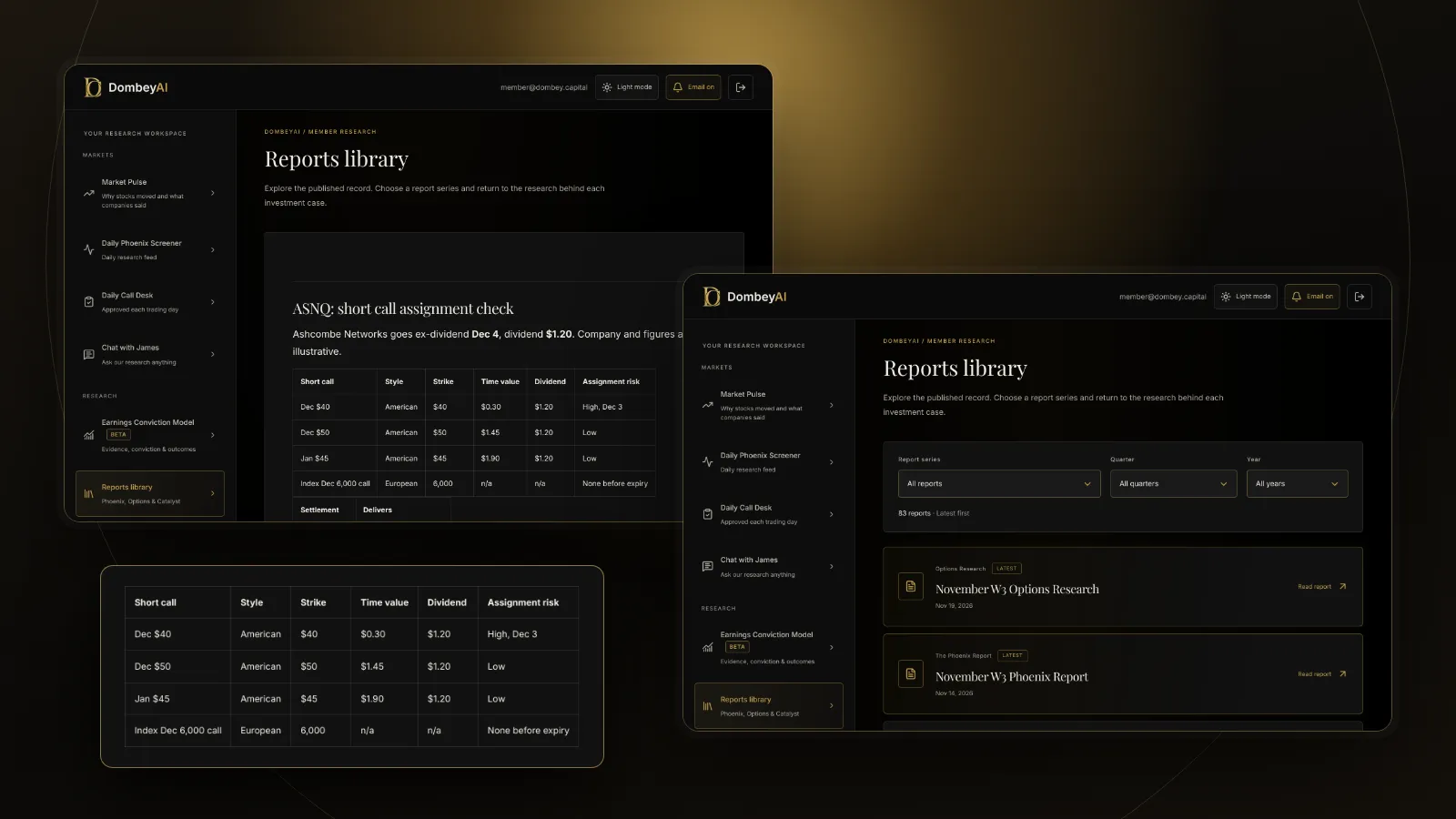
- Calls before an ex-dividend date. A shareholder of record gets the dividend; an option holder does not. If a deep in-the-money call has less time value left than the dividend, the holder may exercise the day before the ex-dividend date to collect it. Our explainer on early exercise of options walks through the comparison.
- Deep in-the-money puts. Exercising a put early delivers the stock and brings in the strike price in cash now. When rates are high and the put has little time value left, that cash can be worth more than waiting.
How pricing models treat the two styles
The Black-Scholes model was built for European options, because a single exercise date makes the math tractable. American options need methods that check, at each step, whether exercising beats holding, such as binomial trees.
Put-call parity is exact for European options: a call minus a put at the same strike and expiry equals the stock minus the present value of the strike, adjusted for dividends. For American options parity becomes a range rather than an equality, because the early exercise right can be worth something to one side. When you compare quoted prices against parity on a stock option, small gaps can reflect the exercise style rather than a mispricing.
European options can also do something American options cannot: trade below their intrinsic value. A deep in-the-money European put can be worth less than strike minus spot, because the holder must wait to collect. An American put would be exercised before that happened.
What the style means for a short position
For a buyer, early exercise is a right. For a seller, it is a risk.
If you are short an American option, you can be assigned on any business day. The likely times are predictable:
- The business day before an ex-dividend date, on short calls that are in the money with little time value.
- Near expiration, on any short option in the money.
- After a corporate event that removes the time value, such as a cash takeover close to completion.
Assignment turns an option position into a stock position overnight. A short call becomes a short stock position, which may need margin and may owe the dividend. A short put becomes a long stock position at the strike. In a spread, assignment on one leg leaves the other leg unhedged until you act.
If you are short a European index option, none of this happens before expiration. You carry market risk until settlement, but no one can hand you shares early.
Settlement: shares versus cash
Exercise style and settlement method are separate features, but in the US they tend to come together. American-style stock and ETF options settle physically. European-style index options settle in cash.
That pairing matters at expiration. The Options Clearing Corporation automatically exercises listed equity options that finish $0.01 or more in the money unless the holder gives other instructions. A trader who holds an in-the-money stock call through expiration ends Monday with 100 shares per contract and the price risk of the weekend. Our guide to what happens when options expire covers the timing and the instructions you can give your broker.
A cash-settled index option ends with a cash credit or debit and no position. The amount depends on the settlement value, and the settlement time differs by series. Cboe's standard monthly SPX options use a value calculated from opening prices on expiration morning, while the weekly SPXW series use the closing value. An investor who assumes the close can be surprised by a morning settlement after a weak open.
Where the style matters around a catalyst
Event-driven positions put the differences under pressure:
- Earnings and FDA dates. A short American put sold into a binary event can be assigned after a gap down, before you decide whether to roll it. See how to choose a strike and expiry for a catalyst.
- Special dividends. A large special dividend raises the chance of early exercise on short calls. Depending on its size, the exchange may also adjust the contract terms, which our explainer on adjusted options covers.
- Takeovers. In a cash deal, a target's options lose their time value as closing nears, which makes early assignment of in-the-money short calls more likely. After closing, the options settle on the deal consideration. See what happens to options when a company is acquired.
- Index hedges. Hedging a portfolio with European index puts removes assignment risk and delivers cash, which suits a hedge whose job is to offset losses rather than to deliver shares.
Dated catalysts and the options priced around them are what our market coverage tracks, ticker by ticker.
Where this goes wrong
- Assuming you cannot be assigned before expiry. Sellers of stock and ETF options are exposed to assignment every business day. A spread that looks hedged on paper can be broken overnight.
- Forgetting the dividend. The ex-dividend date, not the payment date, is the day that matters for early exercise. Check it before holding a short in-the-money call.
- Confusing similar products. SPX and SPY track the same index but differ in style, settlement, size and tax treatment. Read the contract specifications rather than assuming.
- Reading parity gaps as free money. On American options, a small gap from European parity may be the value of early exercise or the cost of borrowing shares, not a mispricing.
- Ignoring the settlement value. For AM-settled index options, the final value can differ sharply from the prior close.
The bottom line
American options can be exercised any time before expiration; European options only at it. In the US that usually means stock and ETF options are American and settle in shares, while broad index options are European and settle in cash. For buyers the extra right is worth little most of the time, but for sellers it brings assignment risk on any business day, especially before ex-dividend dates and near expiry. Check the style and settlement terms of the contract before you hold a short option through a catalyst.