

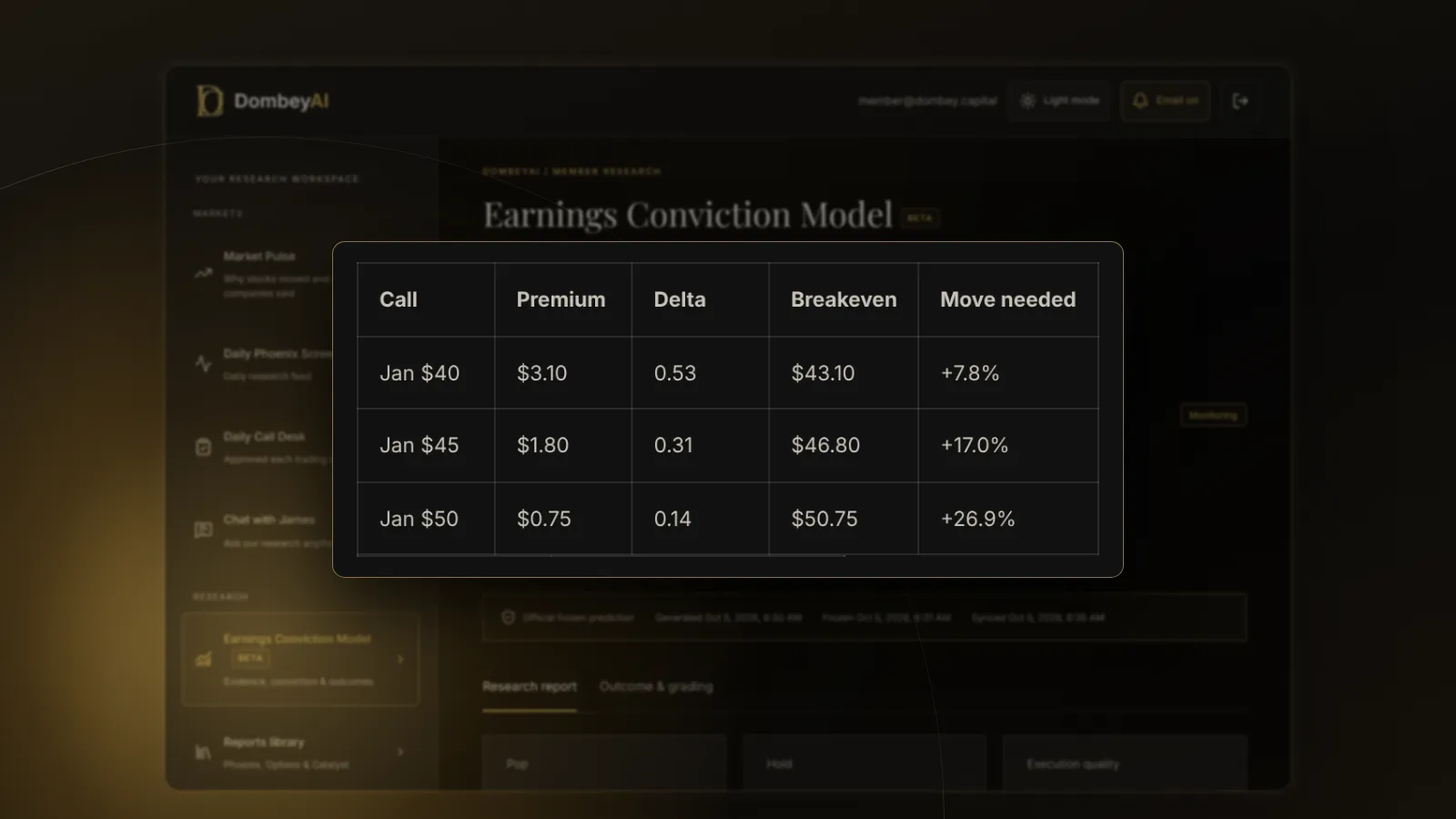
A short definition
A call has four terms: the underlying stock or index, the strike price, the expiration date and the premium, which is quoted per share. A standard US equity call covers 100 shares, so a call quoted at $3.00 costs $300 per contract before fees.
The buyer is long the call and profits if the stock rises enough. The seller, also called the writer, is short the call and profits if the stock stays below the strike plus the premium received. Every call has both sides, and the Options Clearing Corporation stands between them as the guarantor of listed contracts.
Real examples
Calls appear in more places than the listed options market. The table shows the common forms and what sets each apart.
| Where calls appear | Who holds them | How they settle | What to know |
|---|---|---|---|
| Listed equity calls | Any approved brokerage customer | Physical: 100 shares per contract | American style, exercisable any time before expiry |
| Index calls such as Cboe SPX options | Traders and institutions | Cash, against the index value | European style, exercisable only at expiration |
| LEAPS calls | Investors with long theses | Physical for equity LEAPS | Expirations more than a year out; see LEAPS options |
| Employee stock options | Employees | Shares issued by the company | Not listed or transferable; terms are in the company's plan |
| Warrants | Investors in SPACs, rights deals and restructurings | Newly issued shares | Issued by the company and dilutive; see SPAC warrants |
| Convertible bonds | Bond investors | Shares on conversion | A bond with an embedded call on the stock |
Listed calls are standardized: the strike, size and expiry are set by the exchange. The other forms are custom contracts whose terms sit in filings, so read the document before assuming a warrant or employee option behaves like a listed call.
How a call's payoff works
At expiration, a call is worth the stock price minus the strike, if that is positive, and zero otherwise. The buyer's profit is that value minus the premium paid.
| Stock at expiration | Call value per share | Buyer's profit per contract | Seller's profit per contract |
|---|---|---|---|
| $38 | $0 | minus $180 | plus $180 |
| $45 | $0 | minus $180 | plus $180 |
| $46.80 | $1.80 | $0 (breakeven) | $0 |
| $50 | $5.00 | plus $320 | minus $320 |
| $60 | $15.00 | plus $1,320 | minus $1,320 |
Three points follow from the table. The buyer's loss is capped at the premium. The breakeven is the strike plus the premium, $46.80 here, so the stock must rise 17% just to break even. And the uncovered seller's loss keeps growing as the stock rises, with no ceiling.
What goes into the premium
A call's price splits into two parts:
- Intrinsic value. The amount the stock sits above the strike. A $45 call on a $50 stock has $5.00 of intrinsic value. An out-of-the-money call has none.
- Time value. Everything else: the price of the chance that the stock moves further before expiry. It shrinks every day and reaches zero at expiration.
Time value depends mostly on the time left and on implied volatility, the market's estimate of how much the stock will move. Our guide to implied volatility covers the inputs, and the explainer on option moneyness shows how intrinsic and time value shift as a call moves in or out of the money. The option Greeks put numbers on these sensitivities: delta for the stock price, theta for time and vega for volatility; see the option Greeks explained.
Calls around a dated catalyst
Calls are a common way to express a view on a dated event: an earnings report, an FDA decision, a deal vote. The event changes how they are priced.
- If a binary event is days away, implied volatility usually rises, and calls cost more than they would on a quiet stock.
- If the event passes, implied volatility often collapses, and a call can lose value even when the stock moves the right way. That is IV crush.
- If the stock is being acquired for cash, calls above the deal price usually lose most of their value; see what happens to options in an acquisition.
- If you hold shares and sell calls against them, a takeover bid above the strike means the shares get called away at the strike.
The market coverage on Dombey shows how these pricing effects play out around real stock moves, with figures cited from filings and prices.
Exercise, assignment and expiration
Most call holders never exercise. They sell the call before expiry to capture its remaining time value. Exercising early throws away that time value, with one common exception: just before an ex-dividend date, holders of deep in-the-money calls sometimes exercise to collect the dividend. Our explainer on early exercise covers when it happens.
At expiration, OCC rules exercise listed equity options that finish at least $0.01 in the money unless the holder gives other instructions. A holder of one exercised call buys 100 shares at the strike, so an account needs the cash or margin to pay for them. The seller who is assigned must deliver 100 shares, buying them in the market if they are not already held. Our guide to what happens when options expire walks through the timeline.
Where this goes wrong
Calls fail in predictable ways. Each mistake below costs money for a reason that is visible before the trade.
- Right direction, too slow. The stock rises, but after expiry. Time value is a wasting asset.
- Right direction, too small. The stock rises but stays below the breakeven. An out-of-the-money call can rise a lot in percentage terms and still finish worthless.
- Buying after volatility has spiked. The premium already prices a large move, and the post-event drop in volatility eats the gain.
- Illiquid strikes. Wide bid-ask spreads mean you lose several percent on entry and exit. See options liquidity.
- Sizing by contract count, not dollars at risk. Ten cheap calls can lose 100% of the money put in. Size the premium as the amount you are prepared to lose.
- Selling uncovered calls. A small premium against an unlimited loss is a poor trade before a possible takeover bid.
Calls compared with owning the stock
| Question | Owning 100 shares | Buying one call |
|---|---|---|
| Capital needed | Full share price | The premium only |
| Maximum loss | The full investment if the stock goes to zero | The premium |
| Time limit | None | Expiration date |
| Dividends and votes | Yes | No |
| Sensitivity to volatility | None directly | Large, through vega |
A call is a cheaper, time-limited way to hold upside, with leverage that cuts both ways. It suits a view with a date attached, not an open-ended one.
The bottom line
A call option is the right to buy 100 shares at the strike before expiry, paid for with a premium that the buyer can lose entirely. The breakeven is the strike plus the premium, and the price depends heavily on time and implied volatility, both of which work against the buyer as an event passes. Read a call as a dated view with a known maximum cost, compare its breakeven with the move the market already prices, and check the contract terms before trading warrants or other call-like securities.