

How an election merger is structured
The merger agreement sets three things:
- The per-share consideration for each choice. For example, $40.00 in cash per share, or 0.80 acquirer shares per share.
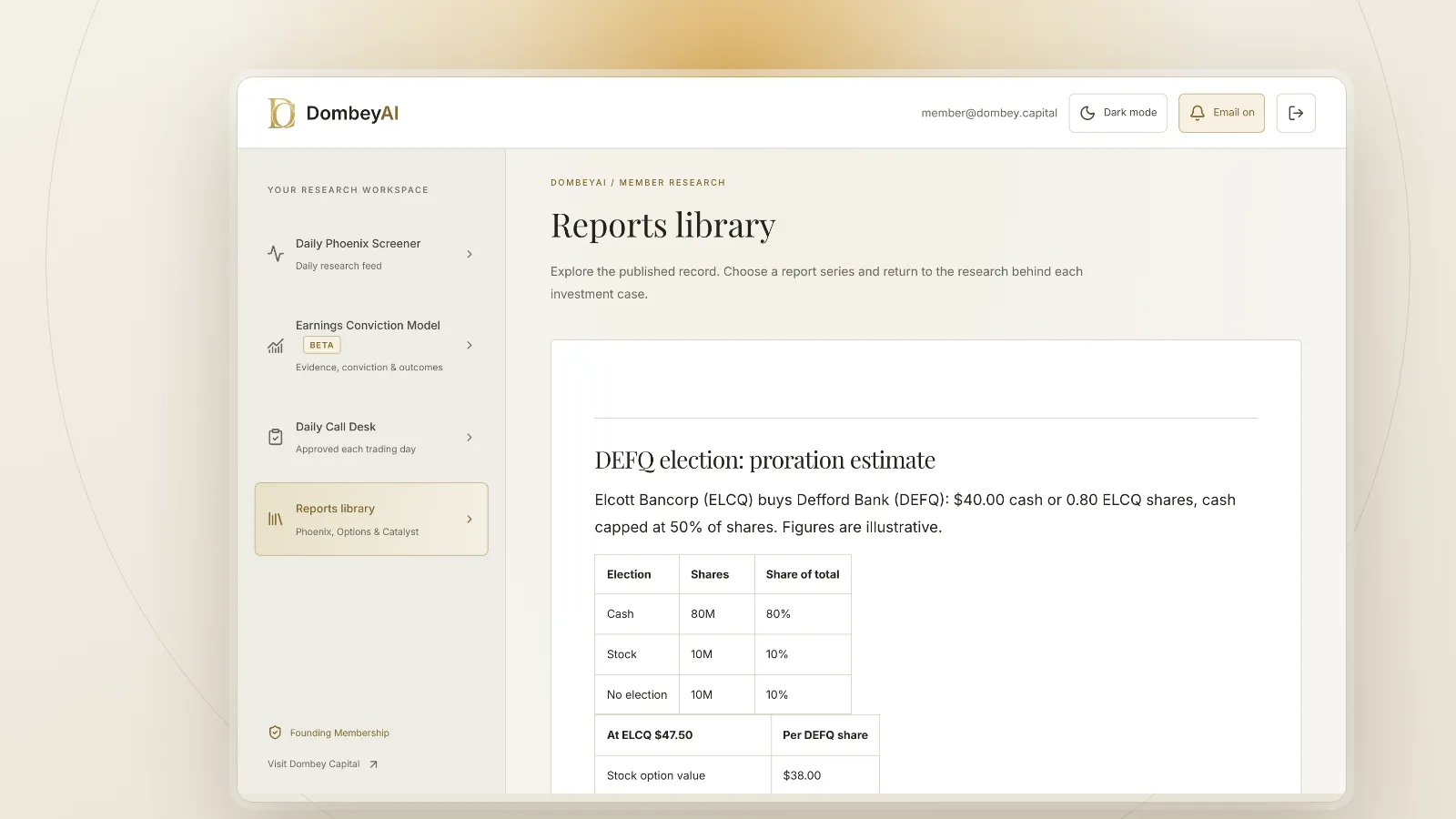
- The aggregate caps. For example, cash will be paid on no more than 50% of target shares, and stock on the rest.
- The proration and default rules. What happens when one choice is oversubscribed, and what non-electing shares receive.
Many agreements also include a value-equalization formula. Instead of a fixed $40.00 cash or 0.80 shares, each choice is reset near closing so both have the same value, based on the acquirer's average share price over a set window before closing. In that design, the election mainly decides the form of value, not the amount, except for proration and timing effects.
The election process
The election runs on a calendar set out in the proxy statement or the S-4 merger registration:
| Step | What happens | What to check |
|---|---|---|
| Election form mailed | Holders receive the form and letter of transmittal | Mailing date and how your broker handles it |
| Election period | Holders choose cash, stock, mixed or no election | Whether a mixed election is allowed |
| Broker cutoff | Brokers set their own deadline, often a day or two earlier | Your broker's date, not the agent's |
| Election deadline | Last time to submit or revoke | Whether the deadline moves with closing |
| Closing | Proration is calculated | Final proration factors in the press release |
| Payment | Exchange agent pays cash and delivers shares | Treatment of fractional shares |
Shares submitted with an election are delivered to the exchange agent. In most deals they cannot be traded until the deal closes or the election is revoked. Some agreements allow a short grace period after the deadline for the shares themselves to arrive, provided a broker has committed to deliver them in time.
Proration: the math
Proration applies only to the oversubscribed side. Suppose cash is capped and too many holders elect cash.
The same logic runs the other way when stock is oversubscribed, which happens when the acquirer's shares rise above the cash value.
The holder who elected cash still received more than the holder who elected stock. That is typical with fixed terms: electing the more valuable option helps, even after proration. With equalized terms, the gap shrinks to almost nothing.
Proration in a merger election works much like proration in a tender offer, and the same caution applies: the final factor is not known until after the deadline.
What non-electing holders receive
The default for shares with no valid election is set in the agreement. The common versions are:
- Undersubscribed form. Non-electing shares fill whichever side has room, which in practice is the less popular choice.
- Standard mix. Non-electing shares receive the overall mix, such as 50% cash and 50% stock.
- Treated as one choice. Some agreements treat non-elections as stock elections, or as cash.
If you hold through a broker and do nothing, you are a non-electing holder. With fixed terms, that usually means getting the less valuable option.
How this changes the arbitrage spread
For an investor looking at the spread, an election deal has a blended value. A simple approach is to estimate the likely proration and value the expected mix at current prices.
- If the cash option is worth more today, expect cash to be oversubscribed, and value a cash election as a prorated blend.
- If stock is worth more, the reverse.
- If terms are equalized, the spread is close to the single-form spread, but timing and tax still differ.
Because part of the consideration is acquirer stock, the arbitrage typically involves shorting some of the acquirer's shares against the expected stock portion. The guide on how to calculate a merger arbitrage spread covers the hedge ratio, and merger arbitrage explained covers the wider strategy.
Decision list
- If the terms are fixed and one option is clearly worth more near the deadline, electing that option usually gives the higher blended value, even after proration.
- If the terms are equalized, the choice is mostly about tax and whether you want to keep exposure to the combined company.
- If you may want to sell before closing, weigh the cost of locking your shares against the value of the election.
- If you hold through a broker, find the broker's cutoff, which is earlier than the official deadline.
- If the deadline can move with closing, watch for the press release that sets the final date.
Where this goes wrong
Election mergers produce a few avoidable mistakes.
- Missing the broker cutoff. The official deadline is not your deadline. Brokers often need instructions a day or more earlier.
- Ignoring the lock. Elected shares usually cannot be sold. If the deal breaks or the acquirer's stock moves, you may be stuck until revocation clears.
- Assuming you get what you elect. Proration means you probably get a blend. Plan for the blend.
- Using announcement-day prices. The relative value of cash and stock changes with the acquirer's share price. Re-run the math near the deadline.
- Skipping the tax section. Cash and stock can be taxed differently. The prospectus describes the expected treatment.
- Assuming the deal closes. An election does nothing if the merger fails, and the target can fall back toward its undisturbed price. Deal breaks covers that case.
Read the election section in the merger agreement itself, not only the summary. How to read a merger agreement shows where it sits.
Where to find the terms
The election terms appear in:
- The merger agreement, usually in an article titled "Effect on Capital Stock" or "Election Procedures"
- The proxy statement or prospectus, in a section on the merger consideration
- The election form and letter of transmittal, mailed before the deadline
- Press releases announcing the election deadline and, after closing, the final proration results
For how special situations investors track these deals and which research services cover them, see the best investing newsletters for special situations.
The bottom line
A cash or stock election lets target holders choose the form of their merger consideration, but aggregate caps mean the oversubscribed side is prorated. With fixed terms, the more valuable choice usually wins even after proration, and non-electing holders often receive the less popular form. Elected shares are typically locked until closing or revocation. Check whether the terms are fixed or equalized, find your broker's cutoff, and re-run the numbers near the deadline.