

How each position works
Short selling. The investor borrows shares through a broker, sells them and later buys them back to return them. Under Regulation SHO, a broker must have reasonable grounds to believe the shares can be borrowed before accepting a short sale. The position stays open until the investor closes it or the broker forces it closed, for example if the lender recalls the shares or margin falls short.
Buying a put. A put gives the holder the right to sell 100 shares at the strike price until expiry. The buyer pays a premium up front. If the stock is below the strike at expiry, the put has value equal to the difference; above it, the put expires worthless. Our explainer on the option Greeks covers how its value changes with price, time and volatility.
Side-by-side comparison
| Feature | Short stock | Long put |
|---|---|---|
| Maximum loss | Unlimited | Premium paid |
| Maximum gain | Entry price, if the stock goes to zero | Strike minus premium, if the stock goes to zero |
| Upfront cost | Margin; no premium | Premium |
| Ongoing cost | Borrow fee, dividends owed | Time decay |
| Time limit | None, unless recalled | Expiry date |
| Account | Margin account | Options approval |
| Sensitivity to volatility | None directly | Gains if implied volatility rises, loses if it falls |
| Main tail risk | Squeeze, recall, gap up | Expiring worthless |
Costs of shorting
- Borrow fee. Charged daily as an annual rate on the value of borrowed shares. Easy-to-borrow stocks cost little; hard-to-borrow stocks can cost a high rate, and the rate can change without notice.
- Dividends. The short seller owes the lender any dividends paid while the shares are borrowed. A special dividend can be a large unexpected cost.
- Margin. Short sales require a margin account. Regulation T sets initial margin, FINRA Rule 4210 sets minimum maintenance requirements, and brokers often set higher requirements for volatile or low-priced stocks. A rising price raises the margin needed.
- Recall and buy-in. Lenders can recall shares. If the broker cannot find a replacement, the position can be closed at a bad time.
Stocks with high short interest are usually the most expensive to borrow and the most exposed to squeezes. Our piece on short interest and days to cover explains how to gauge that risk.
Costs of buying puts
- Premium. Paid up front. It contains intrinsic value, if the put is in the money, and time value.
- Time decay. Time value shrinks as expiry approaches, faster in the final weeks.
- Implied volatility. Before a known event, implied volatility usually rises, making puts more expensive. After the event it often falls sharply, which can cut the put's value even if the stock moves the right way. Our explainer on IV crush covers the effect.
- Spreads. Wide bid-ask spreads on illiquid options add to the cost.
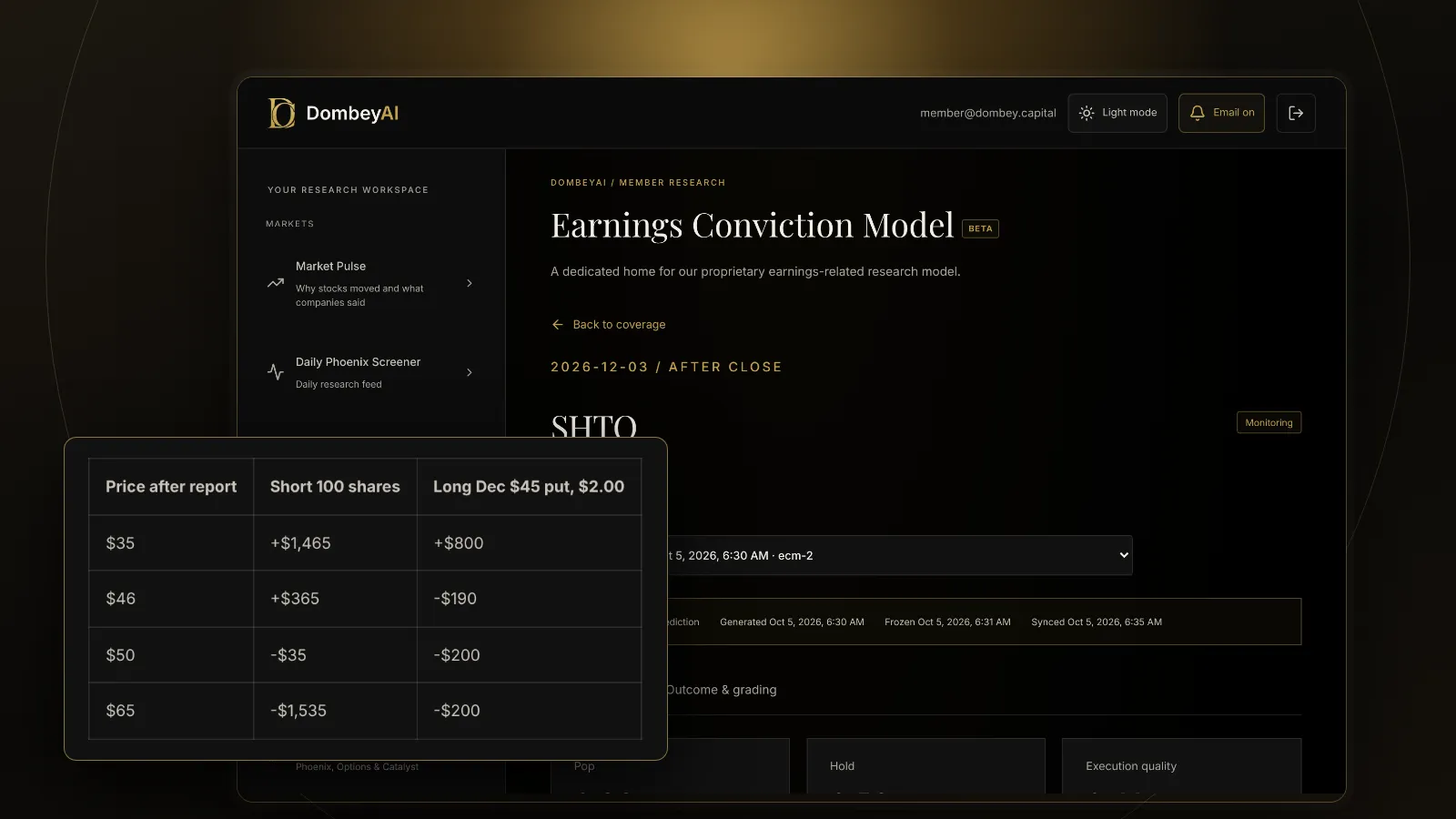
A worked example around a catalyst
The put wins when the move is large and on time, and caps the damage when it goes wrong. The short wins on smaller declines and has no deadline, but the downside is open-ended.
Positions in between
The choice is not only between a naked put and a short sale. Several structures sit between them:
- Put spreads. Buying a put and selling a lower-strike put reduces the premium in exchange for capping the gain. It suits a view on a decline of a defined size, and the sold put offsets some of the implied volatility premium before an event. Our explainer on vertical spreads covers the mechanics.
- Short stock with a call as protection. Shorting the stock and buying an out-of-the-money call caps the loss on a rise, at the cost of the call premium. It keeps the short's lack of an expiry for the stock leg while defining the worst case until the call expires.
- Longer-dated puts. A put with more time costs more but decays more slowly each day, which suits a view where the timing is uncertain. Our piece on LEAPS options covers long-dated contracts.
Each of these trades some of one position's advantages for some of the other's, and each has its own costs in spreads and premiums.
Choosing between them
- If the catalyst has a firm date and you expect a large move, a put defines the risk and pays well if you are right. Our guide on choosing a strike and expiry for a catalyst explains the trade-offs.
- If the timing is uncertain and the decline may be slow, a short avoids time decay, provided the borrow is cheap and stable.
- If the stock is hard to borrow or heavily shorted, both positions are expensive and squeeze risk is high.
- If you cannot tolerate open-ended loss, the put's capped risk is the main reason to prefer it.
Position size matters more than the instrument. Our guide on sizing a position before a binary event covers how to keep any single outcome from doing serious damage.
Where this goes wrong
- Shorting a crowded name. High short interest and a positive surprise can produce a squeeze far beyond any fundamental value.
- Buying puts after volatility has risen. Paying for elevated implied volatility before an event means the stock must move more than expected just to break even.
- Choosing an expiry too close. A correct view that arrives late still loses the premium.
- Ignoring dividends and corporate actions. A short owes dividends, and special dividends or spin-offs can create unexpected obligations.
- Forgetting recall risk. A forced buy-in can close a short at the worst moment.
How it fits a research process
Decide on the view first, then compare the cost of expressing it each way: borrow fee and dividends against premium and implied volatility, at the size you would actually trade. For current catalysts where these choices come up, see Dombey's market coverage.
The bottom line
Buying a put and shorting a stock both benefit from a decline, but a put caps the loss at the premium while a short's loss is unlimited. Shorts carry borrow, margin and dividend costs and face squeeze and recall risk; puts carry time decay and implied volatility risk and need the move to arrive before expiry. Around a dated catalyst, the size and timing of the expected move, the borrow cost and the level of implied volatility decide which is more efficient.