

What you need
- The position: share count, cost basis and current price.
- The risk: what could go wrong, and when. A dated event such as an earnings report, a court ruling or a merger vote is easier to hedge than a vague worry.
- An options-approved brokerage account. Buying puts usually needs the lowest approval level; selling calls against shares you own is usually allowed at the same level.
- The option chain for the stock, with bid, ask, open interest and implied volatility. Our guide on how to read an option chain covers the columns.
- A budget for protection, in dollars and as a percentage of the position.
Step 1: Name the risk you are hedging
Write one sentence: "I want to limit my loss if X happens before Y date." The answer shapes everything else.
A dated, company-specific risk, such as a trial readout or an FDA decision, calls for options on the stock itself, expiring after the date. A broad market risk on a diversified portfolio can be hedged with index options instead. A vague, undated risk is the hardest and most expensive to hedge, because you pay for time with no event to justify it.
Also decide how much of the position to cover. Hedging half the shares halves the cost and leaves half the exposure.
Step 2: Choose the structure
Four structures cover most needs.
| Structure | What you do | Cost | What you give up |
|---|---|---|---|
| Protective put | Buy puts | Full premium | Nothing but the premium |
| Collar | Buy puts, sell calls | Low or zero | Gains above the call strike |
| Put spread | Buy a put, sell a lower put | Lower premium | Protection below the lower strike |
| Covered call | Sell calls only | You collect premium | Gains above the strike; little downside cover |
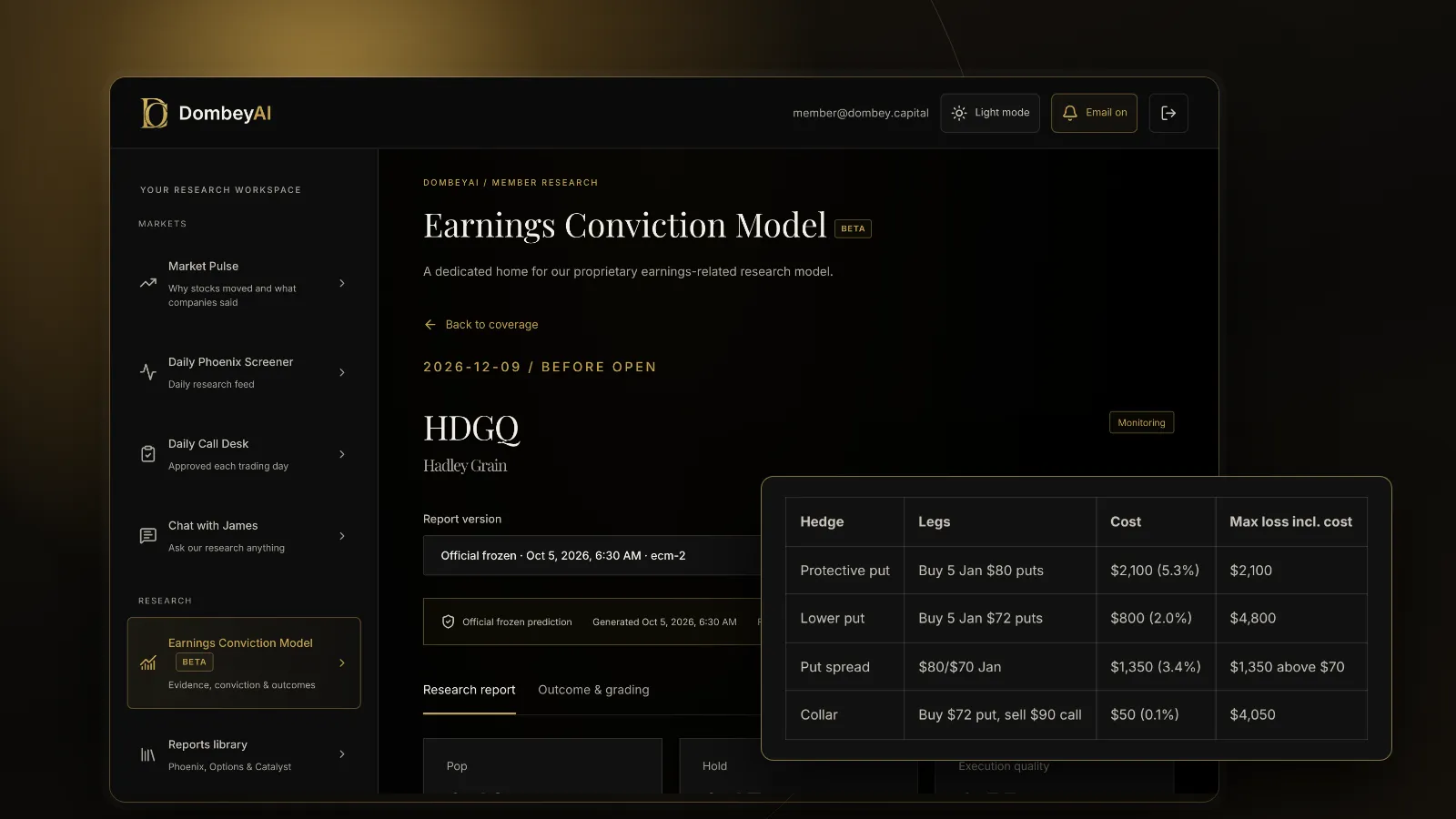
A protective put is the cleanest floor. A collar suits a holder who would accept selling at a higher price in exchange for cheap protection. A put spread, a form of vertical spread, covers a band of loss, which works when you fear a moderate drop more than a collapse. A covered call barely hedges at all: it cushions a small decline by the premium received.
- If you want to keep all the upside, use a protective put.
- If you would sell at a higher price anyway, use a collar.
- If a moderate drop is the main worry and premium is expensive, use a put spread.
- If you only want a small cushion and some income, a covered call is enough.
Step 3: Choose the strike
The put strike sets the deductible. A put at the current price protects from the first dollar of loss and costs the most. A put 10% below the price lets the first 10% of loss through and costs much less.
For a collar, pick the call strike at a price where you would be content to sell. If the call strike sits too close to the current price, the collar removes almost all risk and reward, which has tax consequences covered in Step 8.
Step 4: Choose the expiry
The hedge must still exist when the risk arrives. For a dated event, choose the first expiry after the date, then consider the next one out in case of delays. Court rulings, regulatory decisions and shareholder votes move.
Short expiries cost less in total but more per day of protection. Longer expiries cost more in total but less per month. Around an event, implied volatility rises into the date and falls after it, which our explainer on IV crush explains. A put bought just before an event pays a high volatility price. Our guide to choosing a strike and expiry for a catalyst covers the trade-off in detail.
Step 5: Size the hedge
One standard US equity contract covers 100 shares. Divide your share count by 100 and round to the coverage you want.
| Shares owned | Full hedge | Half hedge |
|---|---|---|
| 300 | 3 contracts | 1 or 2 contracts |
| 1,000 | 10 contracts | 5 contracts |
| 2,500 | 25 contracts | 12 or 13 contracts |
Two checks before you commit. First, confirm the contract size: after a spin-off, special dividend or merger, options can be adjusted to cover a different number of shares or a basket. Second, check liquidity. Look for open interest well above your order size and a bid-ask spread you can accept. Our explainer on options liquidity shows how wide spreads add to cost.
Step 6: Cost the hedge
Express the cost three ways:
- Dollars: premium times contracts times 100.
- Percentage of the position: premium divided by share price.
- Per month of protection: percentage cost divided by months to expiry.
A put that costs 3% of the position for one month is expensive insurance if repeated, about 36% a year. The same 3% for six months is 0.5% a month. If the hedge costs more than the loss you fear, reduce the size, move the strike lower, or use a put spread or collar.
Step 7: Place the order
Use limit orders, starting near the midpoint between bid and ask. For a collar, enter both legs as one spread order so you do not hold a naked call or an unhedged put if only one side fills. Confirm the expiry, strike, quantity and action (buy to open, sell to open) before sending.
Step 8: Check tax and account effects
In the US, hedging an appreciated position can have tax effects. A position that removes nearly all risk and reward, such as a very tight collar, can be treated as a constructive sale of the shares. Hedges can also bring in the straddle rules, which can defer losses and affect holding periods. IRS Publication 550 covers both. If the gain is large, speak to a tax adviser before placing the hedge.
Step 9: Manage, roll or close
Decide in advance what you will do in each case:
- The event passes and the stock holds up. Sell the remaining put to recover its time value, or let it expire.
- The stock falls. Sell the put for its gain, exercise it to sell the shares at the strike, or hold it while you reassess.
- The event is delayed. Roll the hedge to a later expiry. Our guide to rolling options explains the mechanics.
- The stock rallies toward a collar's call strike. Decide whether to roll the call up and out, accept assignment, or close the collar.
Traders who run larger books adjust continuously with delta hedging, but for a single position, a planned review at each date is enough.
Common mistakes
- Hedging after the drop. Puts get expensive once fear rises. The cheapest time to buy protection is when nobody wants it.
- Choosing an expiry before the event. A hedge that expires a week before the ruling is no hedge.
- Ignoring adjusted contracts. After a corporate action, the symbol and deliverable can change, and a hedge sized on 100 shares per contract can be wrong.
- Using index options for a company-specific risk. An index put does little if one stock falls 40% on its own news.
- Paying for full protection forever. Rolling at-the-money puts every month can cost more than the losses they prevent. Hedge the dated risk, not every risk.
- Forgetting the call side of a collar. If a takeover bid arrives above the call strike, you will have sold the upside.
For worked examples of how single stocks have moved around events, see the Dombey market pages.
The bottom line
Hedging a stock with options starts with a clear statement of the risk and its date. From there, choose the structure, set the strike and expiry, size one contract per 100 shares, and cost the hedge as a percentage of the position and per month. Plan in advance how you will close or roll it, and check the tax effects before hedging a large gain. A good hedge covers the risk you named, for the time you need, at a price you accept.