

What you need
- The case number and court. The company's 8-K under Item 1.03, Bankruptcy or Receivership, gives both, and the press release usually names the claims agent.
- The claims agent's case website. Free in most large cases.
- A PACER account. Needed for documents the agent does not post and for smaller cases with no agent site.
- A calendar. For hearings, objection deadlines and the bar date.
- A short notes file. One line per important filing: docket number, date, what it says, why it matters.
Background reading helps: what happens to stock in Chapter 11 covers the basic mechanics, including why old equity often receives nothing.
Step 1: Find the case and the agent
Search EDGAR for the company's latest 8-K. Item 1.03 confirms the filing, the court and the date. Large cases are often filed in a handful of districts, such as Delaware, the Southern District of Texas, the Southern District of New York and New Jersey, and related entities are usually jointly administered under one lead case number.
The first day press release normally names the claims and noticing agent and links to its case site. If it does not, search the agent firms' sites by company name. For a small case without an agent, go straight to PACER and use the case locator.
Step 2: Read the first day declaration
The first day declaration, filed by a senior officer, is the most useful single document in the case. It explains the business, the capital structure, why the company filed and what it plans to do. It also attaches or summarizes the debt documents.
Record from it:
- Total debt by class and who holds it
- Any prepetition agreement with lenders
- The proposed financing
- Whether a sale or a standalone reorganization is planned
Use it to draw the capital structure. Our guide on mapping a capital structure shows how.
Step 3: Follow the financing
The debtor-in-possession financing motion shows who is funding the case, on what terms and with what milestones. DIP financing often comes from existing lenders, and its milestones (dates by which the debtor must file a plan, win approval of a sale or reach confirmation) set the real timeline of the case.
Step 4: Track the deal that shapes the case
Many cases start with a restructuring support agreement between the company and key creditors. It states who gets what under the planned reorganization, and it often tells you on day one whether old equity receives anything.
If the company plans to sell assets, watch for the bidding procedures motion and any Section 363 sale. The stalking horse bid sets a floor price, and the auction result sets the value available to creditors.
Step 5: Watch the claims and the committees
The bar date order sets the deadline for creditors to file proofs of claim. The claims register, kept by the agent, shows the size and type of claims filed. Large disputed claims can change recoveries for every class below them.
Committees shape the outcome too. The U.S. Trustee appoints an official committee of unsecured creditors in most large cases. Shareholders can ask for an official equity committee, and the court's ruling on that request is itself a signal about whether equity may be in the money. Groups of creditors acting together file statements under Bankruptcy Rule 2019 disclosing their holdings, which shows who controls each class.
Step 6: Read the disclosure statement and plan
The disclosure statement explains the plan of reorganization: the classes, the treatment of each, the valuation and the projections. Reading a Chapter 11 disclosure statement is a separate skill, and our guide walks through it. Check three things first:
- The plan value and the valuation range behind it
- The recovery estimate for each class
- Whether old equity receives anything, and in what form
Step 7: Build the case calendar
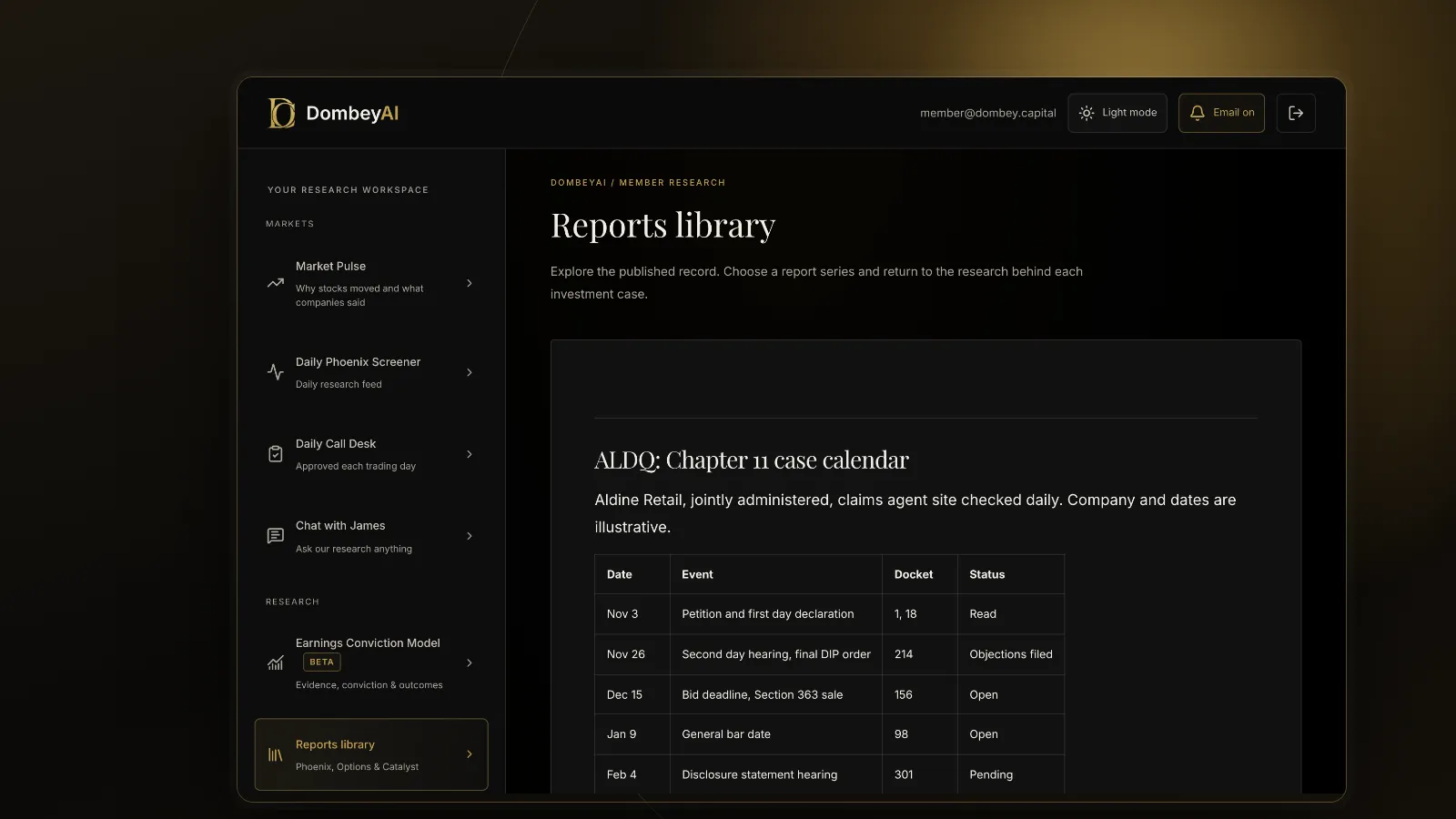
A docket is a list of documents; a case is a sequence of dates. Hearing agendas, filed before each hearing, list every matter, its status and any objections. Use them to keep a calendar like this one.
| Date | Event | What to check |
|---|---|---|
| Petition date | Filing and first day motions | First day declaration, interim DIP order |
| Week 3 to 5 | Second day hearing | Final DIP order, committee objections |
| Bar date | Deadline to file claims | Claims register totals |
| Disclosure statement hearing | Approval to solicit votes | Changes from the filed version |
| Voting deadline | Classes vote on the plan | Voting declaration, class results |
| Objection deadline | Last day to object to confirmation | Objections from committees and creditors |
| Confirmation hearing | Court decides on the plan | Confirmation order, valuation testimony |
| Effective date | Plan takes effect | New securities, distributions |
The dates above are typical stages, not fixed rules; each case sets its own schedule. The monthly operating reports filed with the U.S. Trustee add a running check on cash and operations between hearings.
Step 8: Set alerts and check them daily
Sign up for email updates on the claims agent's site if it offers them. For cases in the RECAP archive, CourtListener offers docket alerts. Add the company's EDGAR filings to your alerts as well, since material case events often appear in 8-Ks. Our comparison of PACER alternatives covers paid docket tools that add faster alerts and search across cases, and the best bankruptcy and restructuring research sources covers the reporting services that summarize them.
On PACER, keep costs down by reading the docket report first and opening only the documents you need. Fees are 10 cents per page, capped at $3 per document for most filings, and waived in any quarter where your charges total $30 or less.
Common mistakes
- Reading the docket in order. Most entries are notices, retention applications and certificates of service. Start with the first day declaration and the agendas, then go to the filings they point to.
- Ignoring objections. The plan is the debtor's position. Objections from the creditors' committee or a large holder show where the value fight is, as in valuation fights in Chapter 11.
- Treating the stock price as information. Shares of companies in Chapter 11 can trade well above the value the plan gives them. The plan, not the quote, decides recoveries.
- Losing track of amended filings. Disclosure statements and plans are amended several times. Note the docket number of the latest version.
- Forgetting the milestones. A missed DIP milestone can change the case overnight.
The bottom line
A bankruptcy docket is the most direct record of how a Chapter 11 case will end, and you do not need to read all of it. Find the case and the claims agent from the 8-K, read the first day declaration, then follow financing, the restructuring support agreement, sales, claims, the plan and the objections. Keep a calendar from the hearing agendas and set alerts so nothing arrives late. Investors comparing outside research on these situations can start with the best newsletters for special situations.